
Tratar vs Tratar de
Tratar = to treat/handle. Tratar de = to try/be about.
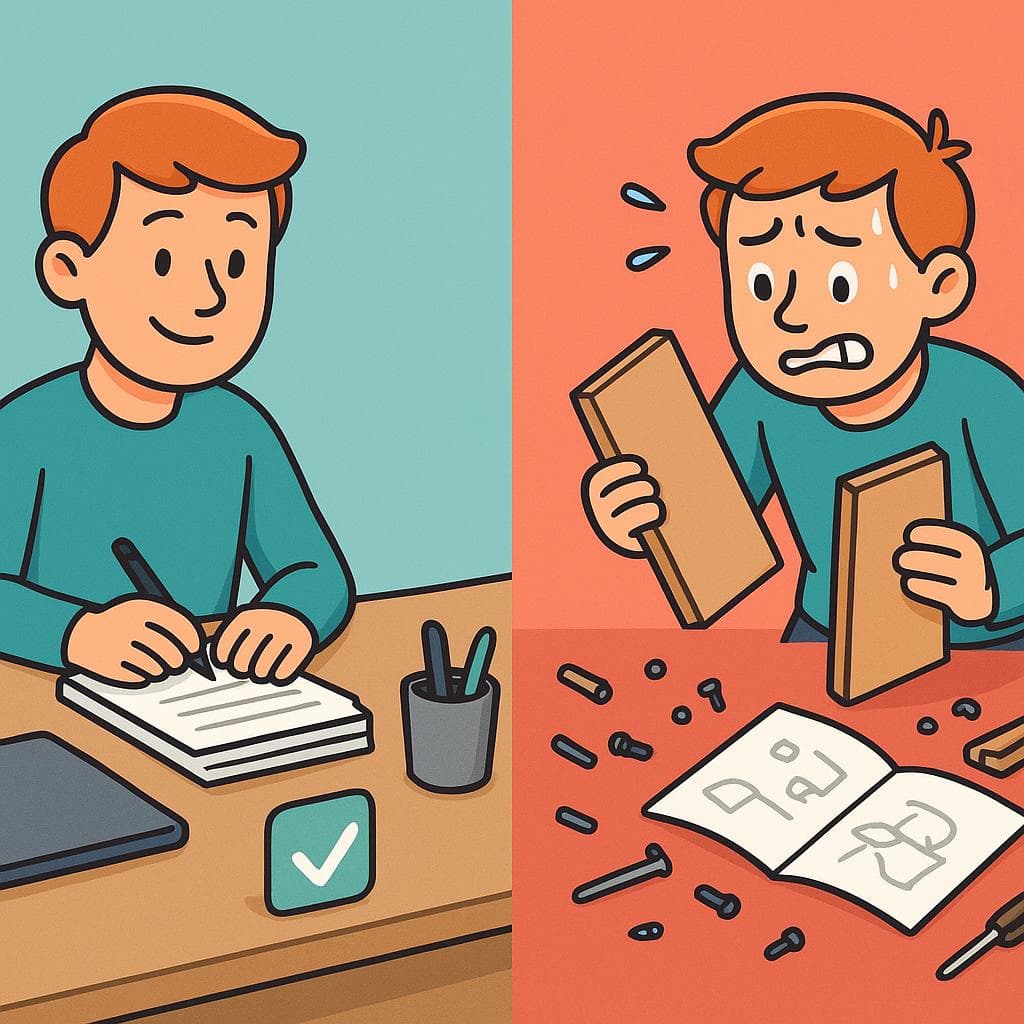
tratar
To treat (a person, topic, illness); to handle or address.
trah-TARtratar de
To try to do something (when followed by a verb); to be about something (when followed by a noun).
trah-TAR dehQuick Rule
Tratar = to treat/handle. Tratar de = to try/be about.
Think: The 'de' is for 'DOING'. If you're trying to DO something, you need 'tratar DE'.
- When followed by a noun, 'tratar de' means 'to be about'. Example: 'La película trata de un héroe.' (The movie is about a hero.)
Comparison Table
| Context | tratar | tratar de | Why? |
|---|---|---|---|
| Expressing an action | Trato el problema. | Trato de resolver el problema. | Tratar = to handle the problem. Tratar de + verb = to try to do the action of solving. |
| Discussing a book's topic | El libro trata el tema del amor. | El libro trata de amor. | Subtle difference: 'tratar' means it addresses/covers the topic. 'Tratar de' means its plot is about the topic. |
| Interaction | Lo trato como a un hermano. | Trato de entenderlo. | Tratar describes the manner of treatment. Tratar de describes the attempt to perform an action (understanding). |
When to Use "tratar / tratar de"
tratar
To treat (a person, topic, illness); to handle or address.
trah-TAR
To treat a person
Mis jefes me tratan con mucho respeto.
My bosses treat me with a lot of respect.
To address or cover a topic
El informe trata los problemas económicos del país.
The report addresses the country's economic problems.
To treat a medical condition
El doctor trata la gripe con descanso y líquidos.
The doctor treats the flu with rest and fluids.
To process or handle something
Nuestra empresa trata datos confidenciales.
Our company handles confidential data.
tratar de
To try to do something (when followed by a verb); to be about something (when followed by a noun).
trah-TAR deh
To try to do an action
Trato de llamar a mi mamá todos los días.
I try to call my mom every day.
To describe the subject of a book, film, etc.
¿De qué trata el libro?
What is the book about?
To make an effort
Ella siempre trata de ayudar a los demás.
She always tries to help others.
Contrast Examples
With "tratar":
En esta reunión, vamos a tratar el nuevo proyecto.
In this meeting, we are going to address the new project.
With "tratar de":
Voy a tratar de terminar el informe hoy.
I am going to try to finish the report today.
The Difference: 'Tratar' means to handle or discuss a topic. 'Tratar de' means to make an effort to complete an action.
With "tratar":
El documental trata el cambio climático con urgencia.
The documentary treats climate change with urgency.
With "tratar de":
El documental trata del cambio climático.
The documentary is about climate change.
The Difference: 'Tratar' describes HOW the documentary handles its subject. 'Tratar de' describes WHAT the subject is.
With "tratar":
No sé cómo tratar este asunto tan delicado.
I don't know how to handle such a delicate matter.
With "tratar de":
Trato de no preocuparme por el asunto.
I try not to worry about the matter.
The Difference: 'Tratar' is about managing the issue itself. 'Tratar de' is about your personal attempt or effort related to it.
Common Mistakes
Voy a tratar correr un maratón.
Voy a tratar de correr un maratón.
When 'tratar' means 'to try', it must be followed by 'de' and then the verb for the action you're trying.
¿Qué trata la película?
¿De qué trata la película?
To ask what a book or movie is 'about', the correct and most common phrase is '¿De qué trata?'
Trato de mis clientes con paciencia.
Trato a mis clientes con paciencia.
When 'tratar' means 'to treat' a person, you use the personal 'a', not 'de'.
Quick Practice
Quick Quiz: Tratar vs Tratar de
Question 1 of 3
Which sentence means 'I'm trying to eat healthier'?
Related Grammar
Want to understand the grammar behind this pair? Explore these lessons for a deep dive:
Key Words


Tags
Build the instinct, not just the rule
Rules help you get it right; context makes it automatic. Read 200+ illustrated and narrated Spanish stories to see confusing pairs chosen correctly — over and over — until you stop thinking about it.
Frequently Asked Questions
So, is 'El libro trata la guerra' wrong?
Not at all! It's just different. 'El libro trata de la guerra' means 'The book is about war' (its plot). 'El libro trata la guerra' means 'The book addresses/handles the topic of war' (perhaps analytically or thematically). The first is more common for fiction, the second for non-fiction.
Are there other verbs that need 'de' before another verb?
Yes, many! This is a common pattern in Spanish. For example, 'acabar de' (to have just), 'dejar de' (to stop), and 'olvidarse de' (to forget to) all follow this 'verb + de + infinitive' structure.