
Viejo vs Antiguo
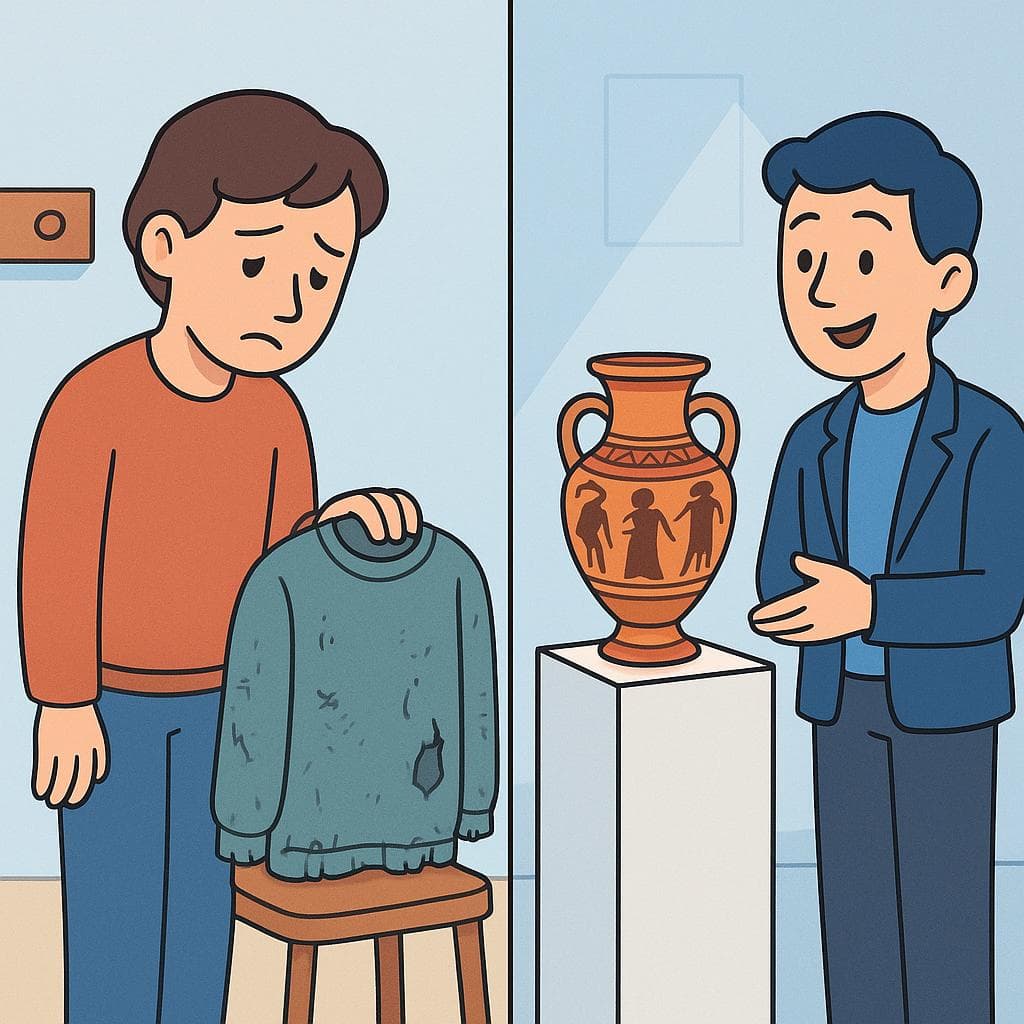
Viejo is for living things or worn-out objects. Antiguo is for historical things.
viejo
Old (age for people/animals), worn-out (for things), or long-time (for relationships)
BYEH-hoantiguo
Old (historical, ancient, of a former time)
ahn-TEE-gwoQuick Rule
Viejo is for living things or worn-out objects. Antiguo is for historical things.
Think: Viejo = 'Venerable' (for people). Antiguo = 'Antique' (for objects).
- When placed before a noun, 'viejo' can mean 'long-time', as in 'mi viejo amigo' (my old friend).
Comparison Table
| Context | viejo | antiguo | Why? |
|---|---|---|---|
| Describing a Car | un coche viejo | un coche antiguo | 'Viejo' implies it's just old and maybe beat-up. 'Antiguo' implies it's a classic or antique car with value. |
| Describing a Book | un libro viejo | un libro antiguo | 'Viejo' suggests the book is worn and in poor condition. 'Antiguo' suggests it's historically significant or a valuable first edition. |
| Describing a House | una casa vieja | una casa antigua | 'Vieja' focuses on its age, possibly suggesting it's run-down. 'Antigua' highlights its historical character and charm. |
| Describing a Custom | (less common) | una costumbre antigua | 'Antiguo' is the correct and respectful word for traditions, customs, and historical concepts. |
When to Use "viejo / antiguo"
viejo
Old (age for people/animals), worn-out (for things), or long-time (for relationships)
BYEH-ho
Age of people & animals
Mi abuelo es viejo, tiene 90 años.
My grandfather is old, he's 90.
Worn-out or used objects
Necesito comprar unos zapatos nuevos, estos están muy viejos.
I need to buy new shoes, these are very old.
Long-time relationship (before noun)
Me encontré con mi viejo amigo de la escuela.
I ran into my old friend from school.
antiguo
Old (historical, ancient, of a former time)
ahn-TEE-gwo
Historical or ancient objects
Encontraron una vasija antigua en la excavación.
They found an ancient pot in the excavation.
Historical periods & places
Me encanta estudiar la historia de la antigua Grecia.
I love studying the history of ancient Greece.
Former (job, house, etc. - before noun)
Este es mi antiguo jefe.
This is my former boss.
Contrast Examples
With "viejo":
Es un coche viejo.
It's an old car. (It's just old, maybe in bad shape.)
With "antiguo":
Es un coche antiguo.
It's an antique car. (It's a classic, valuable car.)
The Difference: 'Viejo' describes age, often with a negative sense of being worn out. 'Antiguo' describes age with a positive sense of historical value or classic status.
With "viejo":
Hablé con un amigo viejo.
I spoke with an old friend. (An elderly friend.)
With "antiguo":
Hablé con un viejo amigo.
I spoke with an old friend. (A long-time friend.)
The Difference: This is a special case. Placing 'viejo' *after* the noun describes age. Placing it *before* describes the length of the relationship. 'Antiguo' is not used for this.
With "viejo":
Es una ciudad vieja.
It's an old city. (Neutral, just stating its age.)
With "antiguo":
Es una ciudad antigua.
It's an ancient city. (Emphasizes its deep history and historical importance.)
The Difference: Both can be correct, but 'antigua' adds a layer of historical significance and grandeur that 'vieja' does not.
Common Mistakes
Mi abuelo es muy antiguo.
Mi abuelo es muy viejo. (or 'es mayor')
Using 'antiguo' for people is very rare and sounds like you're calling them a fossil. Use 'viejo' or the more polite 'mayor' for a person's age.
Me compré un teléfono antiguo.
Me compré un teléfono viejo.
Unless you bought a telephone from the 1920s, 'antiguo' is the wrong word. For a simple, outdated model, 'viejo' is correct.
Quick Practice
Quick Quiz: Viejo vs Antiguo
Question 1 of 3
Which word would you use to describe a Roman coin? 'una moneda ___'
Related Grammar
Want to understand the grammar behind this pair? Explore these lessons for a deep dive:
Key Words


Tags
Build the instinct, not just the rule
Rules help you get it right; context makes it automatic. Read 200+ illustrated and narrated Spanish stories to see confusing pairs chosen correctly — over and over — until you stop thinking about it.
Frequently Asked Questions
Can I ever use 'antiguo' for a person?
It's extremely rare and usually sounds odd or even insulting, like calling them a relic. It's much safer to use 'viejo' or the more polite term 'mayor' to describe an elderly person.
What about the word 'anciano'?
'Anciano' is another word for an old person, but it's more formal and respectful than 'viejo'. You might see it in literature or use it to show great respect for an elder. For everyday conversation, 'viejo' (for friends/family) or 'mayor' (more polite) is more common.
Does the meaning of 'antiguo' change if I put it before the noun?
Yes! Just like 'viejo', its meaning can change. 'Mi antiguo jefe' means 'my former boss', not 'my ancient boss'. So, before a noun, 'antiguo' often means 'former'.