ahorcar Preterite Conjugation
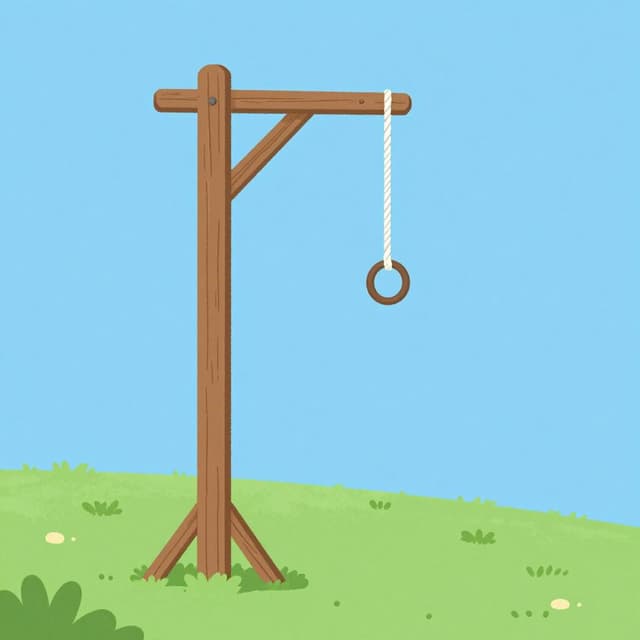
ahorcar — to hang
The preterite of ahorcar has a spelling change only in the 'yo' form: ahorqué, ahorcaste, ahorcó, ahorcamos, ahorcasteis, ahorcaron.
ahorcar Preterite Forms
When to Use the Preterite
Use the preterite for a completed act of hanging or strangling at a specific point in time in the past.
Notes on ahorcar in the Preterite
Only the 'yo' form is irregular (ahorqué) to preserve the 'k' sound. All other forms are regular.
Example Sentences
Ahorqué el saco de boxeo en el garaje.
I hung the punching bag in the garage.
yo
El verdugo ahorcó al prisionero.
The executioner hanged the prisoner.
él/ella/usted
¿Por qué me ahorcaste tan fuerte?
Why did you strangle me so hard?
tú
Common Mistakes
Mistake: ahorcé
Correct: ahorqué
Why: Without the 'u', the 'c' before 'e' sounds like an 's', changing the pronunciation entirely.
Master Spanish verbs in context
Memorizing tables only gets you so far. Read 200+ illustrated and narrated Spanish stories to see verbs like 'ahorcar' used naturally — in the tenses you're learning.
Related Tenses
Present
yo: ahorco
The present tense of ahorcar is completely regular: ahorco, ahorcas, ahorca, ahorcamos, ahorcáis, ahorcan.
Imperfect
yo: ahorcaba
The imperfect of ahorcar is regular: ahorcaba, ahorcabas, ahorcaba, ahorcábamos, ahorcabais, ahorcaban.
Future
yo: ahorcaré
The future tense of ahorcar is regular: ahorcaré, ahorcarás, ahorcará, ahorcaremos, ahorcaréis, ahorcarán.
Conditional
yo: ahorcaría
The conditional of ahorcar is regular: ahorcaría, ahorcarías, ahorcaría, ahorcaríamos, ahorcaríais, ahorcarían.
Present Subjunctive
yo: ahorque
The present subjunctive of ahorcar features a spelling change (c to qu) in all persons: ahorque, ahorques, ahorque, ahorquemos, ahorquéis, ahorquen.
Imperfect Subjunctive
yo: ahorcara
The imperfect subjunctive of ahorcar is regular based on the third-person plural preterite: ahorcara, ahorcaras, ahorcara, ahorcáramos, ahorcarais, ahorcaran.
Affirmative Imperative
yo: ahorca
The imperative of ahorcar uses the regular 'tú' form (ahorca) but switches to 'qu' for others: ahorque, ahorquemos, ahorcad, ahorquen.
Negative Imperative
yo: no ahorques
The negative imperative of ahorcar always uses the 'qu' spelling change: no ahorques, no ahorque, no ahorquemos, no ahorquéis, no ahorquen.