apagar Affirmative Imperative Conjugation
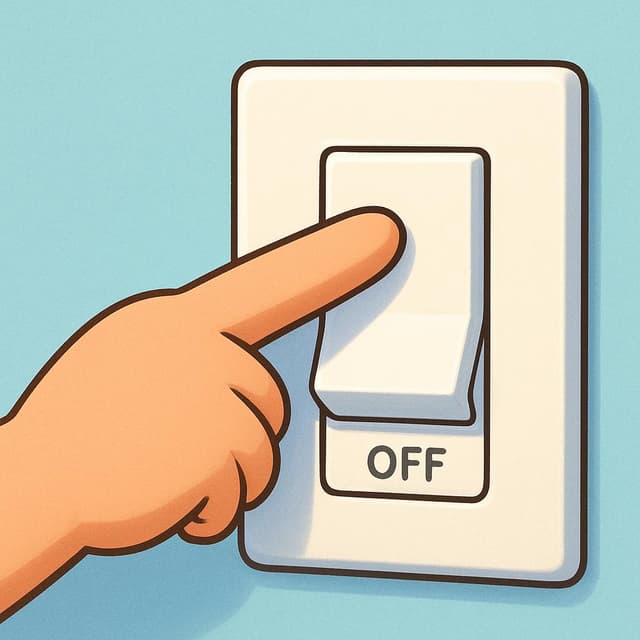
apagar — turn off
Direct commands: apaga (tú), apague (usted), apagad (vosotros), apaguen (ustedes).
apagar Affirmative Imperative Forms
When to Use the Affirmative Imperative
Use this to tell someone directly to turn something off or extinguish a fire.
Notes on apagar in the Affirmative Imperative
The formal commands (usted/ustedes) and the 'nosotros' form require the 'gu' spelling change.
Example Sentences
¡Apaga la luz!
Turn off the light!
tú
Apague el motor, por favor.
Turn off the engine, please.
usted
Apaguemos las velas ahora.
Let's blow out the candles now.
nosotros
Common Mistakes
Mistake: Using 'apaga' for a formal command to 'usted'.
Correct: apague
Why: Apaga is the informal (tú) command; formal commands must use the subjunctive-style ending.
Master Spanish verbs in context
Memorizing tables only gets you so far. Read 200+ illustrated and narrated Spanish stories to see verbs like 'apagar' used naturally — in the tenses you're learning.
Related Tenses
Present
yo: apago
The present tense of apagar is regular: apago, apagas, apaga, apagamos, apagáis, apagan.
Preterite
yo: apagué
The preterite of apagar requires a spelling change in the 'yo' form (apagué) to keep the hard 'g' sound.
Imperfect
yo: apagaba
The imperfect of apagar is regular: apagaba, apagabas, apagaba, apagábamos, apagabais, apagaban.
Future
yo: apagaré
The future tense is regular: add endings to the infinitive (apagaré, apagarás, apagará...).
Conditional
yo: apagaría
The conditional is regular: add -ía, -ías, -ía... to the infinitive apagar.
Present Subjunctive
yo: apague
The present subjunctive uses a 'gu' spelling in all forms: apague, apagues, apague...
Imperfect Subjunctive
yo: apagara
Formed from the 'ellos' preterite: apagara, apagaras, apagara...
Negative Imperative
yo: no apagues
Negative commands always use the present subjunctive forms: no apagues, no apague, no apaguéis, no apaguen.