arrancar Preterite Conjugation
arrancar — to start
The preterite of arrancar has a spelling change in the 'yo' form (arranqué), but is otherwise regular.
arrancar Preterite Forms
When to Use the Preterite
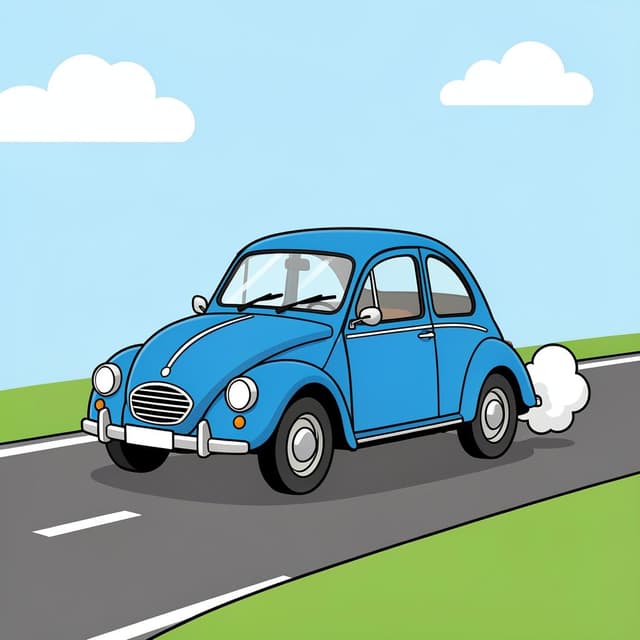
Use the preterite for completed actions in the past, such as the exact moment a car started or when someone suddenly pulled something out.
Notes on arrancar in the Preterite
Only the 'yo' form changes 'c' to 'qu' (arranqué) to maintain the hard 'k' sound. All other forms (arrancaste, arrancó, etc.) use the 'c'.
Example Sentences
Arranqué el coche y me fui.
I started the car and left.
yo
El corredor arrancó con mucha fuerza.
The runner took off with a lot of strength.
él/ella/usted
Arrancamos todas las malas hierbas ayer.
We pulled out all the weeds yesterday.
nosotros
Common Mistakes
Mistake: arrancé
Correct: arranqué
Why: In Spanish, 'ce' sounds like 'se'. To keep the 'k' sound of 'arrancar', you must use 'qu' before the 'é'.
Master Spanish verbs in context
Memorizing tables only gets you so far. Read 200+ illustrated and narrated Spanish stories to see verbs like 'arrancar' used naturally — in the tenses you're learning.
Related Tenses
Present
yo: arranco
The present tense of arrancar is completely regular: arranco, arrancas, arranca, arrancamos, arrancáis, arrancan.
Imperfect
yo: arrancaba
The imperfect of arrancar is regular: arrancaba, arrancabas, arrancaba, arrancábamos, arrancabais, arrancaban.
Future
yo: arrancaré
The future tense of arrancar is regular: arrancaré, arrancarás, arrancará, arrancaremos, arrancaréis, arrancarán.
Conditional
yo: arrancaría
The conditional of arrancar is regular: arrancaría, arrancarías, arrancaría, arrancaríamos, arrancaríais, arrancarían.
Present Subjunctive
yo: arranque
The present subjunctive of arrancar undergoes a spelling change: arranque, arranques, arranque, arranquemos, arranquéis, arranquen.
Imperfect Subjunctive
yo: arrancara
The imperfect subjunctive of arrancar is regular (arrancara) and uses the -ra or -se endings.
Affirmative Imperative
yo: arranca
The imperative of arrancar gives direct commands: arranca (tú), arranque (usted), arranquen (ustedes).
Negative Imperative
yo: no arranques
The negative imperative of arrancar uses the 'qu' spelling change: no arranques, no arranque, no arranquemos, no arranquéis, no arranquen.