dejar Present Conjugation
dejar — to leave
Dejar is regular in the present tense: dejo, dejas, deja, dejamos, dejáis, dejan.
dejar Present Forms
When to Use the Present
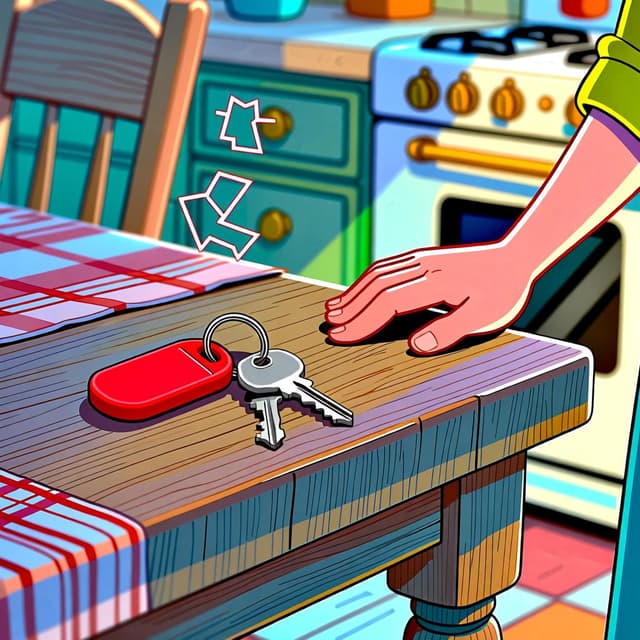
Use the present tense to talk about things you leave behind, things you allow someone to do, or habits like leaving your keys on the table.
Notes on dejar in the Present
Dejar is a completely regular -ar verb in the present tense. No stem changes or spelling shifts occur.
Example Sentences
Siempre dejo las llaves en la entrada.
I always leave the keys in the entrance.
yo
Mi madre no me deja salir tarde.
My mother doesn't let me go out late.
él/ella/usted
¿Nos dejas entrar al cine?
Will you let us enter the cinema?
tú
Common Mistakes
Mistake: Using 'salir' when you mean to leave an object behind.
Correct: Use 'dejar' for objects.
Why: Learners often confuse 'salir' (to exit) with 'dejar' (to leave something/someone).
Master Spanish verbs in context
Memorizing tables only gets you so far. Read 200+ illustrated and narrated Spanish stories to see verbs like 'dejar' used naturally — in the tenses you're learning.
Related Tenses
Preterite
yo: dejé
The preterite of dejar follows the regular -ar pattern: dejé, dejaste, dejó, dejamos, dejasteis, dejaron.
Imperfect
yo: dejaba
Dejar is regular in the imperfect: dejaba, dejabas, dejaba, dejábamos, dejabais, dejaban.
Future
yo: dejaré
To form the future of dejar, add endings to the infinitive: dejaré, dejarás, dejará, dejaremos, dejaréis, dejarán.
Conditional
yo: dejaría
The conditional of dejar uses the infinitive plus -ía endings: dejaría, dejarías, dejaría, dejaríamos, dejaríais, dejarían.
Present Subjunctive
yo: deje
The present subjunctive of dejar uses the 'e' vowel: deje, dejes, deje, dejemos, dejéis, dejen.
Imperfect Subjunctive
yo: dejara
The imperfect subjunctive of dejar is formed from the 'dejaron' stem: dejara, dejaras, dejara, dejáramos, dejarais, dejaran.
Affirmative Imperative
yo: deja
The imperative of dejar uses the forms: deja, dejad, deje, dejemos, dejen.
Negative Imperative
yo: no dejes
The negative imperative of dejar uses the subjunctive: no dejes, no dejéis, no deje, no dejemos, no dejen.