descartar Present Subjunctive Conjugation
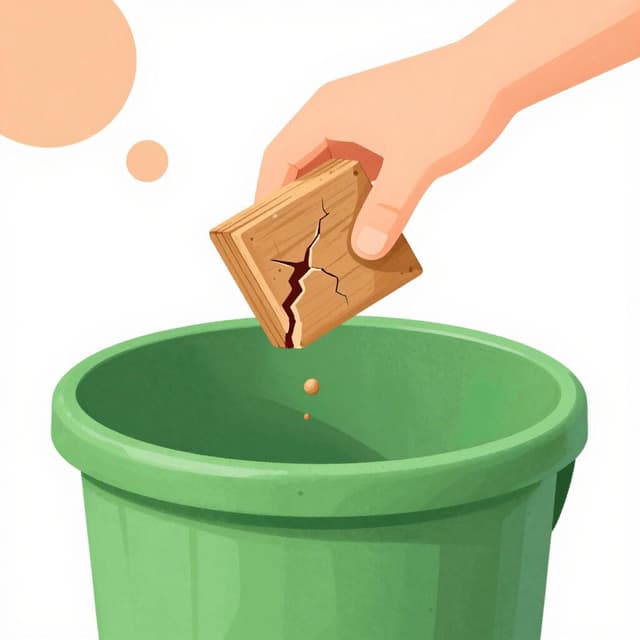
descartar — to discard
Use present subjunctive forms like 'descarte' for wishes, doubts, and emotions.
descartar Present Subjunctive Forms
When to Use the Present Subjunctive
The present subjunctive is your go-to for expressing wishes, doubts, emotions, or uncertainty about something happening now or in the future. For 'descartar,' you'd use it like: 'Espero que no descartes mis consejos' (I hope you don't discard my advice) or 'Dudo que descarten el proyecto' (I doubt they will discard the project).
Notes on descartar in the Present Subjunctive
'Descartar' is regular in the present tense, and this regularity carries over to the present subjunctive. The stem 'descart-' remains the same, and the endings are standard for -ar verbs in the subjunctive.
Example Sentences
Espero que no descartes esa idea todavía.
I hope you don't discard that idea yet.
tú
Quiero que usted descarte el correo viejo.
I want you to discard the old mail.
Es importante que no descartemos ninguna opción.
It's important that we don't discard any options.
nosotros
Dudo que ellos descarten la posibilidad de ganar.
I doubt they will discard the possibility of winning.
ellos/ellas/ustedes
Common Mistakes
Mistake: Using the present indicative instead of the present subjunctive after expressions of doubt or desire, e.g., 'Dudo que descartan el plan'.
Correct: Use the subjunctive: 'Dudo que descarten el plan'.
Why: Expressions of doubt, desire, emotion, and uncertainty trigger the subjunctive mood in Spanish.
Mistake: Incorrectly applying the '-ar' subjunctive endings, e.g., writing 'descartemos' as 'descatemos'.
Correct: The stem 'descart-' remains intact: 'descartemos'.
Why: The stem vowel is preserved in subjunctive conjugations for regular -ar verbs.
Master Spanish verbs in context
Memorizing tables only gets you so far. Read 200+ illustrated and narrated Spanish stories to see verbs like 'descartar' used naturally — in the tenses you're learning.
Related Tenses
Present
yo: descarto
Use present forms like 'descarto' (I discard) for current or habitual actions.
Preterite
yo: descarté
Use preterite forms like 'descarté' (I discarded) for completed actions in the past.
Imperfect
yo: descartaba
Use imperfect forms like 'descartaba' for ongoing or habitual past actions.
Future
yo: descartaré
Use future forms like 'descartaré' (I will discard) for actions that will happen.
Conditional
yo: descartaría
Use conditional forms like 'descartaría' (I would discard) for hypotheticals or polite requests.
Imperfect Subjunctive
yo: descartara
Use imperfect subjunctive forms like 'descartara' or 'descartase' for past hypotheticals or wishes.
Affirmative Imperative
yo: descarta
Use imperative forms like 'descarta' (tú) and 'descarte' (usted) for direct commands.
Negative Imperative
yo: no descartes
Negative commands use 'no' plus the present subjunctive, like 'no descartes' (tú).