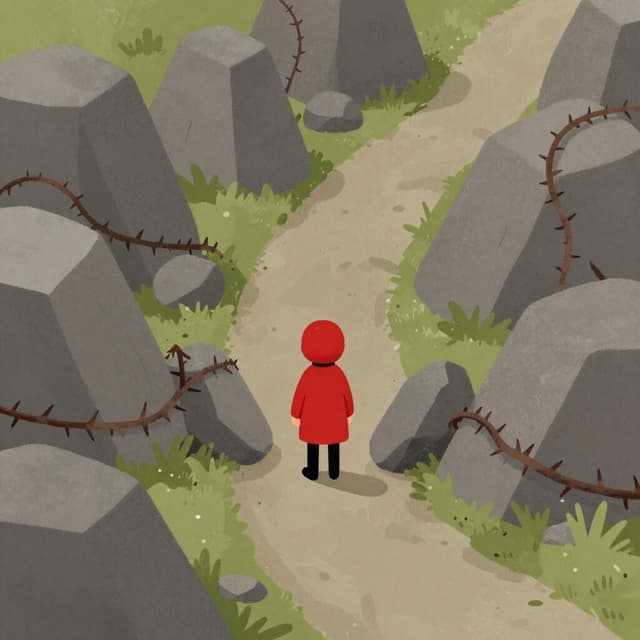
dificultar Present Subjunctive Conjugation
dificultar — to make difficult
The present subjunctive 'dificulte', 'dificultemos', etc., follows expressions of doubt, desire, emotion, and uncertainty.
dificultar Present Subjunctive Forms
When to Use the Present Subjunctive
Use the present subjunctive when the main clause expresses doubt, desire, emotion, possibility, or uncertainty, and you're talking about a present or future action. For 'dificultar,' it's like 'I doubt you *will make* it difficult' or 'It's possible they *make* it difficult.'
Notes on dificultar in the Present Subjunctive
Dificultar is regular in the present subjunctive. The forms are derived from the 'yo' form of the present indicative ('dificulto').
Example Sentences
Dudo que él dificulte la entrega del proyecto.
I doubt he will make the project delivery difficult.
él/ella/usted
Espero que no nos dificultes el acceso.
I hope you don't make access difficult for us.
tú
Queremos que ellos no dificulten la tarea.
We want them not to make the task difficult.
ellos/ellas/ustedes
Es posible que esto dificulte nuestra decisión.
It's possible this will make our decision difficult.
él/ella/usted
Common Mistakes
Mistake: Using the indicative ('dificulta') instead of the subjunctive ('dificulte') after expressions of doubt or desire.
Correct: After 'dudo que', 'espero que', 'quiero que', etc., you need the subjunctive: 'Dudo que dificulte'.
Why: These trigger the subjunctive mood because they express non-certainty or desire.
Mistake: Forgetting the 's' in the vosotros form 'dificultéis'.
Correct: The correct vosotros present subjunctive form is 'dificultéis'.
Why: This is a common error for -er/-ir verbs in the vosotros subjunctive.
Master Spanish verbs in context
Memorizing tables only gets you so far. Read 200+ illustrated and narrated Spanish stories to see verbs like 'dificultar' used naturally — in the tenses you're learning.
Related Tenses
Present
yo: dificulto
Dificultar is regular in the present tense: dificulto, dificultas, dificulta, dificultamos, dificultáis, dificultan.
Preterite
yo: dificulté
Dificultar is regular in the preterite: dificulté, dificultaste, dificultó, dificultamos, dificultasteis, dificultaron.
Imperfect
yo: dificultaba
The imperfect of dificultar is regular: dificultaba, dificultabas, dificultaba, dificultábamos, dificultabais, dificultaban.
Future
yo: dificultaré
The future tense of dificultar is regular: dificultaré, dificultarás, dificultará, dificultaremos, dificultaréis, dificultarán.
Conditional
yo: dificultaría
The conditional of dificultar is regular: dificultaría, dificultarías, dificultaría, dificultaríamos, dificultaríais, dificultarían.
Imperfect Subjunctive
yo: dificultara
The imperfect subjunctive forms like 'dificultara' or 'dificultase' are used for past hypotheticals, wishes, or polite requests.
Affirmative Imperative
yo: dificulta
Use 'dificulta' (tú), 'dificulte' (usted), 'dificultemos' (nosotros), 'dificultad' (vosotros), 'dificulten' (ustedes) for direct commands.
Negative Imperative
yo: no dificultes
Use 'no dificultes' (tú), 'no dificulte' (usted), 'no dificultemos' (nosotros), 'no dificultéis' (vosotros), 'no dificulten' (ustedes), all based on the present subjunctive.