enfriar Present Subjunctive Conjugation
enfriar — to cool
The present subjunctive of 'enfriar' (like 'enfríe' or 'enfríen') is used after expressions of doubt, desire, or emotion.
enfriar Present Subjunctive Forms
When to Use the Present Subjunctive
You'll use the present subjunctive of 'enfriar' after phrases that express wishes, doubts, emotions, or uncertainty. For instance, 'Espero que el clima se enfríe pronto' (I hope the weather cools down soon) or 'Dudo que se enfríe a tiempo' (I doubt it will cool down in time).
Notes on enfriar in the Present Subjunctive
The verb 'enfriar' is regular in the present subjunctive. It follows the standard pattern for -ar verbs, where the stem vowel changes in the present indicative but not in the subjunctive, except for the nosotros form which is the same as the indicative.
Example Sentences
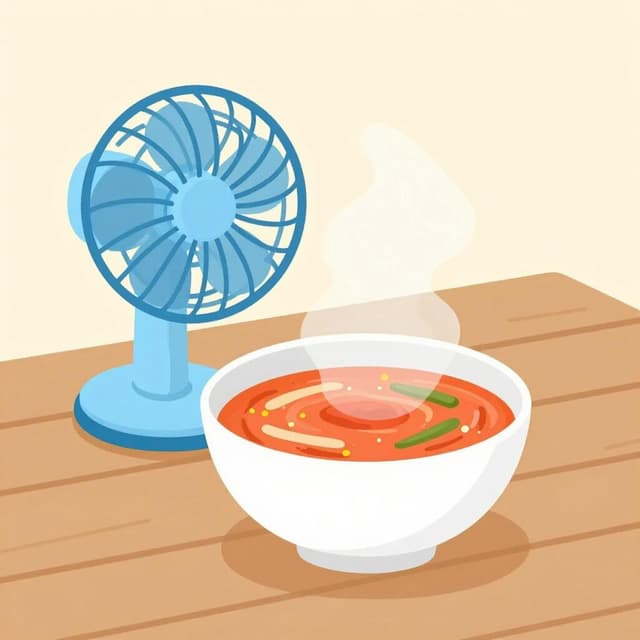
Espero que la sopa se enfríe rápido.
I hope the soup cools down quickly.
él/ella/usted
No creo que el ambiente se enfríe hoy.
I don't think the atmosphere will cool down today.
él/ella/usted
Queremos que ustedes se enfríen un poco.
We want you all to cool down a bit.
Ojalá enfriemos la casa antes de que lleguen.
Hopefully, we cool the house down before they arrive.
nosotros
Common Mistakes
Mistake: Using the indicative instead of the subjunctive after expressions of doubt or desire.
Correct: After verbs like 'esperar', 'dudar', 'querer', use the subjunctive: 'Espero que se enfríe', not 'Espero que se enfría'.
Why: These trigger phrases require the subjunctive mood to express uncertainty or desire.
Mistake: Forgetting the accent on 'enfríe' (yo/él/ella/usted form).
Correct: The accent on the 'i' is necessary: 'enfríe'.
Why: The accent indicates the correct pronunciation and differentiates it from other forms.
Master Spanish verbs in context
Memorizing tables only gets you so far. Read 200+ illustrated and narrated Spanish stories to see verbs like 'enfriar' used naturally — in the tenses you're learning.
Related Tenses
Present
yo: enfrío
The present tense of 'enfriar' ('enfrío', 'enfrías', 'enfría') describes actions happening now or habitual cooling.
Preterite
yo: enfrié
The preterite of 'enfriar' is regular: 'enfrié', 'enfriaste', 'enfrió', 'enfriamos', 'enfriasteis', 'enfriaron'.
Imperfect
yo: enfriaba
The imperfect of 'enfriar' ('enfriaba', 'enfriabas', 'enfriaba') describes ongoing or habitual cooling in the past.
Future
yo: enfriaré
The future tense of 'enfriar' ('enfriaré', 'enfriarás', 'enfriará') indicates actions that will happen.
Conditional
yo: enfriaría
The conditional of 'enfriar' ('enfriaría', 'enfriarías', 'enfriaría') is used for hypotheticals ('would cool') and polite requests.
Imperfect Subjunctive
yo: enfriara
Use the imperfect subjunctive of 'enfriar' (like 'enfriara' or 'enfriase') for past hypotheticals or wishes.
Affirmative Imperative
yo: enfría
Use 'enfriar' imperative for direct commands like 'enfría' (you, informal) or 'enfríe' (you, formal).
Negative Imperative
yo: no enfríes
Negative commands with 'enfriar' use 'no' plus the present subjunctive, like 'no enfríes' (you, informal).