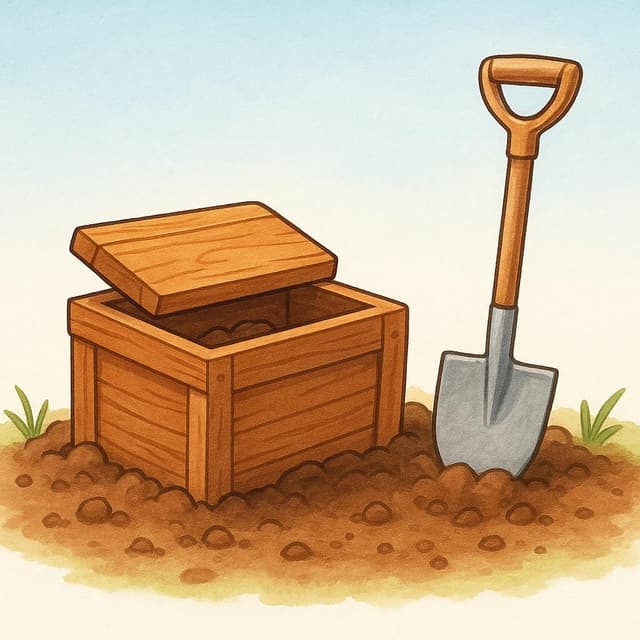
enterrar Negative Imperative Conjugation
enterrar — to bury
Use 'no' + present subjunctive: no entierres, no entierre, no enterremos.
enterrar Negative Imperative Forms
When to Use the Negative Imperative
Use this to tell someone NOT to bury something, such as 'Don't bury the trash'.
Notes on enterrar in the Negative Imperative
Like the present subjunctive, it uses the e > ie stem change except for nosotros and vosotros.
Example Sentences
No entierres la basura en el bosque.
Don't bury the trash in the forest.
tú
No entierren sus sentimientos.
Don't bury your feelings.
No enterremos el problema, hablemos.
Let's not bury the problem, let's talk.
nosotros
Common Mistakes
Mistake: No enterres.
Correct: No entierres.
Why: The negative 'tú' command must use the stem-changed subjunctive form.
Master Spanish verbs in context
Memorizing tables only gets you so far. Read 200+ illustrated and narrated Spanish stories to see verbs like 'enterrar' used naturally — in the tenses you're learning.
Related Tenses
Present
yo: entierro
Enterrar is a stem-changing verb where the 'e' becomes 'ie' in all forms except nosotros and vosotros.
Preterite
yo: enterré
The preterite of enterrar is regular in its endings, but note the spelling change in the 'yo' form: enterré.
Imperfect
yo: enterraba
The imperfect of enterrar is regular: enterraba, enterrabas, enterraba, enterrábamos, enterrabais, enterraban.
Future
yo: enterraré
The future tense of enterrar is completely regular: enterraré, enterrarás, enterrará.
Conditional
yo: enterraría
The conditional uses the infinitive as a base: enterraría, enterrarías, enterraría.
Present Subjunctive
yo: entierre
The present subjunctive follows the e > ie stem change: entierre, entierres, entierre, enterremos, enterréis, entierren.
Imperfect Subjunctive
yo: enterrara
Formed from the third-person plural preterite: enterrara, enterraras, enterrara.
Affirmative Imperative
yo: entierra
Give direct commands to bury something: entierra (tú), entierre (usted), enterremos (nosotros).