escurrir Present Conjugation
escurrir — to drain
The present tense (escurro, escurres, escurre, escurrimos, escurrís, escurren) describes current or habitual draining actions.
escurrir Present Forms
When to Use the Present
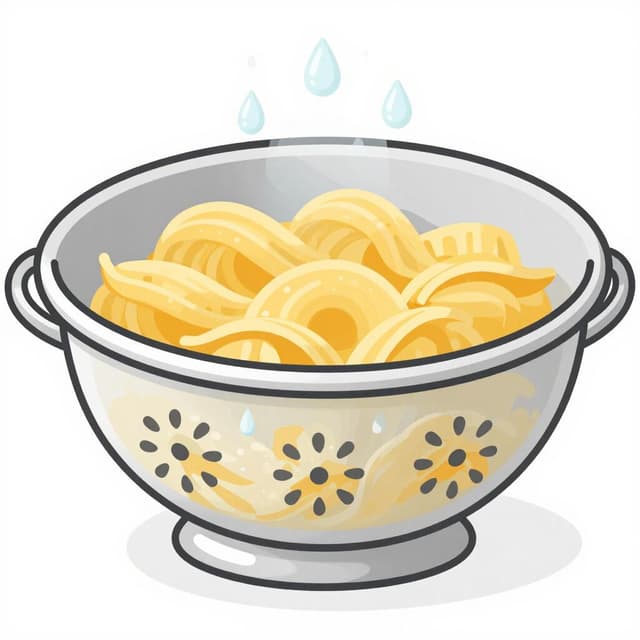
Use the present tense for actions happening right now, like 'I am draining the pasta', or for habitual actions, like 'She drains the dishes every night'.
Notes on escurrir in the Present
Escurrir is a regular -ir verb in the present tense. All conjugations follow the standard pattern.
Example Sentences
Yo escurro la fruta en un colador.
I drain the fruit in a colander.
yo
¿Tú escurres el aceite después de freír?
Do you drain the oil after frying?
tú
Ella escurre los champiñones antes de cocinarlos.
She drains the mushrooms before cooking them.
él/ella/usted
Nosotros escurrimos la ropa mojada.
We drain the wet clothes.
nosotros
Ellos escurren las aceitunas para la tapa.
They drain the olives for the tapa.
ellos/ellas/ustedes
Common Mistakes
Mistake: Using 'escurrir' instead of conjugating.
Correct: You must conjugate: 'Yo escurro', not 'Yo escurrir'.
Why: The infinitive form 'escurrir' is the base verb and isn't used for present actions.
Mistake: Incorrect 'vosotros' form.
Correct: It's 'escurrís', not 'escurres'.
Why: The vosotros ending for regular -ir verbs in the present is -ís.
Master Spanish verbs in context
Memorizing tables only gets you so far. Read 200+ illustrated and narrated Spanish stories to see verbs like 'escurrir' used naturally — in the tenses you're learning.
Related Tenses
Preterite
yo: escurrí
The preterite of escurrir is regular: escurrí, escurriste, escurrió, escurrimos, escurristeis, escurrieron.
Imperfect
yo: escurría
The imperfect of escurrir (escurría, escurrías, escurría, escurríamos, escurríais, escurrían) describes ongoing or habitual past draining.
Future
yo: escurriré
The future tense (escurriré, escurrirás, escurrirá, escurriremos, escurriréis, escurrirán) predicts future draining actions.
Conditional
yo: escurriría
The conditional of escurrir (escurriría, escurrirías, escurriría, escurriríamos, escurriríais, escurrirían) talks about 'would' scenarios.
Present Subjunctive
yo: escurra
The present subjunctive (escurra, escurras, escurramos, escurran, escurráis) is used for wishes, doubts, and uncertainty.
Imperfect Subjunctive
yo: escurriera
The imperfect subjunctive (escurriera/escurriera/escurriéramos/escurrierais/escurrieran) talks about past hypotheticals or wishes.
Affirmative Imperative
yo: escurre
Use escurre (tú), escurra (usted), escurramos (nosotros), escurran (ustedes), escurrid (vosotros) for direct commands.
Negative Imperative
yo: no escurras
Use no escurras (tú), no escurra (usted), no escurramos (nosotros), no escurran (ustedes), no escurráis (vosotros) for negative commands.