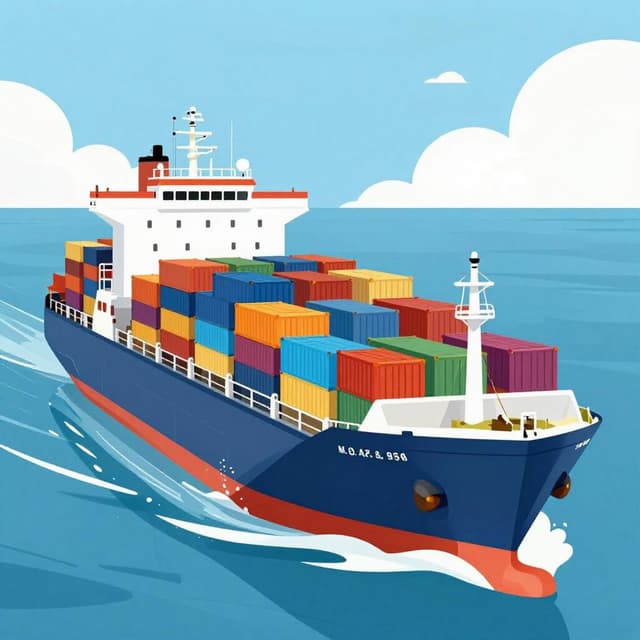
exportar Affirmative Imperative Conjugation
exportar — to export
Use 'exporta' (tú) and 'exporten' (ustedes) for direct commands with exportar.
exportar Affirmative Imperative Forms
When to Use the Affirmative Imperative
The imperative is for giving direct commands. You'll use it to tell someone to export something, like telling a colleague to export a report or telling a country to export goods.
Notes on exportar in the Affirmative Imperative
Exportar is regular in the affirmative imperative. The 'tú' form drops the final '-r' from the infinitive and uses the 'a' ending.
Example Sentences
¡Exporta los datos a la nueva base de datos!
Export the data to the new database!
tú
Exportemos más productos a Europa este año.
Let's export more products to Europe this year.
nosotros
Por favor, exporten el archivo en formato PDF.
Please, export the file in PDF format.
ustedes
¡Exportad las mercancías antes de que cierren la aduana!
Export the merchandise before they close customs!
vosotros
Common Mistakes
Mistake: Using the present subjunctive instead of the affirmative imperative for 'tú'.
Correct: For 'tú', use 'exporta', not 'exportes'.
Why: The 'tú' imperative form for regular -ar verbs is formed by taking the infinitive, dropping the -ar, and adding -a.
Mistake: Forgetting the 'no' with negative commands.
Correct: Always use 'no' before the verb for negative commands (e.g., 'No exportes').
Why: Negative commands in Spanish are formed using the present subjunctive, but they still require 'no' to indicate negation.
Master Spanish verbs in context
Memorizing tables only gets you so far. Read 200+ illustrated and narrated Spanish stories to see verbs like 'exportar' used naturally — in the tenses you're learning.
Related Tenses
Present
yo: exporto
The present tense of exportar is regular: exporto, exportas, exporta, exportamos, exportáis, exportan.
Preterite
yo: exporté
The preterite of exportar is regular: exporté, exportaste, exportó, exportamos, exportasteis, exportaron.
Imperfect
yo: exportaba
The imperfect of exportar is regular: exportaba, exportabas, exportaba, exportábamos, exportabais, exportaban.
Future
yo: exportaré
The future tense of exportar is regular: exportaré, exportarás, exportará, exportaremos, exportaréis, exportarán.
Conditional
yo: exportaría
The conditional of exportar is regular: exportaría, exportarías, exportaría, exportaríamos, exportaríais, exportarían.
Present Subjunctive
yo: exporte
Use 'exporte' (yo/él/ella/Ud.) and 'exporten' (ellos/ellas/Uds.) after expressions of doubt, desire, or emotion.
Imperfect Subjunctive
yo: exportara
Use 'exportara' or 'exportase' for past hypothetical or uncertain actions related to exporting.
Negative Imperative
yo: no exportes
Use 'no exportes' (tú) and 'no exporten' (ustedes) for negative commands with exportar.