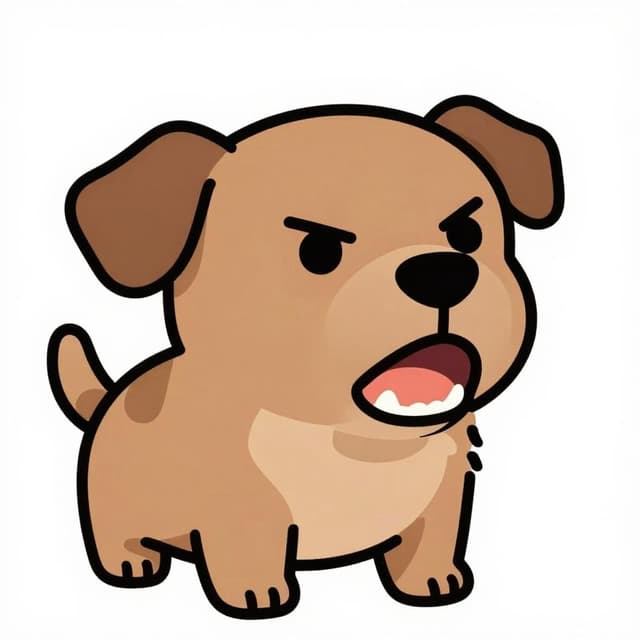
gruñir Present Conjugation
gruñir — to growl
Gruñir is regular in the present tense: gruño, gruñes, gruñe, gruñimos, gruñís, gruñen.
gruñir Present Forms
When to Use the Present
Use this for current habits (like a dog that always growls at mailmen) or things happening right now.
Notes on gruñir in the Present
Gruñir is regular in the present indicative. The 'ñ' doesn't cause any spelling changes here.
Example Sentences
Mi abuelo siempre gruñe por las mañanas.
My grandfather always grumbles in the mornings.
él/ella/usted
¿Por qué gruñes tanto?
Why are you grumbling so much?
tú
Yo gruño cuando tengo hambre.
I growl/grumble when I am hungry.
yo
Common Mistakes
Mistake: Forgetting the tilde on the 'ñ'.
Correct: Always write 'gruñir' with an 'ñ'.
Why: Without the 'ñ', it would be 'grunir', which is not a word.
Master Spanish verbs in context
Memorizing tables only gets you so far. Read 200+ illustrated and narrated Spanish stories to see verbs like 'gruñir' used naturally — in the tenses you're learning.
Related Tenses
Preterite
yo: gruñí
Gruñir has a spelling change in the third person: gruñó and gruñeron (dropping the 'i').
Imperfect
yo: gruñía
The imperfect of gruñir is regular: gruñía, gruñías, gruñía, gruñíamos, gruñíais, gruñían.
Future
yo: gruñiré
The future of gruñir is regular: add the endings -é, -ás, -á, -emos, -éis, -án to the infinitive.
Conditional
yo: gruñiría
The conditional of gruñir is regular: add -ía, -ías, -ía, -íamos, -íais, -ían to the infinitive.
Present Subjunctive
yo: gruña
Gruñir uses the present subjunctive stem 'gruñ-' with -ir endings: gruña, gruñas, gruña, gruñamos, gruñáis, gruñan.
Imperfect Subjunctive
yo: gruñera
The imperfect subjunctive of gruñir drops the 'ie' before the ending: gruñera, gruñeras, gruñera, gruñéramos, gruñerais, gruñeran.
Affirmative Imperative
yo: gruñe
The imperative forms for gruñir are: gruñe (tú), gruña (usted), gruñamos (nosotros), gruñid (vosotros), gruñan (ustedes).
Negative Imperative
yo: no gruñas
The negative imperative uses the present subjunctive: no gruñas, no gruña, no gruñamos, no gruñáis, no gruñan.