hervir Imperfect Conjugation
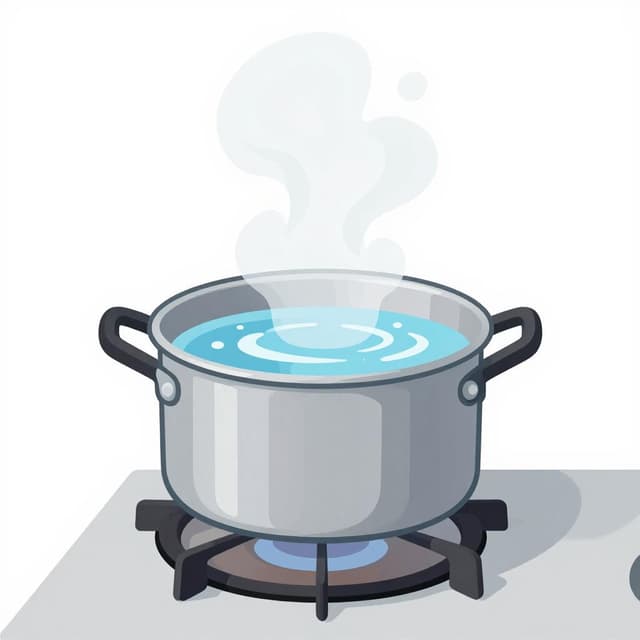
hervir — to boil
Hervir is completely regular in the imperfect: hervía, hervías, hervía, hervíamos, hervíais, hervían.
hervir Imperfect Forms
When to Use the Imperfect
Use the imperfect to describe the state of something boiling in the past or a repeated cooking habit.
Notes on hervir in the Imperfect
There are no stem changes in the imperfect for -ir verbs. It follows the standard -ía endings.
Example Sentences
La sopa hervía en la cocina mientras yo leía.
The soup was boiling on the stove while I was reading.
él/ella/usted
Antes siempre hervíamos el agua del grifo.
Before, we always used to boil the tap water.
nosotros
Common Mistakes
Mistake: hiervía
Correct: hervía
Why: Learners often try to carry the present tense 'ie' stem change into the imperfect, but the imperfect is regular.
Master Spanish verbs in context
Memorizing tables only gets you so far. Read 200+ illustrated and narrated Spanish stories to see verbs like 'hervir' used naturally — in the tenses you're learning.
Related Tenses
Present
yo: hiervo
Hervir is an e > ie stem-changer in the present (hiervo, hierves, hierve, hierven), except for nosotros and vosotros.
Preterite
yo: herví
Hervir has a 'slipper' stem change (e > i) only in the third-person forms: hirvió and hirvieron.
Future
yo: herviré
Hervir is regular in the future; just add the endings to the infinitive: herviré, hervirás, etc.
Conditional
yo: herviría
The conditional uses the full infinitive 'hervir' plus the endings -ía, -ías, -ía, etc.
Present Subjunctive
yo: hierva
Hervir changes e > ie in most forms, but importantly shifts e > i in the nosotros and vosotros forms.
Imperfect Subjunctive
yo: hirviera
The imperfect subjunctive uses the 'hirvier-' stem for all forms (hirviera, hirvieras, etc.).
Affirmative Imperative
yo: hierve
Use 'hierve' for tú and 'hierva' for usted to give direct cooking instructions.
Negative Imperative
yo: no hiervas
All negative commands for hervir are identical to the present subjunctive forms preceded by 'no'.