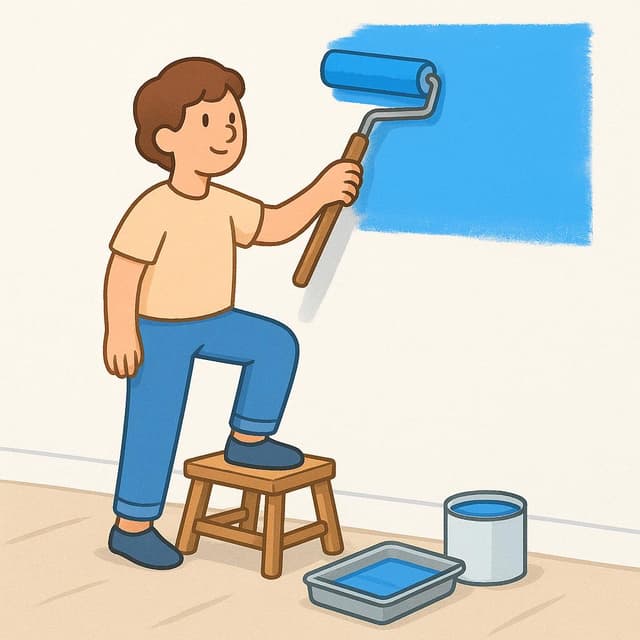
pintar Negative Imperative Conjugation
pintar — to paint
Use 'no pintes' (tú), 'no pinte' (usted), 'no pintemos' (nosotros), 'no pintéis' (vosotros), 'no pinten' (ustedes) for negative commands.
pintar Negative Imperative Forms
When to Use the Negative Imperative
This is for telling someone NOT to do something. It's the polite or firm way to forbid an action, like 'Don't paint that wall' or 'Don't paint over the original mural'.
Notes on pintar in the Negative Imperative
Negative commands in Spanish always use the present subjunctive form preceded by 'no'. Pintar follows this rule perfectly and is regular here.
Example Sentences
No pintes con los dedos, usa el pincel.
Don't paint with your fingers, use the brush.
tú
No pinte aquí, por favor. Es una pared histórica.
Don't paint here, please. It's a historic wall.
usted
No pintemos con esos colores tan oscuros.
Let's not paint with those dark colors.
nosotros
¡No pintéis sobre el dibujo!
Don't paint over the drawing!
vosotros
No pinten la puerta de negro, no va con la casa.
Don't paint the door black, it doesn't go with the house.
ustedes
Common Mistakes
Mistake: Using the infinitive instead of the subjunctive for negative commands.
Correct: Say 'No pintar' is wrong, use 'No pintes' (tú) or other subjunctive forms.
Why: Spanish grammar requires the subjunctive mood for negative commands.
Mistake: Confusing 'pintéis' (vosotros negative imperative) with 'pinteis' (no accent).
Correct: The correct form is 'pintéis' with the accent.
Why: The accent is crucial for correct pronunciation and grammar in the vosotros form.
Master Spanish verbs in context
Memorizing tables only gets you so far. Read 200+ illustrated and narrated Spanish stories to see verbs like 'pintar' used naturally — in the tenses you're learning.
Related Tenses
Present
yo: pinto
Use 'pinto' (yo), 'pintas' (tú), 'pinta' (él/ella/usted), 'pintamos' (nosotros), 'pintáis' (vosotros), 'pintan' (ellos/ellas/ustedes) for actions happening now, habits, or general truths.
Preterite
yo: pinté
Use 'pinté' (yo), 'pintaste' (tú), 'pintó' (él/ella/usted), 'pintamos' (nosotros), 'pintasteis' (vosotros), 'pintaron' (ellos/ellas/ustedes) for completed past actions.
Imperfect
yo: pintaba
Use 'pintaba' (yo/él/ella/usted), 'pintabas' (tú), 'pintábamos' (nosotros), 'pintabais' (vosotros), 'pintaban' (ellos/ellas/ustedes) for ongoing or habitual past actions and descriptions.
Future
yo: pintaré
Use 'pintaré' (yo), 'pintarás' (tú), 'pintará' (él/ella/usted), 'pintaremos' (nosotros), 'pintaréis' (vosotros), 'pintarán' (ellos/ellas/ustedes) for actions that will happen.
Conditional
yo: pintaría
Use 'pintaría' (yo/él/ella/usted), 'pintarías' (tú), 'pintaríamos' (nosotros), 'pintaríais' (vosotros), 'pintarían' (ellos/ellas/ustedes) for hypothetical ('would'), polite requests, or future-in-the-past.
Present Subjunctive
yo: pinte
Use 'pinte' (yo/él/ella/usted), 'pintes' (tú), 'pintemos' (nosotros), 'pintéis' (vosotros), 'pinten' (ellos/ellas/ustedes) after expressions of doubt, desire, emotion, or uncertainty.
Imperfect Subjunctive
yo: pintara
Use 'pintara' or 'pintase' (yo/él/ella/usted), 'pintaras'/'pintases' (tú), 'pintáramos'/'pintásemos' (nosotros), 'pintarais'/'pintaseis' (vosotros), 'pintaran'/'pintasen' (ellos/ellas/ustedes) for past hypotheticals or wishes.
Affirmative Imperative
yo: pinta
Use 'pinta' (tú), 'pinte' (usted), 'pintemos' (nosotros), 'pintad' (vosotros), 'pinten' (ustedes) for direct commands.