prender Imperfect Conjugation
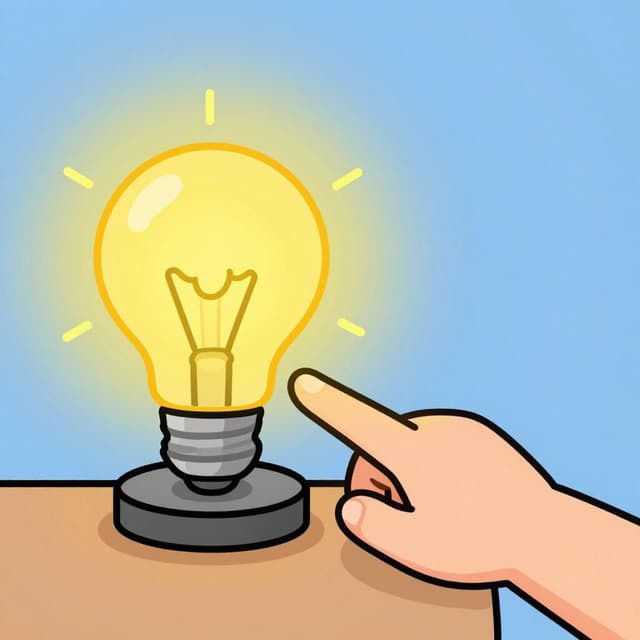
prender — to turn on
Use 'prendía' for ongoing or habitual past actions, like 'I used to turn on'.
prender Imperfect Forms
When to Use the Imperfect
The imperfect tense describes actions that were happening continuously in the past, or actions that used to happen regularly. Think of background descriptions or habits. For example, 'When I was little, I used to turn on the TV every afternoon' or 'The lights were turning on automatically'.
Notes on prender in the Imperfect
Prender is regular in the imperfect tense. The endings -ía, -ías, -ía, -íamos, -íais, -ían are added to the infinitive stem.
Example Sentences
Yo prendía la radio todas las mañanas.
I used to turn on the radio every morning.
yo
Tú prendías el fuego con cuidado.
You used to light the fire carefully.
tú
Cuando llegaba a casa, él prendía la luz del salón.
When he arrived home, he would turn on the living room light.
él/ella/usted
Ellos prendían velas para la cena romántica.
They used to light candles for the romantic dinner.
ellos/ellas/ustedes
Common Mistakes
Mistake: Using the preterite for habitual past actions: 'Ayer prendí la tele por la mañana'.
Correct: For habitual actions, use the imperfect: 'Ayer prendía la tele por la mañana' (if it was a habit on that specific 'yesterday'). Or more generally, 'Yo prendía la tele por la mañana'.
Why: The preterite is for completed actions, while the imperfect is for ongoing or repeated actions in the past.
Mistake: Confusing 'prendía' (yo) with 'prendía' (él/ella/usted).
Correct: The forms are identical. Use context or add pronouns ('Yo prendía...' vs. 'Él prendía...') to clarify.
Why: Many imperfect forms are identical across different persons (yo, él/ella/usted), requiring context or explicit pronouns.
Master Spanish verbs in context
Memorizing tables only gets you so far. Read 200+ illustrated and narrated Spanish stories to see verbs like 'prender' used naturally — in the tenses you're learning.
Related Tenses
Present
yo: prendo
Use 'prendo', 'prendes', 'prende' for actions happening now or habitually, like 'I turn on the TV'.
Preterite
yo: prendí
Use 'prendí', 'prendiste', 'prendió' for completed actions like 'I turned on the light'.
Future
yo: prenderé
Use 'prenderé', 'prenderás' for actions that will happen, like 'I will turn on'.
Conditional
yo: prendería
Use 'prendería' for hypothetical situations, like 'I would turn on'.
Present Subjunctive
yo: prenda
Use 'prenda' for wishes, doubts, or emotions, like 'I hope you turn on'.
Imperfect Subjunctive
yo: prendiera
Use 'prendiera' or 'prendiera' for past hypotheticals or wishes, like 'if I turned on'.
Affirmative Imperative
yo: prende
Use 'prende' for tú, 'prendan' for ustedes to command someone to turn something on.
Negative Imperative
yo: no prendas
Use 'no prendas' for tú, 'no prendan' for ustedes to forbid someone from turning something on.