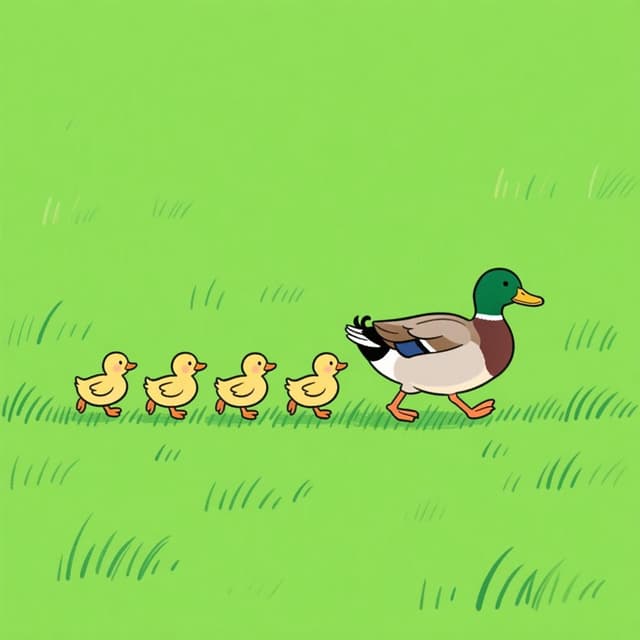
seguir Imperfect Conjugation
seguir — to follow
The imperfect of seguir is regular: seguía, seguías, seguía, seguíamos, seguíais, seguían.
seguir Imperfect Forms
When to Use the Imperfect
Use the imperfect to describe ongoing past actions ('was following') or habitual past states ('used to continue').
Notes on seguir in the Imperfect
There are no stem changes in the imperfect for seguir. It follows the standard -ir ending pattern.
Example Sentences
De niño, siempre seguía a mi hermano mayor.
As a child, I always followed my older brother.
yo
Seguíamos el camino marcado en el mapa.
We were following the path marked on the map.
nosotros
Ellos seguían trabajando cuando llegué.
They were still working when I arrived.
ellos/ellas/ustedes
Common Mistakes
Mistake: Forgot the accent on the 'í'.
Correct: seguía
Why: All imperfect endings for -ir verbs require an accent on the 'i'.
Master Spanish verbs in context
Memorizing tables only gets you so far. Read 200+ illustrated and narrated Spanish stories to see verbs like 'seguir' used naturally — in the tenses you're learning.
Related Tenses
Present
yo: sigo
In the present tense, seguir undergoes an 'e' to 'i' stem change in all forms except nosotros and vosotros.
Preterite
yo: seguí
Seguir changes its stem to 'sig-' in the third-person forms (sigió, siguieron) in the preterite.
Future
yo: seguiré
The future tense of seguir is regular: simply add the endings to the infinitive (seguiré, seguirás...).
Conditional
yo: seguiría
The conditional is regular: add the endings to the full infinitive (seguiría, seguirías...).
Present Subjunctive
yo: siga
The present subjunctive uses the 'sig-' stem for all persons: siga, sigas, siga, sigamos, sigáis, sigan.
Imperfect Subjunctive
yo: siguiera
The imperfect subjunctive uses the 'sigui-' stem derived from the preterite: siguiera, siguieras, siguiera...
Affirmative Imperative
yo: sigue
Give commands using 'sigue' (tú) or 'siga' (usted).
Negative Imperative
yo: no sigas
Negative commands always use the present subjunctive: no sigas, no siga, no sigamos.