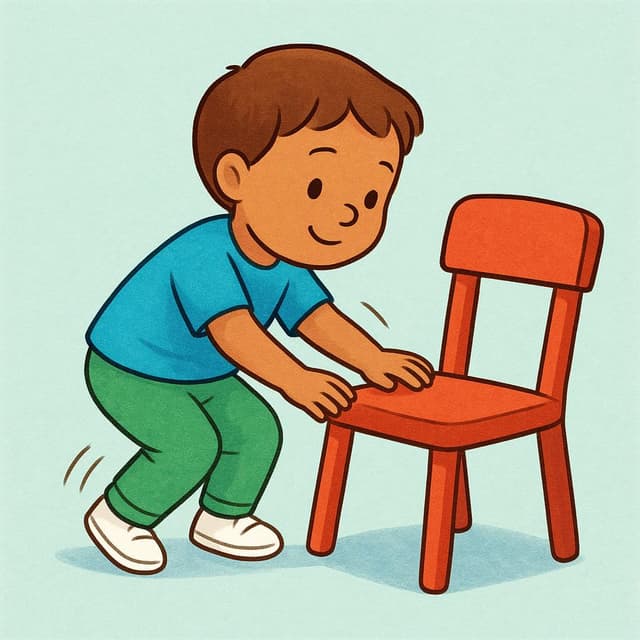
sentar Present Subjunctive Conjugation
sentar — to sit down
Sentar follows the e > ie stem change in the subjunctive, except for nosotros and vosotros.
sentar Present Subjunctive Forms
When to Use the Present Subjunctive
Use this after expressions of desire, doubt, or requests, such as 'I want you to sit' or 'It's better that we sit'.
Notes on sentar in the Present Subjunctive
The stem change (e > ie) occurs in all forms except nosotros (sentemos) and vosotros (sentéis).
Example Sentences
Quiero que te sientes aquí.
I want you to sit here.
tú
Espero que ella se siente pronto.
I hope she sits down soon.
él/ella/usted
Es mejor que nos sentemos ya.
It is better that we sit down now.
nosotros
Common Mistakes
Mistake: Saying 'que nos sientemos'.
Correct: que nos sentemos
Why: In the present subjunctive, -ar verbs like sentar do not have a stem change in the nosotros/vosotros forms.
Master Spanish verbs in context
Memorizing tables only gets you so far. Read 200+ illustrated and narrated Spanish stories to see verbs like 'sentar' used naturally — in the tenses you're learning.
Related Tenses
Present
yo: siento
Sentar is a stem-changing verb (e > ie) in all forms except nosotros and vosotros.
Preterite
yo: senté
The preterite of sentar is regular: senté, sentaste, sentó, sentamos, sentasteis, sentaron.
Imperfect
yo: sentaba
The imperfect of sentar is regular: sentaba, sentabas, sentaba, sentábamos, sentabais, sentaban.
Future
yo: sentaré
The future of sentar is regular: sentaré, sentarás, sentará, sentaremos, sentaréis, sentarán.
Conditional
yo: sentaría
The conditional of sentar is regular: sentaría, sentarías, sentaría, sentaríamos, sentaríais, sentarían.
Imperfect Subjunctive
yo: sentara
The imperfect subjunctive of sentar is regular: sentara, sentaras, sentara, sentáramos, sentarais, sentaran.
Affirmative Imperative
yo: sienta
The imperative uses the stem change (e > ie) for most commands: siente, sentad, sienten.
Negative Imperative
yo: no sientas
The negative imperative uses the present subjunctive forms: no sientes, no siente, no sentemos, no sentéis, no sienten.