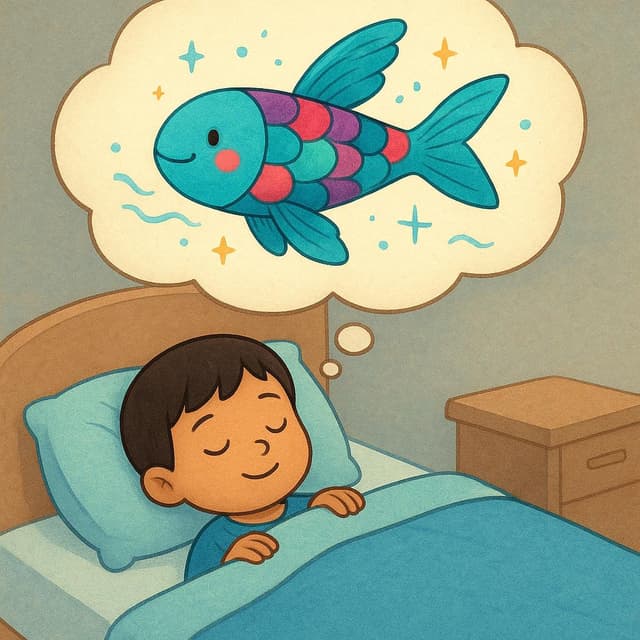
soñar Imperfect Conjugation
soñar — to dream
The imperfect of soñar is regular: soñaba, soñabas, soñaba, soñábamos, soñabais, soñaban.
soñar Imperfect Forms
When to Use the Imperfect
Use the imperfect to describe recurring dreams you had as a child or ongoing aspirations in the past without a specific end.
Notes on soñar in the Imperfect
Soñar is regular in the imperfect. It uses the standard -aba endings for -ar verbs.
Example Sentences
De niño, yo soñaba con ser astronauta.
As a child, I used to dream of being an astronaut.
yo
Siempre soñábamos con vivir en la playa.
We always used to dream of living at the beach.
nosotros
Ella soñaba mientras dormía la siesta.
She was dreaming while she was napping.
él/ella/usted
Common Mistakes
Mistake: soñabamos
Correct: soñábamos
Why: The nosotros form of the imperfect always requires an accent mark on the first 'a'.
Master Spanish verbs in context
Memorizing tables only gets you so far. Read 200+ illustrated and narrated Spanish stories to see verbs like 'soñar' used naturally — in the tenses you're learning.
Related Tenses
Present
yo: sueño
Soñar is a stem-changing verb where the 'o' becomes 'ue' in all forms except nosotros and vosotros.
Preterite
yo: soñé
The preterite of soñar is regular: soñé, soñaste, soñó, soñamos, soñasteis, soñaron.
Future
yo: soñaré
The future of soñar is regular: soñaré, soñarás, soñará, soñaremos, soñaréis, soñarán.
Conditional
yo: soñaría
The conditional of soñar is regular: soñaría, soñarías, soñaría, soñaríamos, soñaríais, soñarían.
Present Subjunctive
yo: sueñe
In the present subjunctive, soñar keeps its 'o to ue' stem change in the same pattern as the present indicative.
Imperfect Subjunctive
yo: soñara
The imperfect subjunctive of soñar is regular: soñara, soñaras, soñara, soñáramos, soñarais, soñaran.
Affirmative Imperative
yo: sueña
The imperative uses 'sueña' for tú and 'soñad' for vosotros.
Negative Imperative
yo: no sueñes
The negative imperative uses the present subjunctive forms: no sueñes, no sueñe, no soñemos, no soñéis, no sueñen.