verse Affirmative Imperative Conjugation
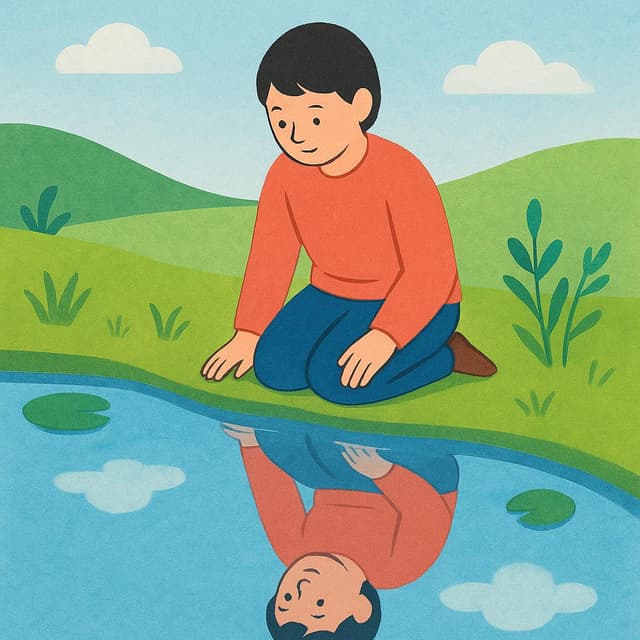
verse — to see oneself
Commands for verse involve attaching the pronoun to the end: vete (irregular), véase, veámonos.
verse Affirmative Imperative Forms
When to Use the Affirmative Imperative
Use this to tell someone to look at themselves or to suggest meeting up.
Notes on verse in the Affirmative Imperative
The 'tú' form 'vete' is identical to the command for 'irse' (to leave). For 'verse' meaning 'look at yourself', 'vete' is rare; 'mírate' is more common, but 'véase' is used in formal instructions (e.g., 'see page 5').
Example Sentences
¡Véanse en el espejo!
Look at yourselves in the mirror!
ustedes
Veámonos a las cinco.
Let's see/meet each other at five.
nosotros
Véase la página diez.
See page ten (formal/instructional).
usted
Common Mistakes
Mistake: Saying 'veamosnos'.
Correct: veámonos
Why: When attaching 'nos' to a 'nosotros' command, the final 's' of the verb is dropped.
Master Spanish verbs in context
Memorizing tables only gets you so far. Read 200+ illustrated and narrated Spanish stories to see verbs like 'verse' used naturally — in the tenses you're learning.
Related Tenses
Present
yo: me veo
The present tense of verse describes how someone looks or how people see each other regularly: me veo, te ves, se ve.
Preterite
yo: me vi
The preterite of verse focuses on a specific moment you saw yourself or met with someone: me vi, te viste, se vio.
Imperfect
yo: me veía
The imperfect of verse is highly irregular: me veía, te veías, se veía.
Future
yo: me veré
The future tense uses the full infinitive 'ver' plus endings: me veré, te verás, se verá.
Conditional
yo: me vería
The conditional of verse follows the regular pattern: me vería, te verías, se vería.
Present Subjunctive
yo: me vea
The subjunctive of verse uses the stem 've-': me vea, te veas, se vea.
Imperfect Subjunctive
yo: me viera
The imperfect subjunctive of verse uses 'vier-': me viera, te vieras, se viera.
Negative Imperative
yo: no te veas
Negative commands use the present subjunctive: no te veas, no se vea, no nos veamos.