alarma
“alarma” means “alarm” in Spanish. It has 2 different meanings depending on context:
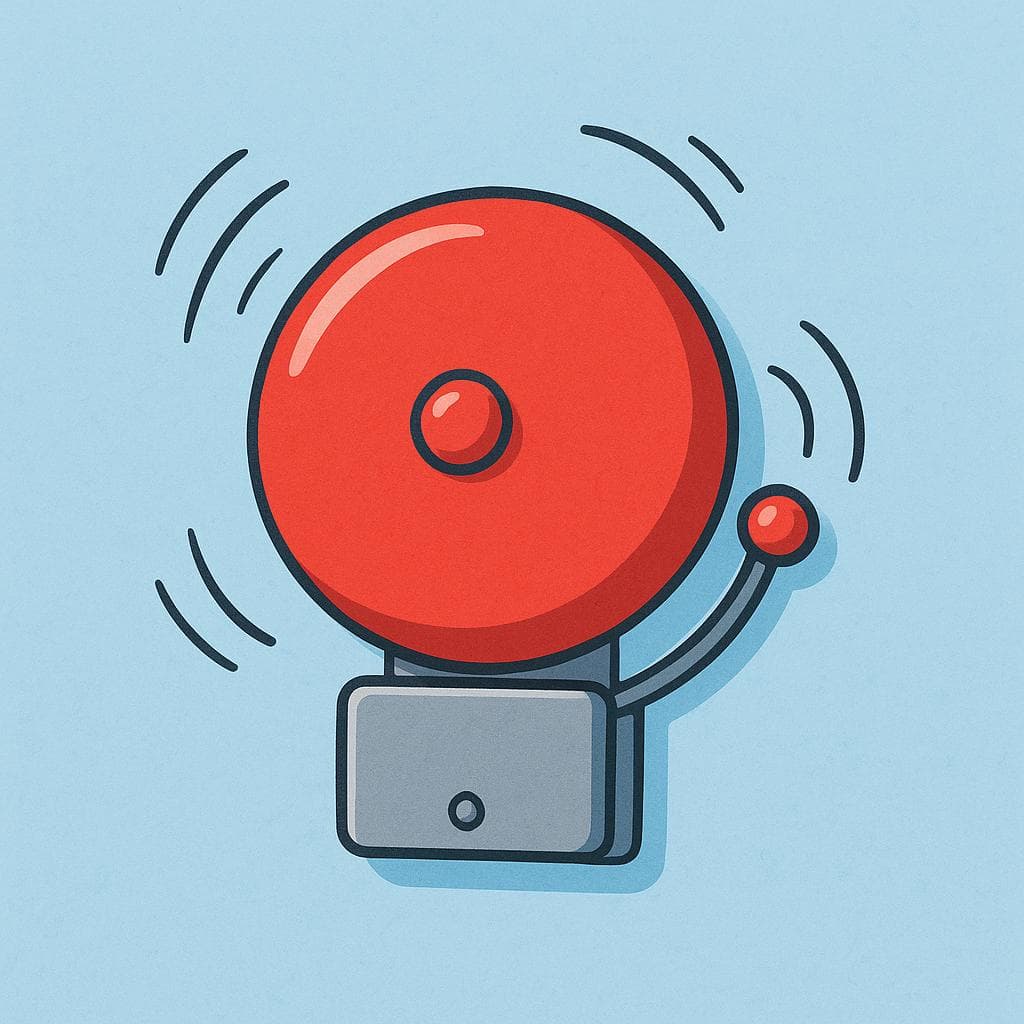

alarm, alarm clockAlso: siren
📝 In Action
Puse la alarma para levantarme temprano.
A1I set the alarm (clock) to get up early.
Si la puerta se abre, la alarma de seguridad saltará.
A2If the door opens, the security alarm will go off.
Escuchamos la alarma de un coche robado en la calle.
A1We heard the alarm of a stolen car in the street.
Word Connections
alarm, panicAlso: concern

📝 In Action
La caída de la bolsa causó una gran alarma social.
B2The stock market crash caused great social alarm (worry).
El doctor dijo que no había motivo para la alarma.
B1The doctor said there was no cause for alarm.
Trató de no mostrar alarma ante la situación.
B1He tried not to show panic (alarm) given the situation.
Word Connections
Translate to Spanish
Words that translate to "alarma" in Spanish:
✏️ Quick Practice
Quick Quiz: alarma
Question 1 of 2
Which sentence uses 'alarma' to mean 'a feeling of worry or fear'?
📚 More Resources
👥 Word Family
📚 Etymology
The word comes from the Italian phrase 'all'arme!', meaning 'to the arms!' This was a military shout used to warn soldiers that they needed to grab their weapons immediately. This warning shout eventually turned into the noun 'alarma' in Spanish and English.
First recorded: 15th century
Cognates (Related words)
💡 Master Spanish
Take your Spanish to the next level. Read 200+ illustrated and narrated Spanish stories tailored to your level with the Inklingo app!
Frequently Asked Questions
If I want to talk specifically about the clock I use to wake up, what Spanish word should I use?
You can simply say 'la alarma' or use the more specific term, 'el despertador'. Both are perfectly understood, but 'el despertador' exclusively means the physical clock device.
Is 'alarma' related to the Spanish verb 'armar'?
Yes, indirectly! The root of 'alarma' comes from the military shout 'a las armas' (to the arms/weapons). So, it shares a historical connection with the concept of 'arms' or 'arming'.