Inklingo

aprende

/ah-PREN-deh/

learns

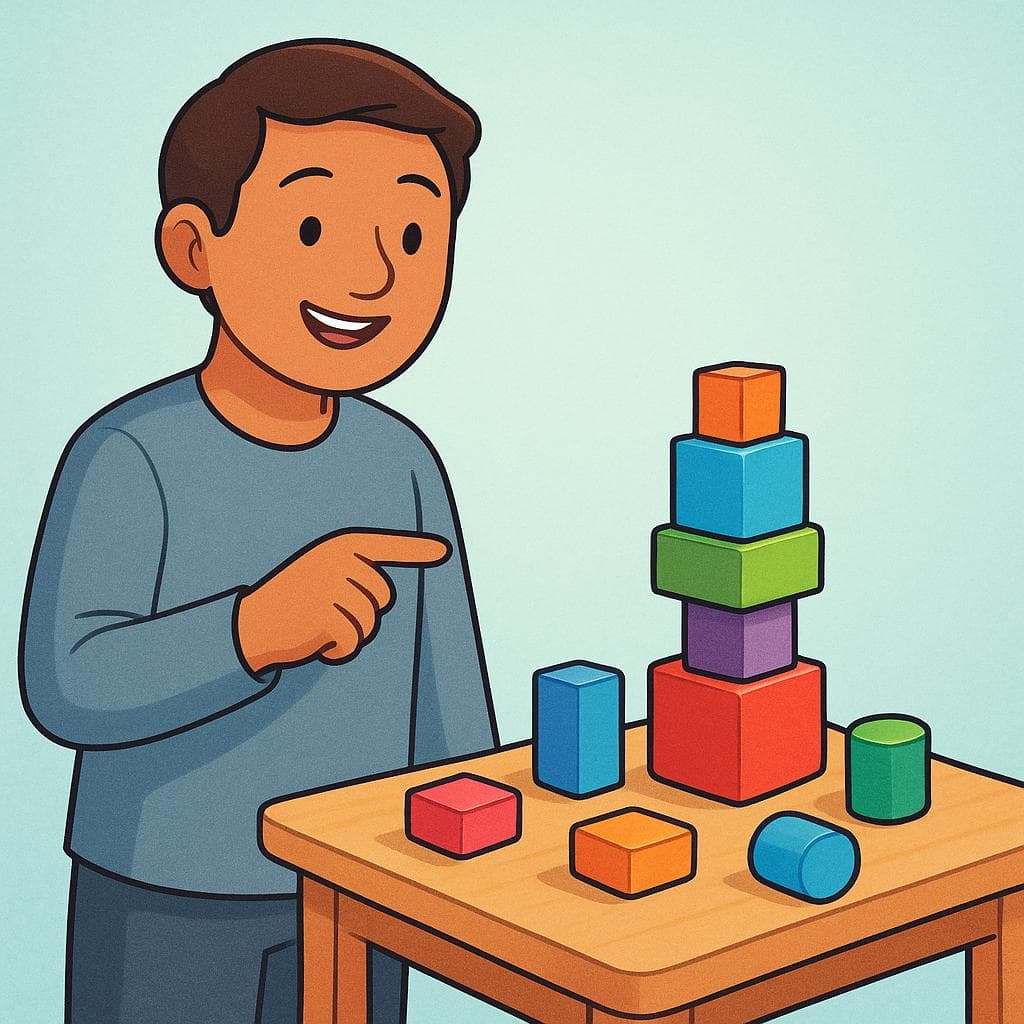
A storybook illustration of a child sitting on the floor, deeply focused on reading a large open book. A bright, glowing lightbulb is depicted floating above the child's head, symbolizing a moment of understanding or learning.

When he, she, or it learns something, we use the verb form aprende.

aprende(verb)

A1regular er

learns

?

He/she/it learns

,

is learning

?

Continuous action

Also:

picks up

?

Skill acquisition

📝 In Action

Mi hijo aprende muy rápido en la escuela.

A1

My son learns very quickly at school.

Usted aprende español con esta aplicación.

A1

You (formal) learn Spanish with this application.

Ella siempre aprende de sus errores.

A2

She always learns from her mistakes.

Word Connections

Synonyms

  • estudia (studies)
  • asimila (assimilates)

Antonyms

  • ignora (ignores)

Common Collocations

  • aprende de memorialearns by heart
  • aprende rápidolearns quickly

💡 Grammar Points

The 'El/Ella/Usted' Form

This form is used for a single person who is not you or the person you are talking directly to (he, she, or it), OR when speaking politely/formally to one person (Usted).

Regular -ER Verb

Since 'aprender' is regular, its endings follow a predictable pattern. Just remove the '-er' and add the correct ending for the person performing the action.

⭐ Usage Tips

Learning vs. Studying

While 'estudiar' means 'to study' (the process), 'aprender' means 'to learn' (the result of gaining knowledge). They are close but not interchangeable.

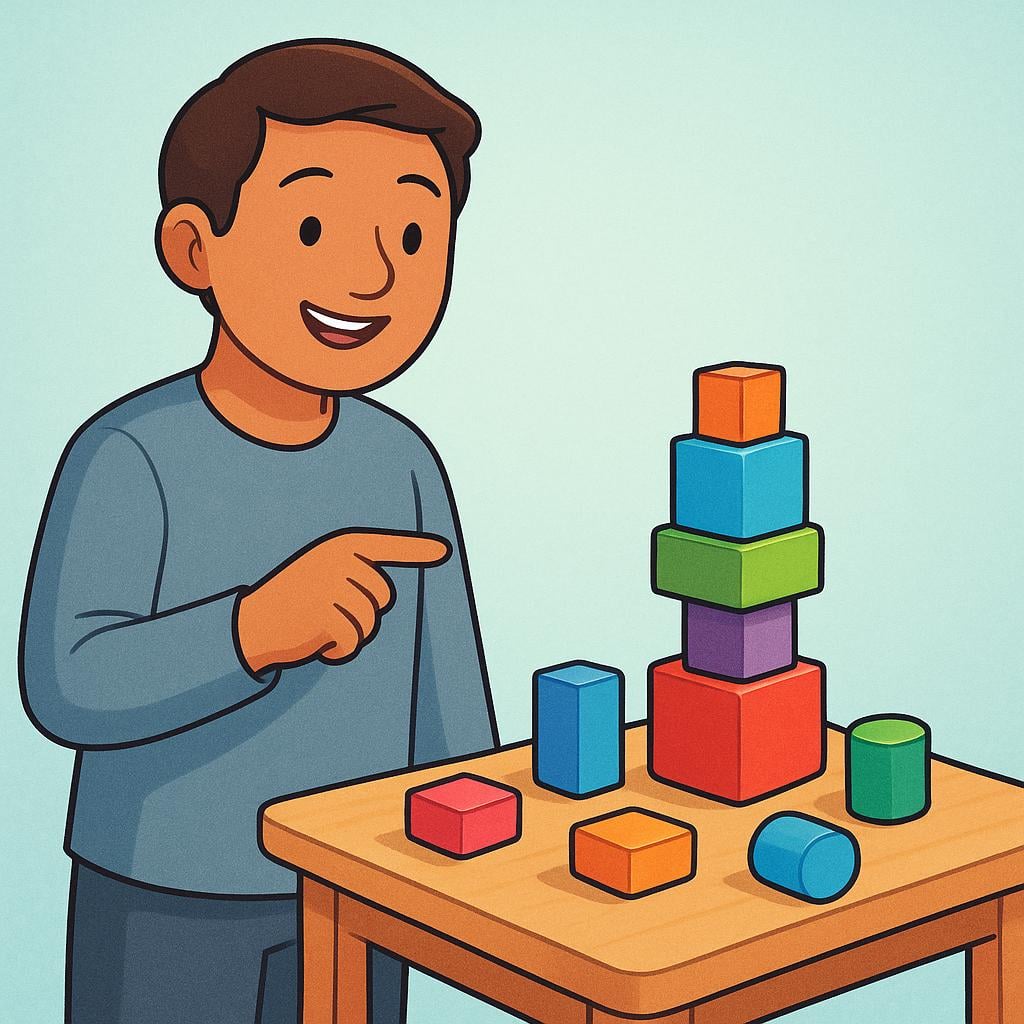
A storybook illustration featuring a friendly adult figure standing next to a table with various colored building blocks. The adult points directly at the blocks with an encouraging and instructional expression.

To give a direct command to a friend to Learn!, we use the imperative form ¡Aprende!

aprende(verb)

A1regular er

Learn!

?

Direct command (tú form)

Also:

Pick it up!

?

Instructional command

📝 In Action

¡Aprende esta lección antes del examen!

A1

Learn this lesson before the exam!

Si quieres mejorar, ¡aprende de tus errores!

A2

If you want to improve, learn from your mistakes!

Word Connections

Synonyms

  • memoriza (memorize)
  • entiende (understand)

💡 Grammar Points

The Informal Command ('Tú' Imperative)

For most regular verbs, the informal command form (telling 'tú' what to do) is exactly the same as the 'él/ella/usted' present tense form. So, 'aprende' means both 'he/she learns' and 'Learn!'.

Negative Commands are Different

To tell someone not to learn, you must change the form: 'No aprendas' (Don't learn). This uses a special verb form (the subjunctive).

❌ Common Pitfalls

Forgetting the tú command rule

Mistake: "Using the infinitive for a command: 'Tú aprender rápido.'"

Correction: Use the command form: '¡Aprende rápido!' (Learn quickly!)

🔄 Conjugations

indicative

present

él/ella/ustedaprende
yoaprendo
aprendes
ellos/ellas/ustedesaprenden
nosotrosaprendemos
vosotrosaprendéis

imperfect

él/ella/ustedaprendía
yoaprendía
aprendías
ellos/ellas/ustedesaprendían
nosotrosaprendíamos
vosotrosaprendíais

preterite

él/ella/ustedaprendió
yoaprendí
aprendiste
ellos/ellas/ustedesaprendieron
nosotrosaprendimos
vosotrosaprendisteis

subjunctive

present

él/ella/ustedaprenda
yoaprenda
aprendas
ellos/ellas/ustedesaprendan
nosotrosaprendamos
vosotrosaprendáis

imperfect

él/ella/ustedaprendiera
yoaprendiera
aprendieras
ellos/ellas/ustedesaprendieran
nosotrosaprendiéramos
vosotrosaprendierais

✏️ Quick Practice

💡 Quick Quiz: aprende

Question 1 of 2

Which sentence uses 'aprende' as a command?

📚 More Resources

Word Family

aprender(to learn) - verb

Frequently Asked Questions

How do I know if 'aprende' means 'he/she/it learns' or 'Learn!'?

You can tell by the context and punctuation. If the sentence has a subject (like 'él' or 'mi amigo') and describes a fact, it means 'learns'. If it starts with an exclamation mark or is the first word in a sentence directed at someone, it’s usually the command form, 'Learn!'

Is 'aprender' a regular verb?

Yes, 'aprender' is a regular verb. This is great news because it means its conjugations follow the standard, predictable pattern for verbs that end in -ER.