Inklingo
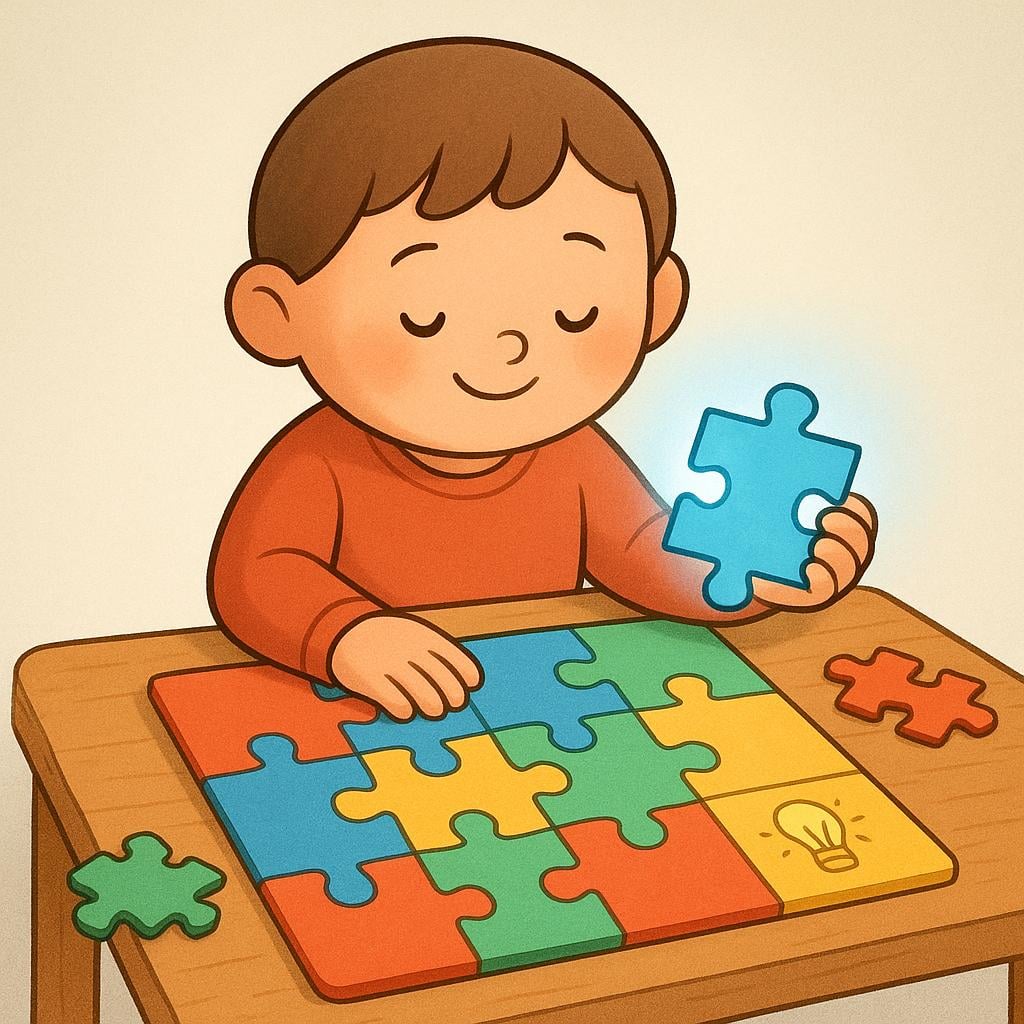
A small, friendly cartoon character successfully placing the final, brightly colored piece into a jigsaw puzzle, completing the entire image. The character has a satisfied expression of realization.

aprendí

ah-pren-DEE

VerbA1regular er
I learned?past acquisition of knowledge or skill
Also:I found out?past discovery of information

Quick Reference

infinitiveaprender
gerundaprendiendo
past Participleaprendido

📝 In Action

Aprendí a conducir el año pasado.

A1

I learned to drive last year.

Aprendí mucho sobre historia en ese viaje.

A2

I learned a lot about history on that trip.

Cuando me explicaste el problema, por fin lo aprendí.

B1

When you explained the problem to me, I finally learned it (understood it).

Word Connections

Synonyms

  • asimilar (to absorb knowledge)
  • instruirse (to educate oneself)

Common Collocations

  • aprendí la lecciónI learned the lesson
  • aprendí un idiomaI learned a language

💡 Grammar Points

A Specific Past Moment

The form 'aprendí' is used to talk about a single learning event that started and finished at a specific point in the past, like 'yesterday' or 'last year'.

Regular Verb Pattern

'Aprender' is a regular 'er' verb, meaning its endings follow the standard pattern. This makes it easy to conjugate once you know the rules for the past tense.

❌ Common Pitfalls

Preterite vs. Imperfect (Learned vs. Was Learning)

Mistake: "Using 'aprendía' when talking about a single, completed moment."

Correction: Use 'aprendí' for the specific moment ('I learned it yesterday'). Use 'aprendía' to describe the ongoing process or habit ('I was learning Spanish when I met him').

⭐ Usage Tips

Skill Acquisition

When talking about learning a new skill (like driving or cooking), always use 'aprender a' + [infinitive]. Example: 'Aprendí a cocinar' (I learned to cook).

🔄 Conjugations

indicative

present

él/ella/ustedaprende
yoaprendo
aprendes
ellos/ellas/ustedesaprenden
nosotrosaprendemos
vosotrosaprendéis

imperfect

él/ella/ustedaprendía
yoaprendía
aprendías
ellos/ellas/ustedesaprendían
nosotrosaprendíamos
vosotrosaprendíais

preterite

él/ella/ustedaprendió
yoaprendí
aprendiste
ellos/ellas/ustedesaprendieron
nosotrosaprendimos
vosotrosaprendisteis

subjunctive

present

él/ella/ustedaprenda
yoaprenda
aprendas
ellos/ellas/ustedesaprendan
nosotrosaprendamos
vosotrosaprendáis

imperfect

él/ella/ustedaprendiera / aprendiese
yoaprendiera / aprendiese
aprendieras / aprendieses
ellos/ellas/ustedesaprendieran / aprendiesen
nosotrosaprendiéramos / aprendiésemos
vosotrosaprendierais / aprendieseis

✏️ Quick Practice

💡 Quick Quiz: aprendí

Question 1 of 1

Which sentence correctly uses 'aprendí' to describe a single completed action?

📚 More Resources

Word Family

aprender(to learn (infinitive)) - verb

Frequently Asked Questions

What is the difference between 'aprendí' and 'descubrí'?

Both relate to gaining knowledge. 'Aprendí' focuses on acquiring a skill, subject, or lesson ('I learned Spanish'). 'Descubrí' means 'I discovered' or 'I found out,' focusing on new information or secrets ('I found out he was leaving'). However, 'aprendí' can sometimes mean 'I found out' when referring to news or facts.