asustaste
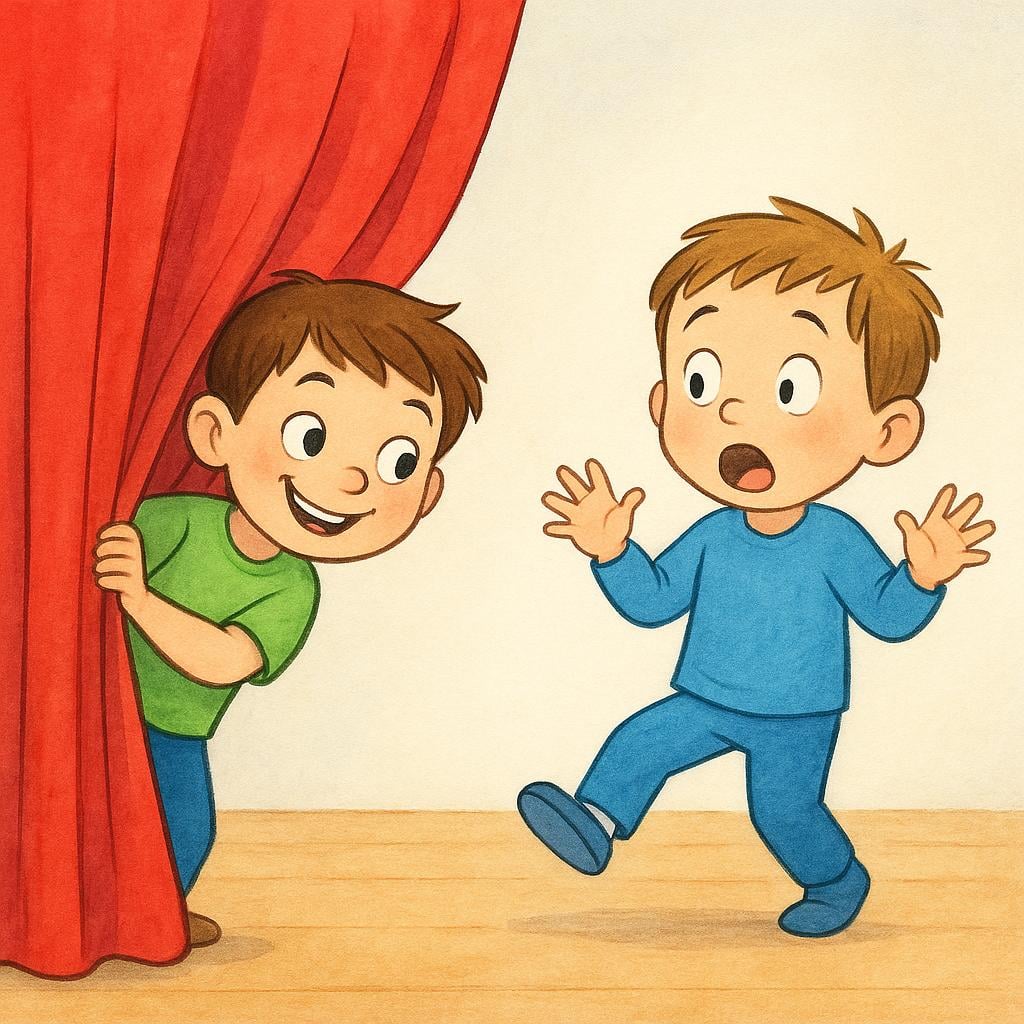
“asustaste” means “You scared” in Spanish (Simple past tense, referring to 'tú').
📝 In Action
¿Por qué me asustaste? Pensé que eras un ladrón.
A2Why did you scare me? I thought you were a thief.
Asustaste a mi perro cuando gritaste de repente.
B1You frightened my dog when you shouted suddenly.
Cuando entraste, asustaste a todos en la sala.
A2When you came in, you scared everyone in the room.
Word Connections
Translate to Spanish
Words that translate to "asustaste" in Spanish:
✏️ Quick Practice
Quick Quiz: asustaste
Question 1 of 2
Which sentence correctly uses 'asustaste'?
📚 More Resources
👥 Word Family
📚 Etymology
The verb 'asustar' comes from the Latin word *sustus*, which is related to *excitare* (to excite or move). In Spanish, it evolved to mean specifically 'to move someone emotionally through fear,' giving us the modern meaning of 'to scare.'
First recorded: 13th century (in similar forms)
Cognates (Related words)
💡 Master Spanish
Take your Spanish to the next level. Read 200+ illustrated and narrated Spanish stories tailored to your level with the Inklingo app!
Frequently Asked Questions
Is 'asustaste' used for physical or emotional scaring?
It is used for both! You can use it when someone jumps out at you (physical surprise) or when someone gives you scary news (emotional fright). The result is always a feeling of fear or surprise.
How do I make 'asustaste' reflexive, meaning 'you got scared'?
You need the reflexive verb 'asustarse.' The conjugation would be 'te asustaste' (You got scared/You frightened yourself).