Inklingo

brujas

/brú-has/

witches

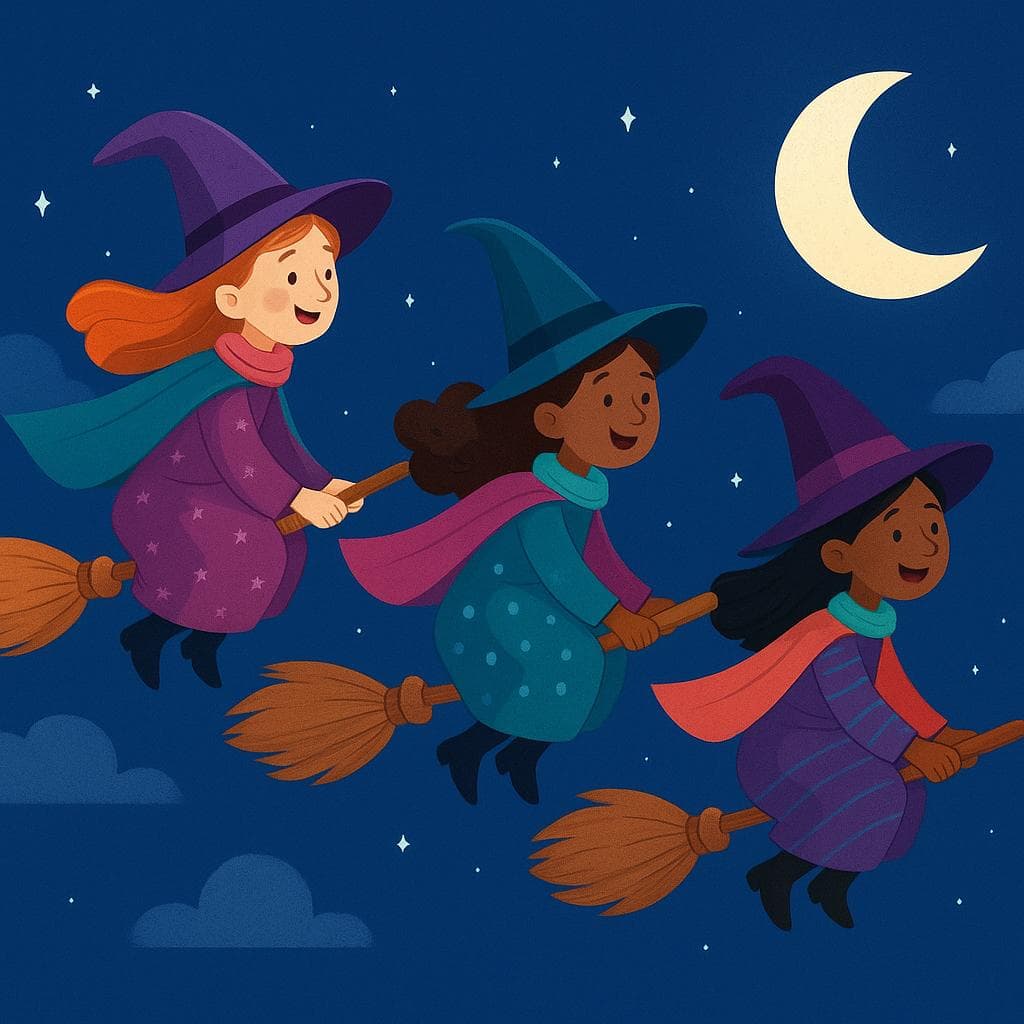
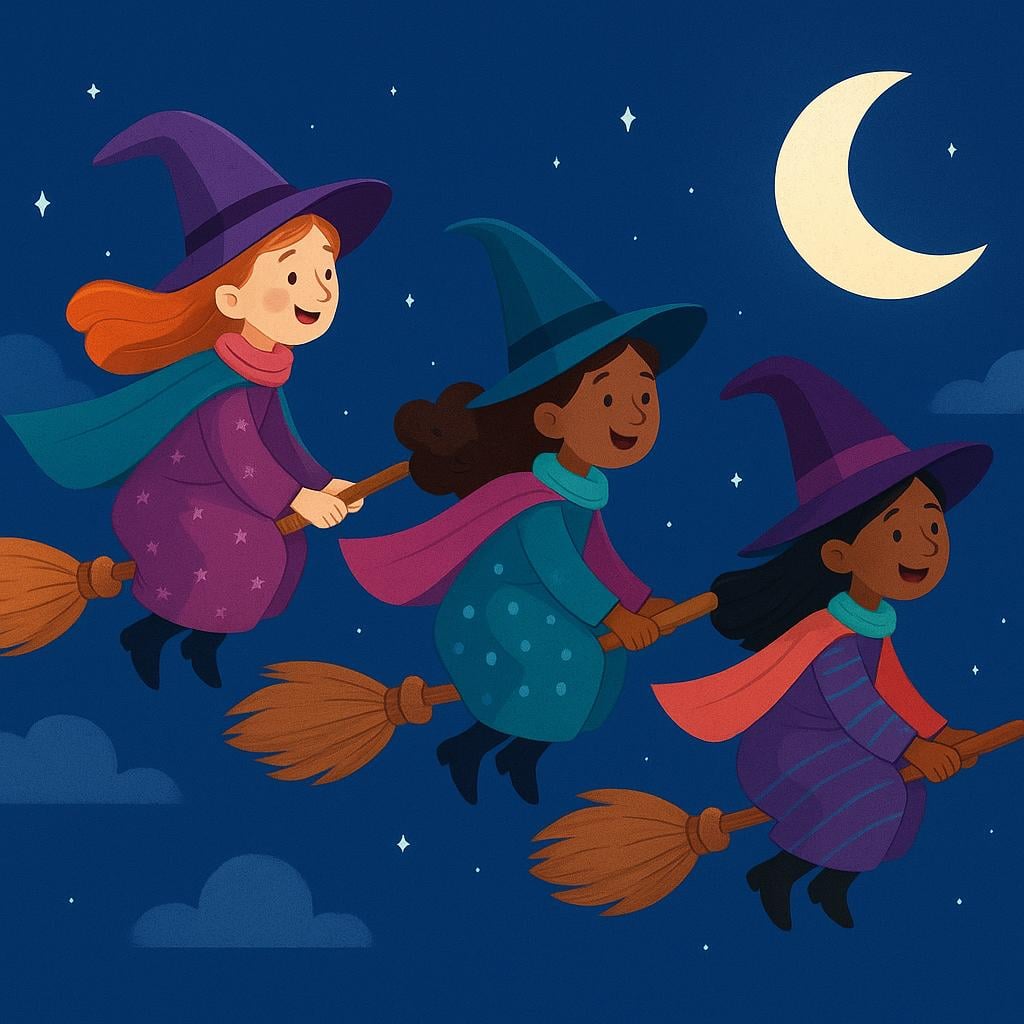
Three cartoon witches wearing pointed hats flying across the night sky on broomsticks above a dark forest.

"Brujas" is the plural noun meaning "witches."

brujas(noun)

fA2

witches

?

plural form of bruja

Also:

hags

?

old, unpleasant women (figurative)

,

crones

?

old women (often negative connotation)

📝 In Action

En Halloween, muchas niñas se disfrazan de brujas.

A1

On Halloween, many girls dress up as witches.

Las brujas de la historia prepararon una poción mágica.

A2

The witches in the story prepared a magic potion.

No seas tan brujas con tu hermana; ayúdala.

B1

Don't be such a witch (or so mean) to your sister; help her.

Word Connections

Synonyms

  • hechiceras (sorceresses)
  • arpías (harpies (mean women))

Common Collocations

  • escoba de brujaswitches' broom
  • cuento de brujaswitch story / fairy tale

💡 Grammar Points

Feminine Plural

This word is the plural form of the feminine noun 'bruja' (one witch). It follows the standard pattern of adding '-s' to a noun ending in a vowel.

❌ Common Pitfalls

Gender Confusion

Mistake: "Using 'los brujas'."

Correction: Always use the feminine article 'las' because the word 'brujas' is always feminine: 'las brujas'.

⭐ Usage Tips

Figurative Use

In common speech, calling someone 'bruja' (or 'brujas') can be an insult meaning they are mean, malicious, or have bad luck, not necessarily that they practice magic.

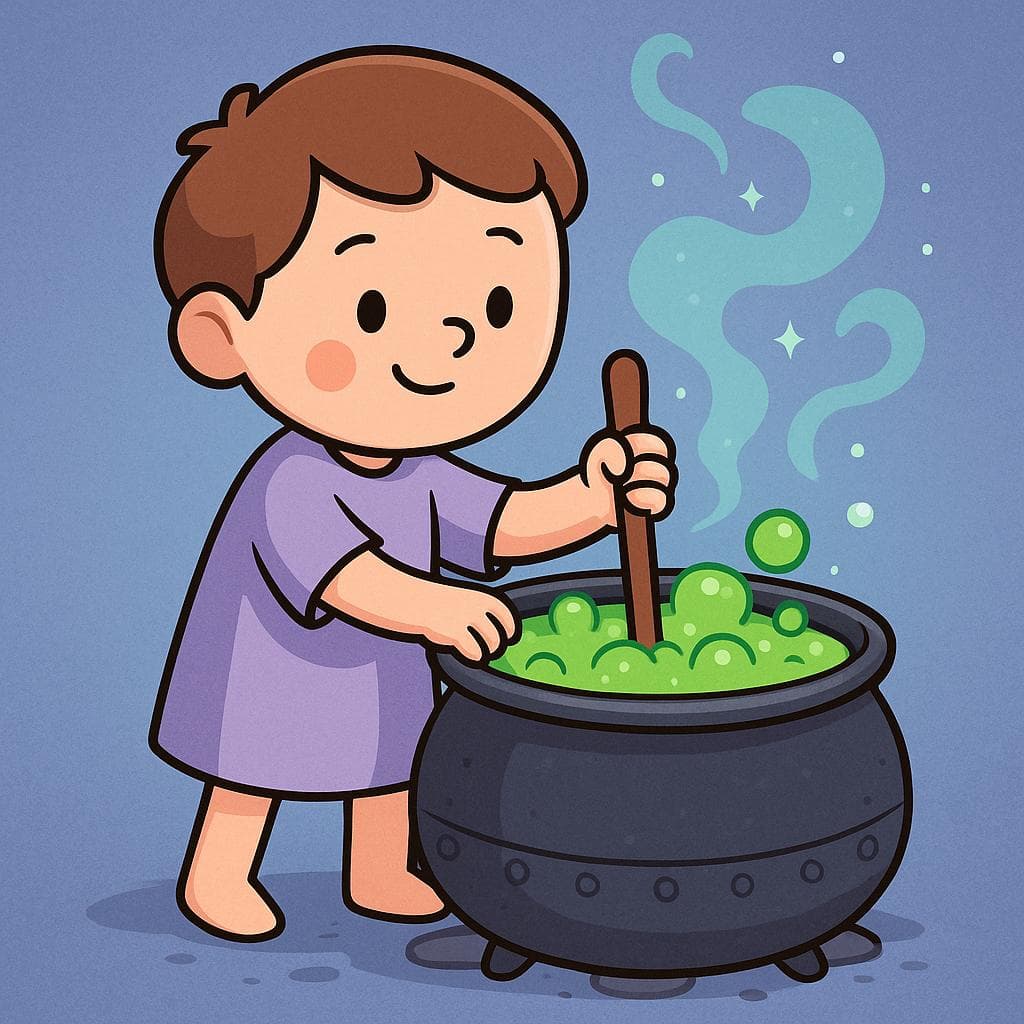
A single figure wearing a dark cloak and pointed hat stirring a large, steaming cauldron filled with a bright green potion.

As a verb, "brujas" means "you practice witchcraft" (second person singular present tense).

brujas(verb)

C2

you practice witchcraft

?

second person singular present tense (tú form)

Also:

you bewitch

?

second person singular present tense (tú form)

📝 In Action

Si tú brujas, debes tener cuidado con la ley.

C2

If you practice witchcraft (or cast spells), you must be careful with the law. (Very formal/archaic sentence structure)

Word Connections

Synonyms

  • hechizas (you cast spells)

💡 Grammar Points

The Verb Form

In this rare usage, 'brujas' is the simple present tense form for 'tú' (you). The full verb is 'brujar', which is a regular '-ar' verb.

⭐ Usage Tips

Use the Noun Instead

Native speakers almost always use the verb 'embrujar' (to bewitch/cast a spell on someone) instead of the simple verb 'brujar'. You are safe using 'embrujar' instead.

🔄 Conjugations

indicative

present

él/ella/ustedbruja
yobrujo
brujas
ellos/ellas/ustedesbrujan
nosotrosbrujamos
vosotrosbrujáis

imperfect

él/ella/ustedbrujaba
yobrujaba
brujabas
ellos/ellas/ustedesbrujaban
nosotrosbrujábamos
vosotrosbrujabais

preterite

él/ella/ustedbrujó
yobrujé
brujaste
ellos/ellas/ustedesbrujaron
nosotrosbrujamos
vosotrosbrujasteis

subjunctive

present

él/ella/ustedbruje
yobruje
brujes
ellos/ellas/ustedesbrujen
nosotrosbrujemos
vosotrosbrujéis

imperfect

él/ella/ustedbrujara/brujase
yobrujara/brujase
brujaras/brujases
ellos/ellas/ustedesbrujaran/brujasen
nosotrosbrujáramos/brujásemos
vosotrosbrujarais/brujaseis

✏️ Quick Practice

💡 Quick Quiz: brujas

Question 1 of 2

Which sentence uses 'brujas' as a noun?

📚 More Resources

Word Family

bruja(witch (singular)) - noun

Frequently Asked Questions

How do I say 'wizard' (a male witch)?

The word is 'brujo.' Spanish uses 'bruja' for females and 'brujo' for males, following the standard gender pattern for people.

Is 'brujas' only used for magical creatures?

No. While its main meaning relates to magic, it is very commonly used as a strong insult or playful tease for someone who is tricky, manipulative, or just generally grumpy.