Inklingo
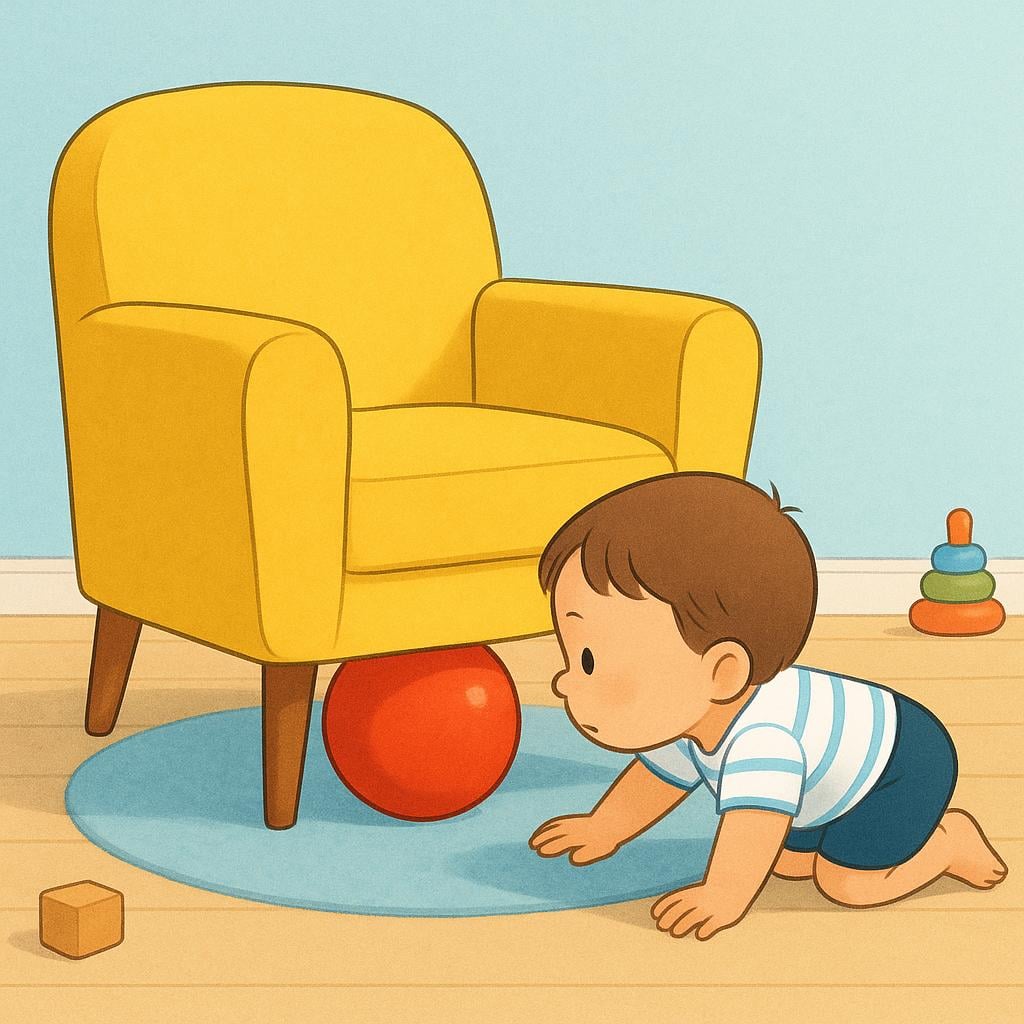
A simple storybook illustration of a small child on their hands and knees peering intently under a bright yellow armchair, actively searching for a large red ball that is partially visible.

buscarlo

boo-SKAR-loh

VerbA2regular ar
to look for it?referring to a masculine singular object,to search for him?referring to a male person
Also:to seek it?more formal setting

Quick Reference

infinitivebuscar
gerundbuscando
past Participlebuscado

📝 In Action

Necesito buscarlo antes de la cena.

A1

I need to look for it before dinner.

Voy a buscarlo en la biblioteca.

A2

I am going to look for him/it in the library.

¿Puedes terminar de buscarlo?

B1

Can you finish looking for it?

Word Connections

Synonyms

  • encontrarlo (to find it (opposite action))
  • localizarlo (to locate it)

Common Collocations

  • debes buscarloyou must look for it
  • es hora de buscarloit's time to look for it

💡 Grammar Points

Pronoun Placement Rule (Infinitive)

When you have two verbs together (like 'want to look'), the little word 'lo' (it/him) can either go before the first verb ('Lo quiero buscar') OR attached to the end of the second verb ('Quiero buscarlo').

The Meaning of 'lo'

The 'lo' attached to the end tells you that the thing being searched for is a single masculine item or person (e.g., el libro, el perro, el amigo).

❌ Common Pitfalls

Forgetting the Gender

Mistake: "Using 'buscarlo' when searching for a feminine thing like 'la llave' (the key)."

Correction: Use 'buscarla' instead. Remember: 'lo' for masculine, 'la' for feminine.

Separating the Pronoun

Mistake: "Saying 'Necesito buscar lo' (separating the words)."

Correction: When attaching to the infinitive, they must be written as one word: 'Necesito buscarlo'.

⭐ Usage Tips

Stress Shift

When attaching a pronoun like 'lo' to an infinitive, the original stress stays the same. The stress is still on the 'car' part: bus-CAR-lo.

🔄 Conjugations

indicative

present

él/ella/ustedbusca
yobusco
buscas
ellos/ellas/ustedesbuscan
nosotrosbuscamos
vosotrosbuscáis

imperfect

él/ella/ustedbuscaba
yobuscaba
buscabas
ellos/ellas/ustedesbuscaban
nosotrosbuscábamos
vosotrosbuscabais

preterite

él/ella/ustedbuscó
yobusqué
buscaste
ellos/ellas/ustedesbuscaron
nosotrosbuscamos
vosotrosbuscasteis

subjunctive

present

él/ella/ustedbusque
yobusque
busques
ellos/ellas/ustedesbusquen
nosotrosbusquemos
vosotrosbusquéis

imperfect

él/ella/ustedbuscara / buscase
yobuscara / buscase
buscaras / buscases
ellos/ellas/ustedesbuscaran / buscasen
nosotrosbuscáramos / buscásemos
vosotrosbuscarais / buscaseis

✏️ Quick Practice

💡 Quick Quiz: buscarlo

Question 1 of 2

Which of these is the correct way to say 'We should look for the phone' (el teléfono)?

📚 More Resources

Word Family

buscar(to look for) - verb

Frequently Asked Questions

Why is 'buscarlo' one word instead of two?

In Spanish, when you attach a pronoun (like 'lo', 'la', 'me', 'te') to the end of an infinitive verb (like 'buscar'), they must be written together as a single word. This is called an enclitic pronoun.

When do I use 'buscarlo' versus 'lo busco'?

'Buscarlo' is the infinitive form, usually following another verb (e.g., 'Necesito buscarlo'). 'Lo busco' is the conjugated form, meaning 'I look for it' or 'I am looking for it' (e.g., 'Lo busco ahora').