cabra
“cabra” means “goat” in Spanish. It has 2 different meanings depending on context:
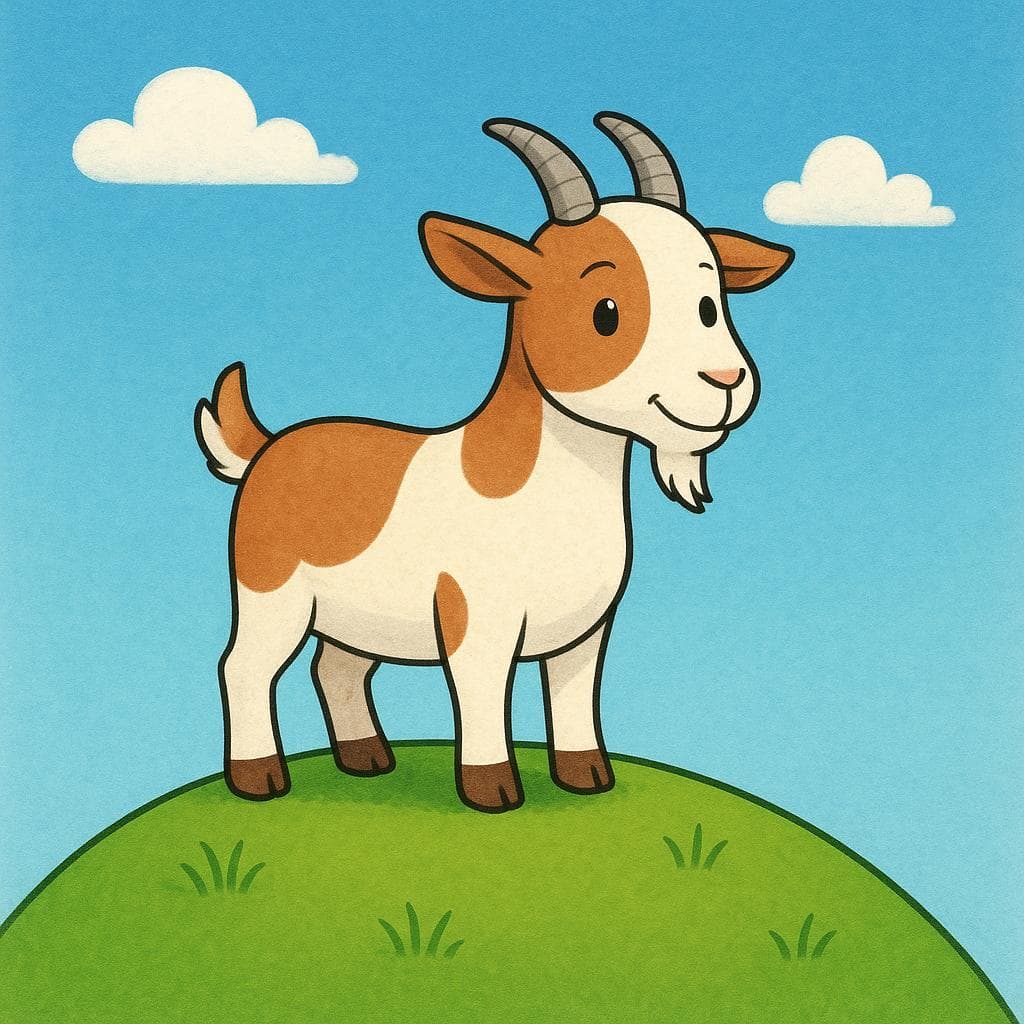

goat

📝 In Action
La cabra come hojas y ramas en la montaña.
A1The goat eats leaves and branches on the mountain.
El ganadero tiene un rebaño de veinte cabras.
A2The rancher has a herd of twenty goats.
Word Connections
crazy personAlso: nutcase

📝 In Action
Mi abuela está como una cabra, siempre bailando sola en el jardín.
B2My grandma is crazy/nuts, always dancing alone in the garden.
Solo a una cabra se le ocurriría subir esa montaña sin equipo.
C1Only a crazy person (nutcase) would think of climbing that mountain without equipment.

Vocabulary Collections
Translate to Spanish
Words that translate to "cabra" in Spanish:
✏️ Quick Practice
Quick Quiz: cabra
Question 1 of 1
Which sentence uses 'cabra' in its figurative, non-animal meaning?
📚 More Resources
👥 Word Family
🎵 Rhymes
📚 Etymology
The word comes directly from the Latin word *capra*, which meant 'female goat.' This root is shared across many Romance languages.
First recorded: Medieval Latin period
Cognates (Related words)
💡 Master Spanish
Take your Spanish to the next level. Read 200+ illustrated and narrated Spanish stories tailored to your level with the Inklingo app!
Frequently Asked Questions
Is 'cabra' only used for female goats?
While 'cabra' technically means 'female goat,' in everyday Spanish, it is very common and acceptable to use it as the general term for the entire species, similar to how we use 'cow' for the species.
If I want to say 'male goat,' what word should I use?
The specific word for a male goat is 'macho cabrío' or simply 'cabrón.' However, be very careful with 'cabrón' as it is a strong insult in many Spanish-speaking countries, often meaning 'jerk' or worse.