café
“café” means “coffee” in Spanish. It has 3 different meanings depending on context:

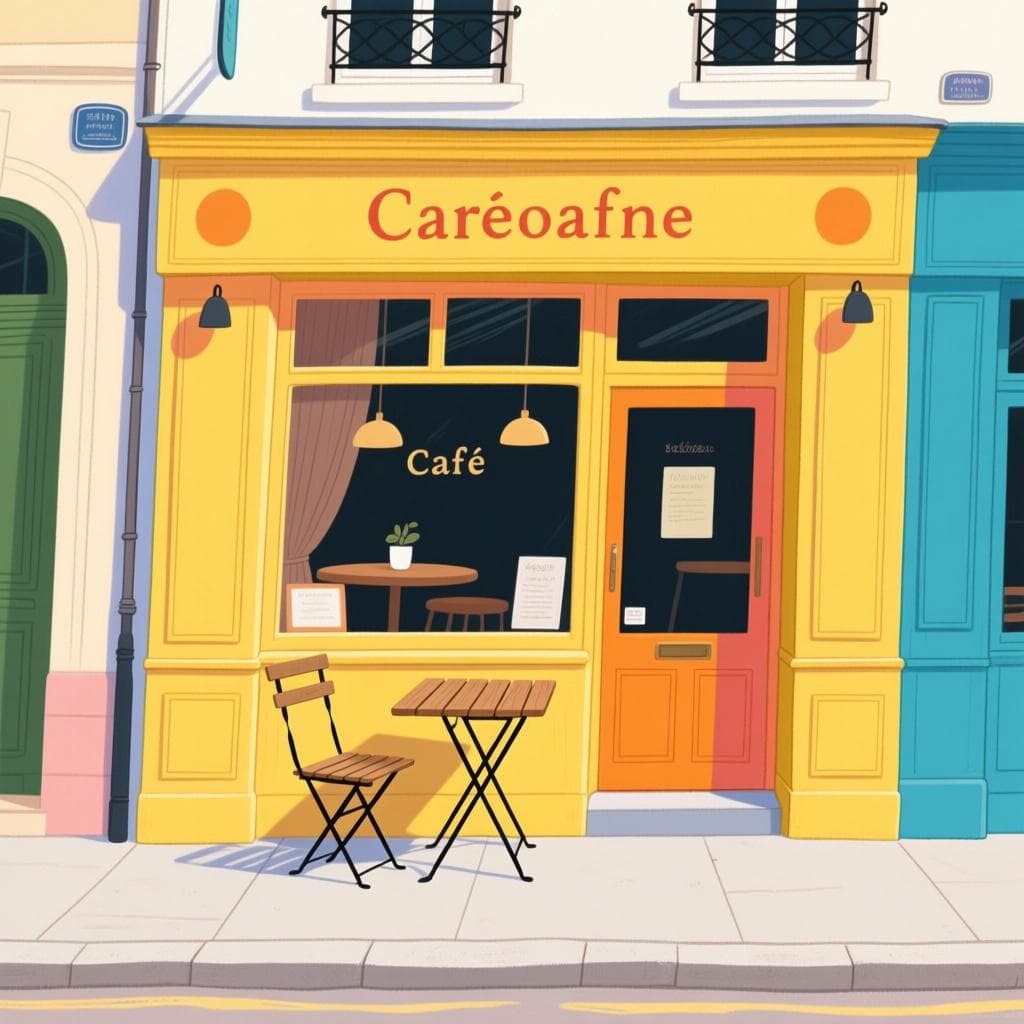

coffeeAlso: coffee bean

📝 In Action
Quiero un café con leche, por favor.
A1I'd like a coffee with milk, please.
Tomamos un café después de la cena.
A1We have a coffee after dinner.
Colombia exporta un café excelente.
B1Colombia exports excellent coffee (beans).
Word Connections
café, coffee shop

📝 In Action
Nos vemos en el café de la esquina a las cinco.
A1See you at the corner café at five.
Me gusta trabajar en un café porque hay buen ambiente.
A2I like to work in a coffee shop because there's a good atmosphere.
Word Connections
brown, coffee-colored

📝 In Action
Tiene los ojos de color café.
A2He/She has brown eyes.
Me compré unos zapatos café para combinar con mi chaqueta.
B1I bought some brown shoes to go with my jacket.
Las paredes café hacen que la habitación se vea más pequeña.
B1The brown walls make the room look smaller.
Word Connections
Translate to Spanish
Words that translate to "café" in Spanish:
✏️ Quick Practice
Quick Quiz: café
Question 1 of 2
Which sentence uses 'café' to describe a color?
📚 More Resources
👥 Word Family
📚 Etymology
The word 'café' has a fascinating journey! It comes to Spanish from the Italian 'caffè', which borrowed it from the Turkish 'kahve'. The Turkish word itself came from the Arabic 'qahwah' (قهوة), which originally might have referred to a type of wine.
First recorded: Around the 17th century
Cognates (Related words)
💡 Master Spanish
Take your Spanish to the next level. Read 200+ illustrated and narrated Spanish stories tailored to your level with the Inklingo app!
Frequently Asked Questions
What's the difference between using 'café' and 'marrón' for the color brown?
They both mean 'brown', and you can often use them interchangeably. However, 'café' is much more common in Latin America, while 'marrón' is more common in Spain. Also, 'café' often describes a specific, rich shade of brown, just like coffee!
Why does the accent mark on 'café' matter?
The accent on the 'é' is super important! It tells you to stress the last syllable: ca-FEH. Without it, the word would be 'cafe', stressed on the first syllable (CA-feh), which isn't a word in Spanish. That little line changes the whole sound!