camello
“camello” means “camel” in Spanish. It has 3 different meanings depending on context:



camelAlso: dromedary
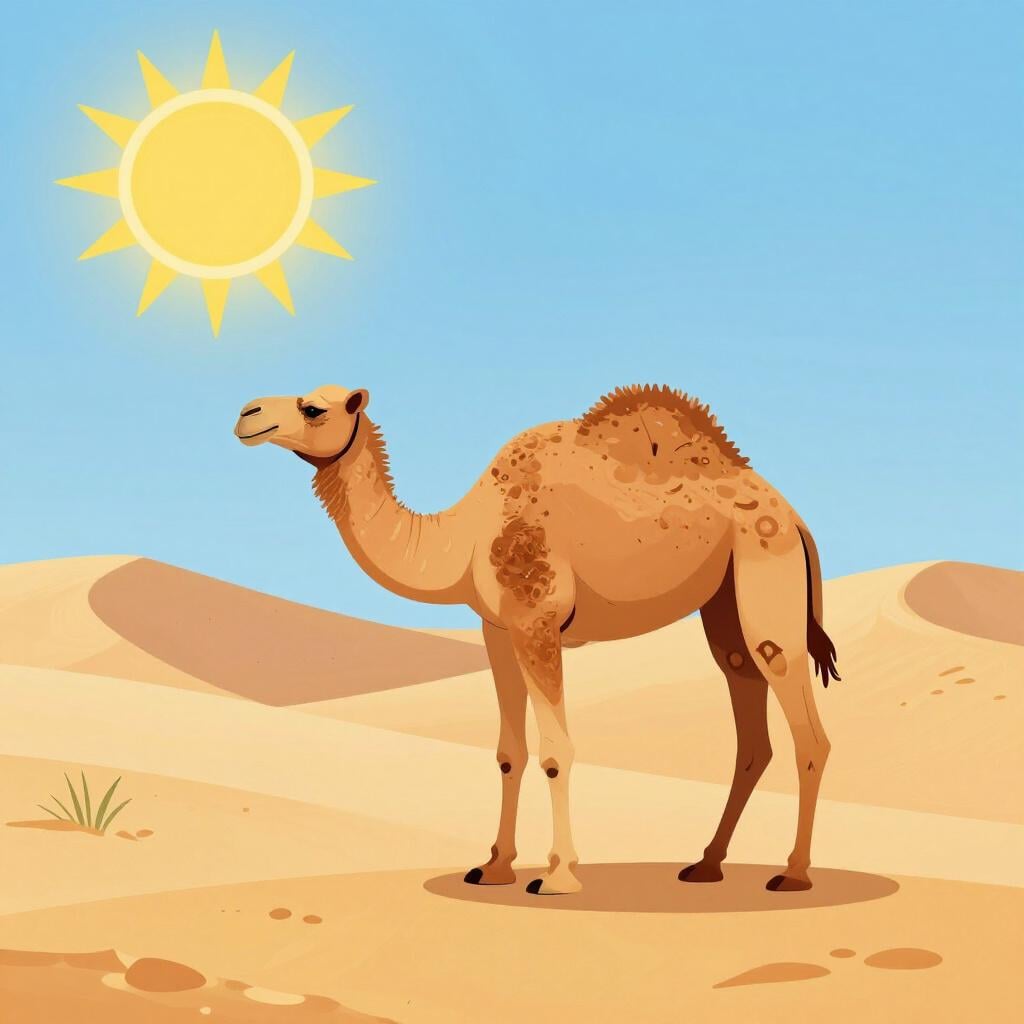
📝 In Action
Los camellos pueden pasar muchos días sin beber agua.
A2Camels can go many days without drinking water.
Vimos un camello cerca de las pirámides.
A1We saw a camel near the pyramids.
Word Connections
drug dealerAlso: pusher

📝 In Action
La policía detuvo al camello del barrio.
B2The police arrested the neighborhood drug dealer.
Word Connections
jobAlso: hard work

📝 In Action
Estoy buscando un camello para las vacaciones.
C1I'm looking for a job for the holidays.
¡Qué camello fue subir todas esas cajas!
C2What hard work it was moving all those boxes!
Word Connections
Vocabulary Collections
Translate to Spanish
✏️ Quick Practice
Quick Quiz: camello
Question 1 of 2
If you are in Bogotá and someone says 'Tengo mucho camello,' what do they mean?
📚 More Resources
👥 Word Family
📚 Etymology
From the Latin 'camelus', which came from the Greek 'kamelos', originally borrowed from Semitic languages (like Arabic 'jamal').
First recorded: 13th century
Cognates (Related words)
💡 Master Spanish
Take your Spanish to the next level. Read 200+ illustrated and narrated Spanish stories tailored to your level with the Inklingo app!
Frequently Asked Questions
Is 'camello' the same as 'dromedario'?
In everyday Spanish, many people use 'camello' for both. However, technically a 'camello' has two humps and a 'dromedario' has only one.
Is it offensive to use the word 'camello'?
When referring to the animal or 'work' (in Colombia), it's fine. However, calling a person a 'camello' in Spain usually implies they are a drug dealer, which is very offensive.