camiones
“camiones” means “trucks” in Spanish (large motorized vehicles for transport).
trucks, lorries
Also: buses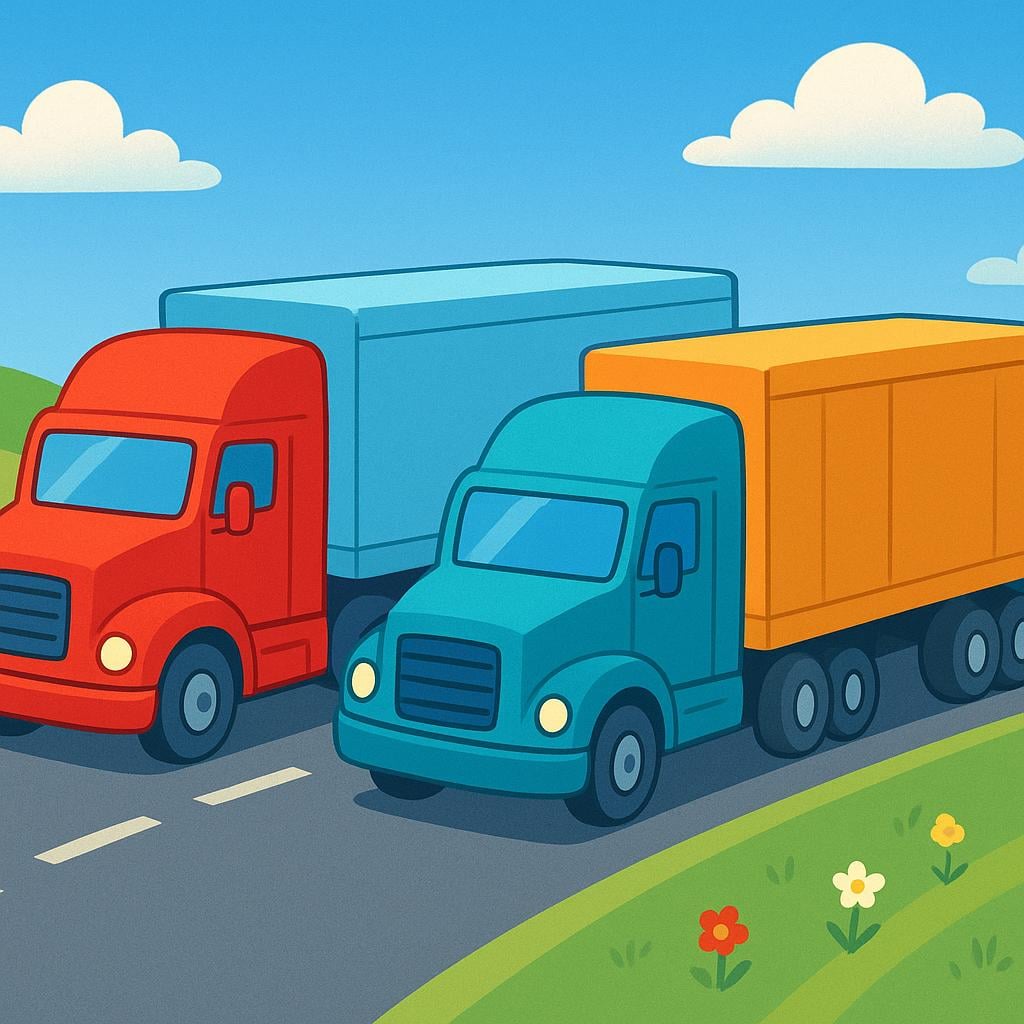
📝 In Action
El ruido de los camiones no me deja dormir.
A2The noise from the trucks doesn't let me sleep.
Vimos muchos camiones de carga en la autopista.
B1We saw many cargo trucks on the highway.
En México, la gente usa los camiones para ir al trabajo.
A1In Mexico, people use the buses (camiones) to go to work.
✏️ Quick Practice
Quick Quiz: camiones
Question 1 of 2
Which word is the singular form of 'camiones'?
📚 More Resources
👥 Word Family▼
📚 Etymology▼
The word 'camión' entered Spanish from French, where 'camion' originally referred to a large wagon or heavy cart. It gained its modern meaning as motorized vehicles became common in the 20th century.
First recorded: Mid-19th century (in French, later in Spanish)
Cognates (Related words)
💡 Master Spanish
Take your Spanish to the next level. Read 200+ illustrated and narrated Spanish stories tailored to your level with the Inklingo app!
Frequently Asked Questions
Why do I see 'camión' with an accent mark, but 'camiones' without one?
The accent mark in 'camión' tells you to stress the last syllable. When you add '-es' to make it plural ('camiones'), the natural stress pattern of the word shifts forward, so the written accent mark is no longer needed.
Is 'camiones' used for small delivery vans too?
Usually no. For smaller vans or pickup trucks, Spanish speakers use 'camioneta' or 'furgoneta.' 'Camiones' is reserved for large, heavy-duty vehicles.