camiseta
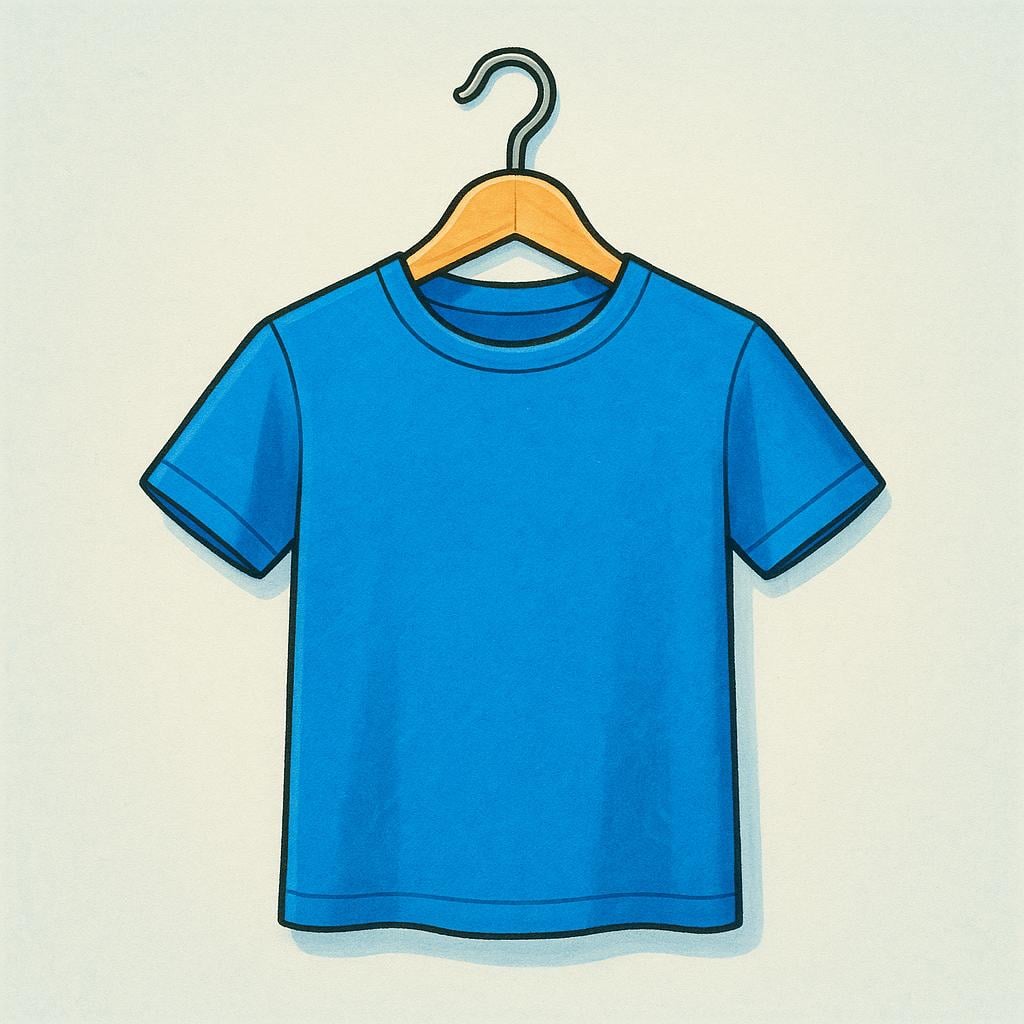
“camiseta” means “T-shirt” in Spanish (casual short-sleeved top).
T-shirt, jerseyAlso: undershirt
📝 In Action
Me puse una camiseta azul para ir al parque.
A1I put on a blue T-shirt to go to the park.
Llevaba la camiseta de su equipo de fútbol favorita.
A2He was wearing his favorite soccer team's jersey.
Necesito doblar las camisetas limpias y guardarlas en el armario.
A1I need to fold the clean T-shirts and put them away in the closet.
Word Connections
Translate to Spanish
Words that translate to "camiseta" in Spanish:
✏️ Quick Practice
Quick Quiz: camiseta
Question 1 of 2
Which of these garments is usually a 'camiseta'?
📚 More Resources
👥 Word Family
📚 Etymology
It comes from the Spanish word 'camisa' (meaning 'shirt' or 'smock'), combined with the diminutive suffix '-eta'. This structure shows that a 'camiseta' is essentially a smaller, simpler version of a standard shirt.
First recorded: Likely codified in the 18th or 19th century as casual wear became distinct from formal wear.
Cognates (Related words)
💡 Master Spanish
Take your Spanish to the next level. Read 200+ illustrated and narrated Spanish stories tailored to your level with the Inklingo app!
Frequently Asked Questions
What is the difference between 'camiseta' and 'camisa'?
'Camiseta' is the casual T-shirt or jersey, typically made of knit cotton and pulled over the head. 'Camisa' is the more formal shirt, usually with buttons down the front and a collar (like a dress shirt).
Can 'camiseta' refer to a tank top?
Yes. While you might specifically say 'camiseta sin mangas' (sleeveless T-shirt), 'camiseta' can be used generally for any simple top, including tank tops or vests, especially in a sports context.