cañón
“cañón” means “cannon” in Spanish. It has 3 different meanings depending on context:


cannon
Also: artillery piece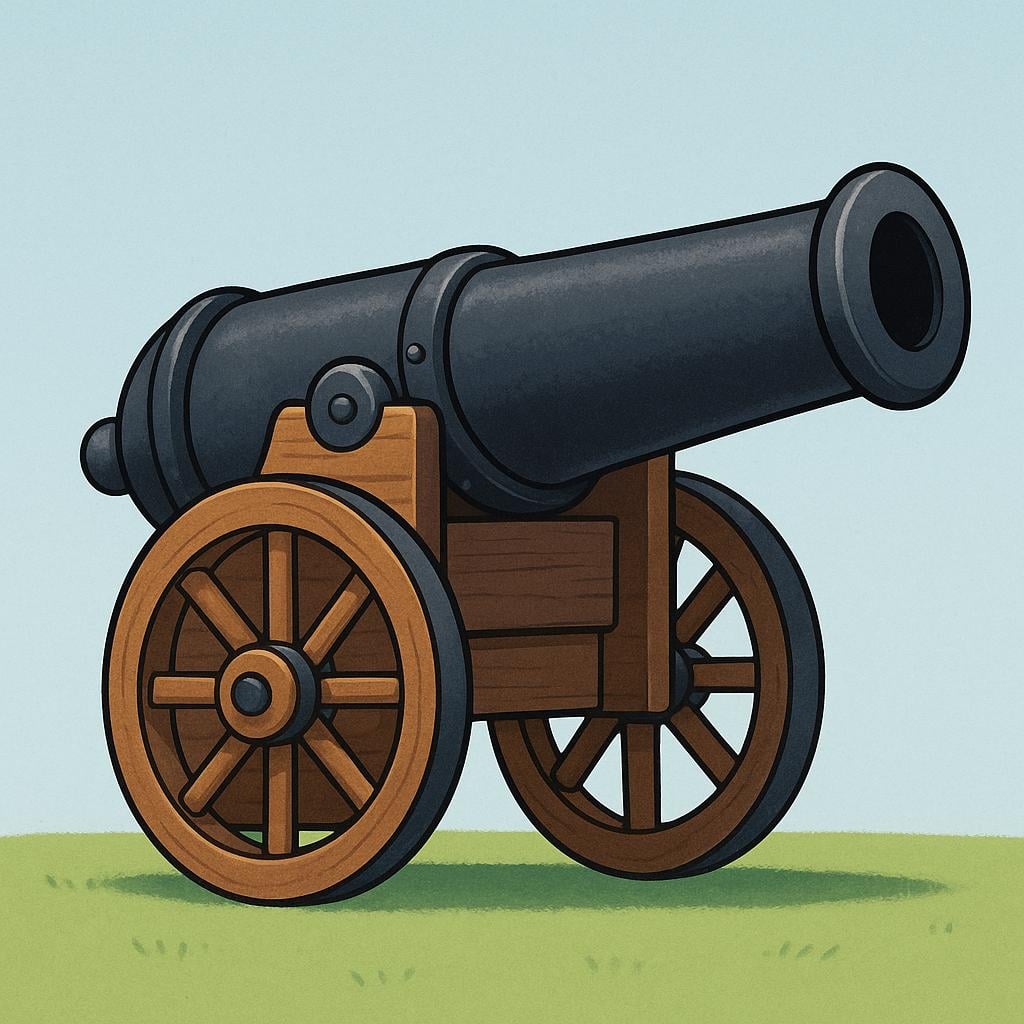
📝 In Action
En el castillo aún quedan varios cañones antiguos.
B1There are still several old cannons left in the castle.
El cañón disparó una bola de hierro.
B1The cannon fired an iron ball.
canyon
Also: gorge
📝 In Action
Fuimos de excursión al cañón del río durante el verano.
B1We went hiking in the river canyon during the summer.
El cañón tiene paredes muy empinadas y profundas.
B2The canyon has very steep and deep walls.
awesome
Also: cool
📝 In Action
¡Qué cañón está tu coche nuevo!
C1Your new car is so cool/awesome!
La película que vimos anoche fue cañón.
C1The movie we saw last night was great.
Esa canción es cañón, la estoy escuchando sin parar.
C1That song is awesome, I'm listening to it non-stop.
Translate to Spanish
✏️ Quick Practice
Quick Quiz: cañón
Question 1 of 2
Which sentence uses 'cañón' in its slang meaning (awesome/cool)?
📚 More Resources
👥 Word Family▼
🎵 Rhymes▼
📚 Etymology▼
The word comes from the augmentative form of 'caña,' which means 'reed' or 'cane.' It originally referred to any large, thick tube, such as the barrel of a weapon or a deep, tube-like valley (canyon).
First recorded: 15th century
Cognates (Related words)
💡 Master Spanish
Take your Spanish to the next level. Read 200+ illustrated and narrated Spanish stories tailored to your level with the Inklingo app!
Frequently Asked Questions
Is the slang meaning of 'cañón' used everywhere in the Spanish-speaking world?
No. The slang usage of 'cañón' meaning 'awesome' or 'great' is very specific to Spain. If you use it in Mexico or Argentina, for example, people will likely only understand the literal meanings (canyon or cannon).
Does 'cañón' ever refer to the tube part of an object, like a pipe or a barrel?
Yes, 'cañón' is often used neutrally to describe the barrel of a gun (el cañón del rifle) or the spout of a faucet, reflecting its original meaning as a large tube.