Inklingo

ciega

/SYEH-gah/

blind

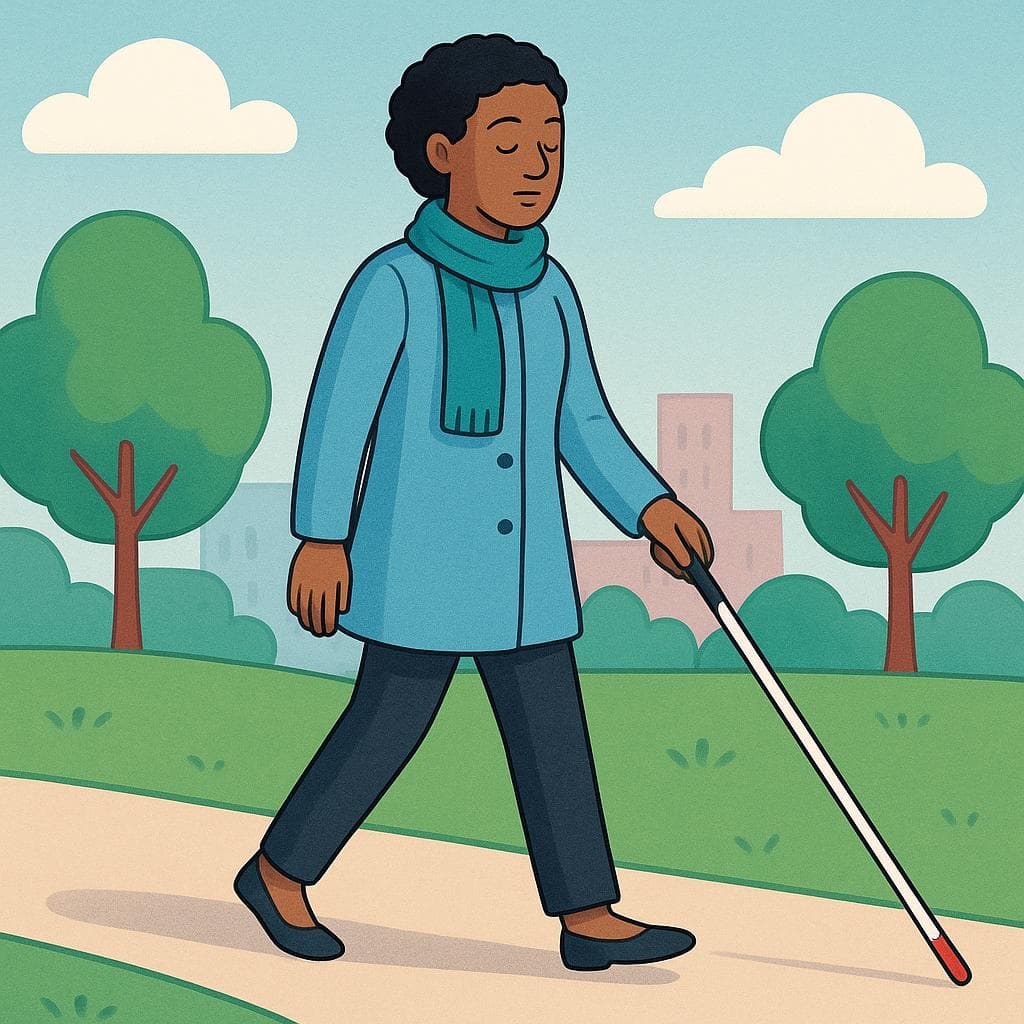
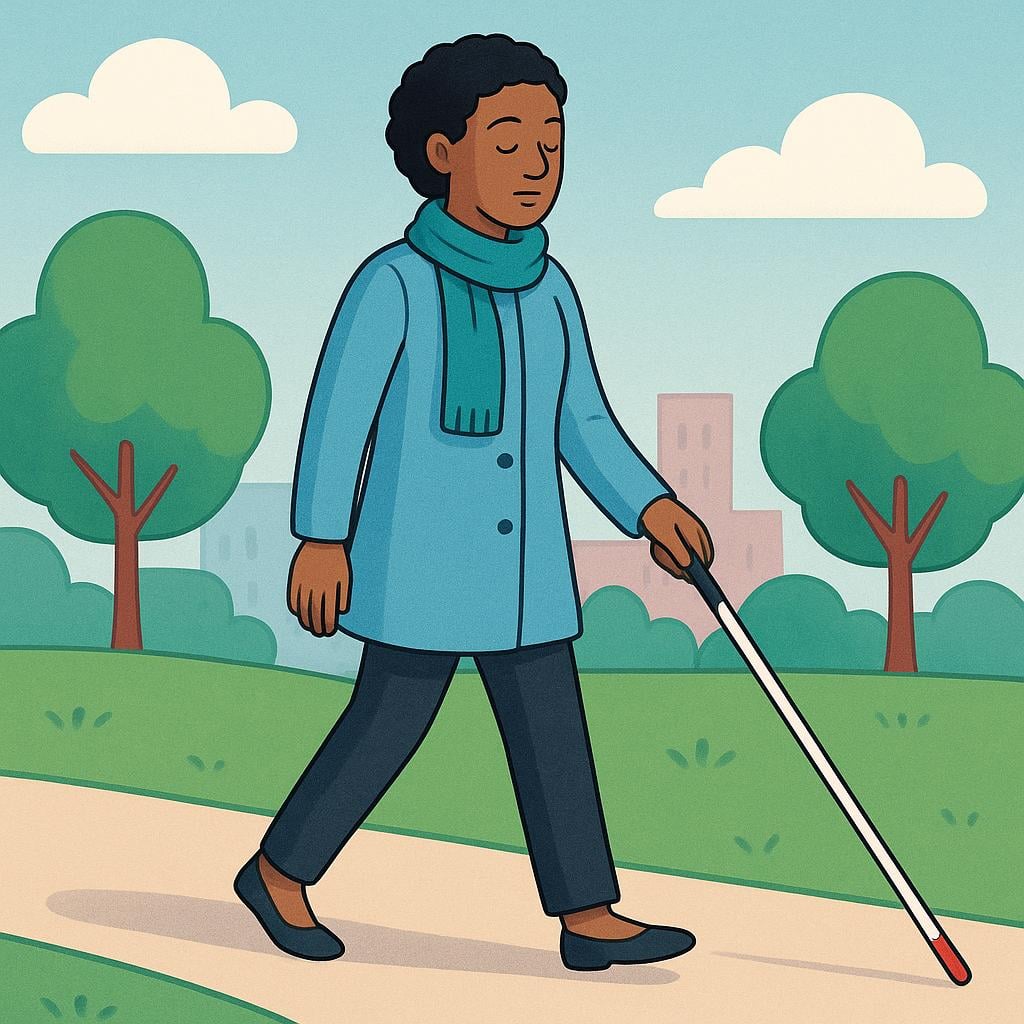
A woman stands outdoors, holding a white cane extended in front of her, indicating she is blind.

Depicting the adjective 'blind', or lacking sight.

ciega(adjective)

fA2

blind

?

lacking sight

Also:

unthinking

?

figurative, e.g., 'blind rage'

,

unreasoning

?

figurative

📝 In Action

Mi abuela es ciega de nacimiento.

A2

My grandmother has been blind since birth.

Actuó movida por una rabia ciega.

B1

She acted driven by a blind (unthinking) rage.

Necesitas una cita ciega para conocer gente nueva.

B1

You need a blind date to meet new people.

Word Connections

Synonyms

  • invidente (visually impaired)
  • oscura (dark (figurative for unaware))

Antonyms

  • vidente (sighted)
  • clara (clear)

Common Collocations

  • cita ciegablind date
  • fe ciegablind faith

💡 Grammar Points

Gender Matching

As an adjective, 'ciega' must match the feminine person or thing it describes. If you were describing a man, you would use 'ciego'.

❌ Common Pitfalls

Confusing Adjective and Noun

Mistake: "Using 'la ciega' when you mean 'la mujer ciega'."

Correction: While 'la ciega' is correct (Definition 2), it is often more polite and descriptive to use 'persona ciega' or 'mujer ciega' if you are referring to the characteristic, not the person as a noun.

⭐ Usage Tips

Use with *Estar* or *Ser*

Use the verb ser (es ciega) because sight is usually a permanent characteristic. Use estar (está ciega) only if the lack of sight is temporary or caused by something external (like temporary dazzling).

A simple portrait of a woman sitting and reading a book by running her fingertips over the raised dots of Braille.

Depicting the noun 'blind woman', a female person lacking sight.

ciega(noun)

fA2

blind woman

?

a female person lacking sight

📝 In Action

Ayudamos a la ciega a cruzar la calle.

A2

We helped the blind woman cross the street.

La joven ciega leyó el libro en braille.

B1

The young blind woman read the book in braille.

Word Connections

Synonyms

  • invidente (visually impaired person)

💡 Grammar Points

The Noun Form

When 'ciega' is used as a noun, it stands alone and refers directly to the person. It is always feminine.

⭐ Usage Tips

Politeness in Usage

While correct, many speakers prefer the term 'persona invidente' (visually impaired person) as a more respectful alternative in formal situations.

A figure shields their face with an arm as an overwhelming, brilliant flash of white light bursts towards them, temporarily blinding them.

Depicting the verb 'blinds' (3rd person singular present), meaning to cause someone to lose sight.

ciega(verb)

B1irregular (stem-changing e>ie) ar

blinds

?

3rd person singular present of 'cegar'

,

dazzles

?

3rd person singular present of 'cegar'

Also:

blocks up

?

3rd person singular present, figurative or literal blocking

📝 In Action

La envidia ciega a la gente y les hace cometer errores.

B1

Envy blinds people and makes them commit mistakes.

Esa luz tan fuerte ciega al conductor.

B1

That strong light blinds the driver.

Usted ciega el hueco con cemento.

B2

You (formal) block up the hole with cement.

Word Connections

Synonyms

  • deslumbrar (to dazzle)
  • obcecar (to obsess/to cloud judgment)

Antonyms

  • iluminar (to illuminate)

Common Collocations

  • la luz ciegathe light blinds

💡 Grammar Points

Stem Change E → IE

The verb cegar changes the 'e' in its root to 'ie' whenever the stress falls on the root (which happens for most singular forms and the third-person plural in the present tense).

Spelling Change in Preterite/Subjunctive

Notice the 'g' changes to 'gu' in the nosotros and vosotros forms of the present subjunctive (ceguemos, ceguéis) and the yo form of the preterite (cegué). This is just to keep the 'g' sound hard, like in 'gato'.

⭐ Usage Tips

Figurative Use

The verb cegar is often used figuratively to mean that a strong emotion (like rage, love, or ambition) makes someone unable to think clearly.

🔄 Conjugations

indicative

present

él/ella/ustedciega
yociego
ciegas
ellos/ellas/ustedesciegan
nosotroscegamos
vosotroscegáis

imperfect

él/ella/ustedcegaba
yocegaba
cegabas
ellos/ellas/ustedescegaban
nosotroscegábamos
vosotroscegabais

preterite

él/ella/ustedcegó
yocegué
cegaste
ellos/ellas/ustedescegaron
nosotroscegamos
vosotroscegasteis

subjunctive

present

él/ella/ustedciegue
yociegue
ciegues
ellos/ellas/ustedescieguen
nosotrosceguemos
vosotrosceguéis

imperfect

él/ella/ustedcegara/cegase
yocegara/cegase
cegaras/cegases
ellos/ellas/ustedescegaran/cegasen
nosotroscegáramos/cegásemos
vosotroscegarais/cegaseis

✏️ Quick Practice

💡 Quick Quiz: ciega

Question 1 of 2

Which sentence uses 'ciega' in its verb form?

📚 More Resources

Word Family

ciego(blind (masculine)) - adjective

Frequently Asked Questions

Is 'ciega' rude to use?

While 'ciega' (blind woman) is technically correct, many people prefer the term 'invidente' (visually impaired) as it is considered more respectful and less direct. Context matters: 'cita ciega' (blind date) is completely normal.

How do I know if 'ciega' is the adjective or the verb?

If it follows a verb like *ser* or *estar* (Ella es ciega), it's usually the adjective. If it is acting as the main action of the sentence and could be replaced by 'blinds' (El sol ciega), it is the verb form of *cegar*.