cochero
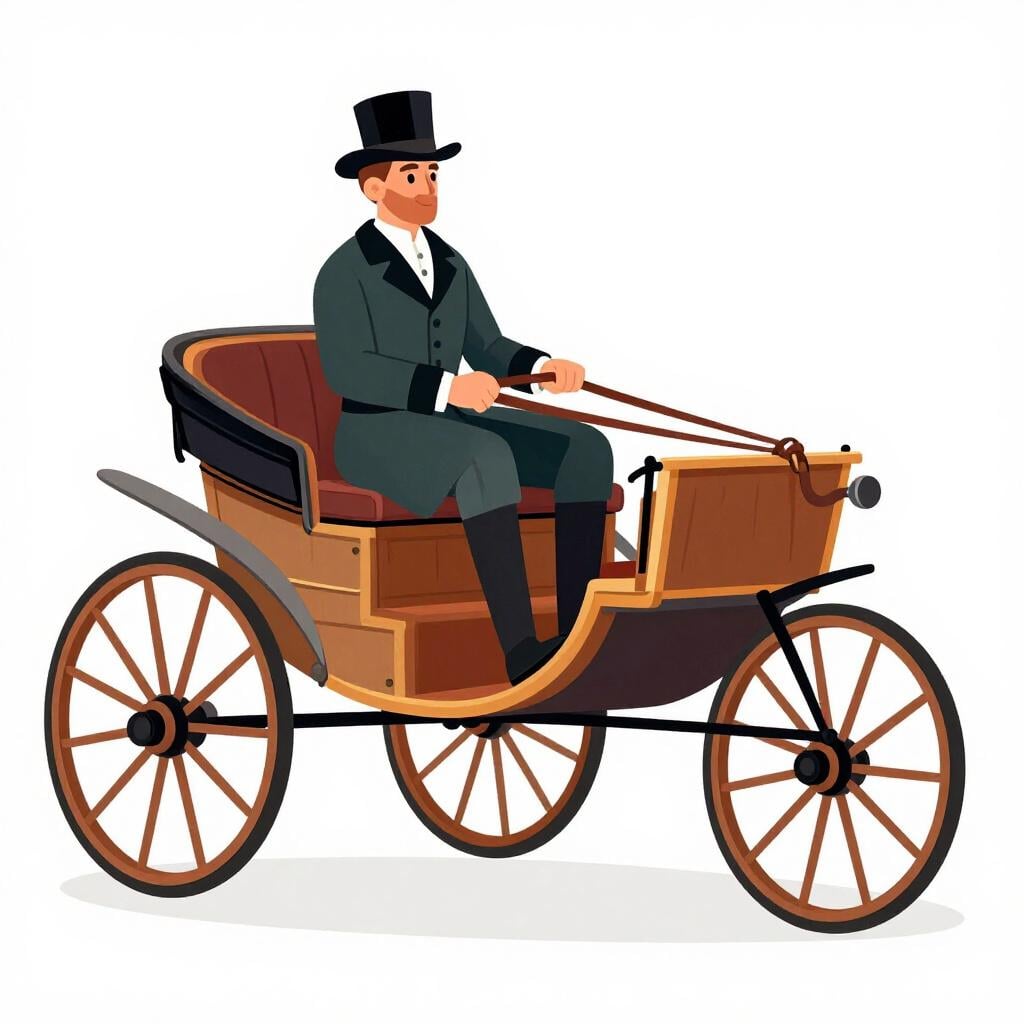
“cochero” means “coachman” in Spanish (a person who drives a horse-drawn carriage).
coachmanAlso: carriage driver
📝 In Action
El cochero guiaba los caballos con mucha habilidad.
A2The coachman was leading the horses with great skill.
En las películas antiguas, el cochero siempre lleva un sombrero de copa.
B1In old movies, the coachman always wears a top hat.
Contratamos a un cochero para recorrer el centro histórico en carroza.
B2We hired a carriage driver to tour the historic center in a horse-drawn carriage.
Word Connections
Translate to Spanish
Words that translate to "cochero" in Spanish:
✏️ Quick Practice
Quick Quiz: cochero
Question 1 of 3
What is a 'cochero' most likely to be driving?
📚 More Resources
👥 Word Family
📚 Etymology
From 'coche' (carriage), which actually traces back to the Hungarian word 'kocsi', named after the town of Kocs where high-quality carriages were first made in the 15th century.
First recorded: 16th century
Cognates (Related words)
💡 Master Spanish
Take your Spanish to the next level. Read 200+ illustrated and narrated Spanish stories tailored to your level with the Inklingo app!
Frequently Asked Questions
Is 'cochero' still a common job today?
Not in the traditional sense of transportation. Today, cocheros mostly work in the tourism industry, giving carriage rides in historic cities, or in ceremonial roles for royalty.
Does 'cochero' mean the same thing in Latin America and Spain?
Yes, the meaning is consistent across the Spanish-speaking world, though the frequency of seeing one depends on how much a city preserves its horse-and-carriage traditions.
What is the female version of 'cochero'?
The female version is 'cochera', though traditionally this was a male-dominated profession. Note that 'cochera' also commonly means 'garage' in many countries.