Inklingo

comidas

/koh-MEE-dahs/

meals

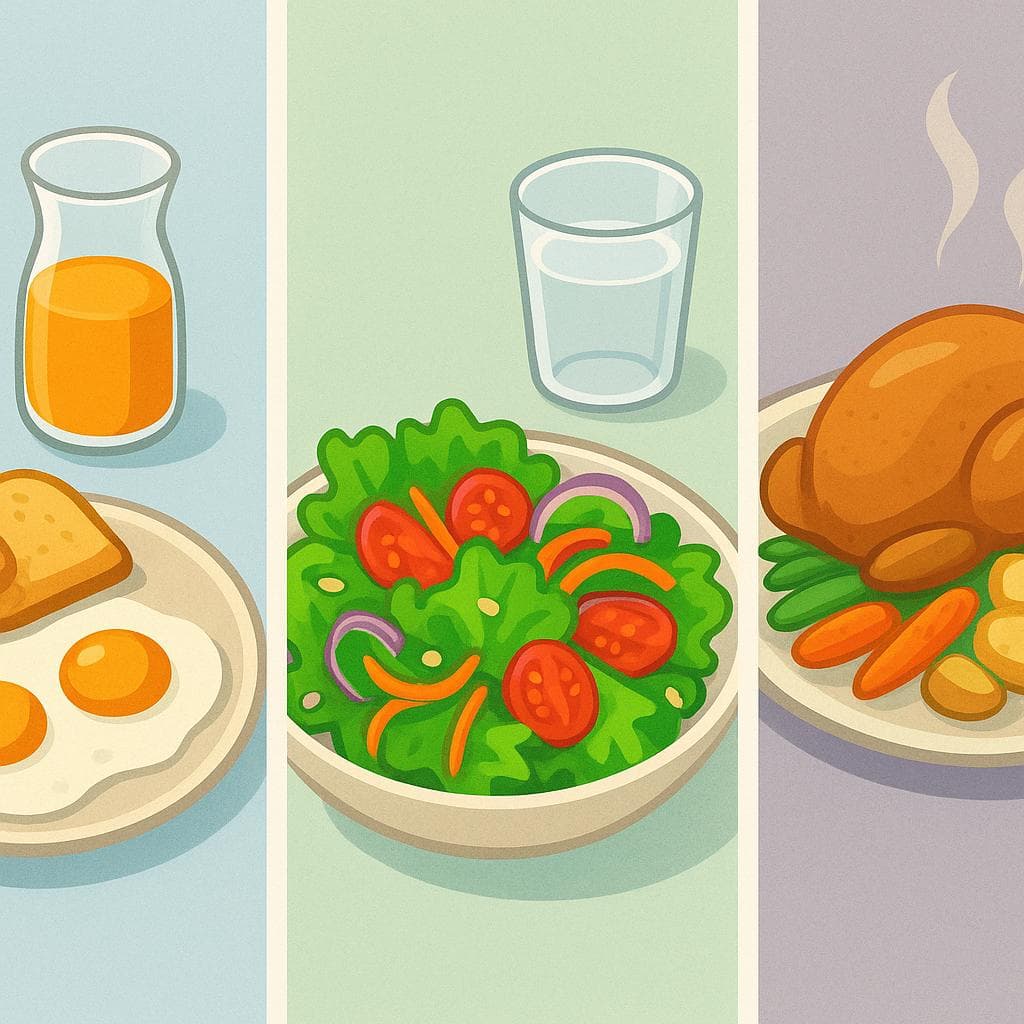
Three distinct small illustrations arranged side-by-side: one showing a breakfast setting with eggs, one showing a lunch setting with a salad, and one showing a dinner setting with a roast, representing different scheduled meals.

The word 'comidas' refers to scheduled meals, such as breakfast, lunch, and dinner.

comidas(noun)

fA1

meals

?

scheduled eating times (breakfast, lunch, dinner)

Also:

foods

?

general items of nourishment (plural form of 'food')

,

lunches/dinners

?

when referring to specific midday or evening meals

📝 In Action

En España se hacen tres comidas principales al día.

A1

In Spain, they have three main meals a day.

Las comidas mexicanas son picantes y deliciosas.

A2

Mexican foods are spicy and delicious.

¿Qué comidas preparaste para la fiesta?

A2

What meals (or foods) did you prepare for the party?

Word Connections

Synonyms

Common Collocations

  • comer fuera de las comidasto snack between meals
  • comidas caserashomemade meals

💡 Grammar Points

Plural of 'Comida'

This word is the plural of 'comida' (the singular noun for 'food' or 'meal'). Because it ends in a vowel, you just add an '-s' to make it plural.

❌ Common Pitfalls

Confusing 'Comida' and 'Almuerzo'

Mistake: "Using 'almuerzos' (lunches) when you mean 'meals' in general."

Correction: 'Comidas' is the general term for meals (like breakfast, lunch, and dinner). 'Almuerzo' is usually just the midday meal.

⭐ Usage Tips

Use with 'Hacer' or 'Tener'

In Spanish, you often use the verb 'hacer' (to make/do) or 'tener' (to have) when talking about eating meals, rather than just 'comer': 'hacer las comidas' or 'tener las comidas'.

A white serving platter sitting on a table, covered in scattered crumbs. Four cookies are visible, each having been partially consumed, illustrating that the items have been eaten.

As an adjective, 'comidas' means 'eaten,' describing plural feminine items that have been consumed.

comidas(adjective)

fB2

eaten

?

describing plural feminine items that have been consumed

Also:

consumed

?

used as the past participle of 'comer' (to eat)

📝 In Action

Las galletas comidas por el niño estaban en la mesa.

B2

The cookies eaten by the child were on the table.

Solo quedan dos manzanas, las otras ya están comidas.

C1

Only two apples are left; the others are already eaten.

💡 Grammar Points

The Past Participle

This form comes from the verb 'comer' (to eat). When used as an adjective, it describes a noun and must match its number (plural) and gender (feminine).

Used with 'Estar'

You often see this form used with the verb 'estar' (to be) to describe the state of something after the action: 'Las frutas están comidas' (The fruits are eaten/have been consumed).

⭐ Usage Tips

Focus on Agreement

Remember to change the ending: 'comido' (masculine singular), 'comida' (feminine singular), 'comidos' (masculine plural), and 'comidas' (feminine plural).

✏️ Quick Practice

💡 Quick Quiz: comidas

Question 1 of 2

Which sentence correctly uses 'comidas' as the main noun?

📚 More Resources

Frequently Asked Questions

Is 'comidas' the same as 'alimentos'?

They are very similar! 'Comidas' usually refers to dishes, specific prepared meals, or the act of eating. 'Alimentos' is a more formal or scientific term for 'foodstuffs' or nutrition in general.

How do I know if 'comidas' means 'meals' or 'eaten'?

If it is preceded by an article (like 'las') or a number, it's almost always the noun 'meals' or 'foods'. If it follows a form of the verb 'estar' (to be) and is describing something else, it's the adjective 'eaten'.