conspiración
“conspiración” means “conspiracy” in Spanish (secret plot).
conspiracy, plot
Also: scheme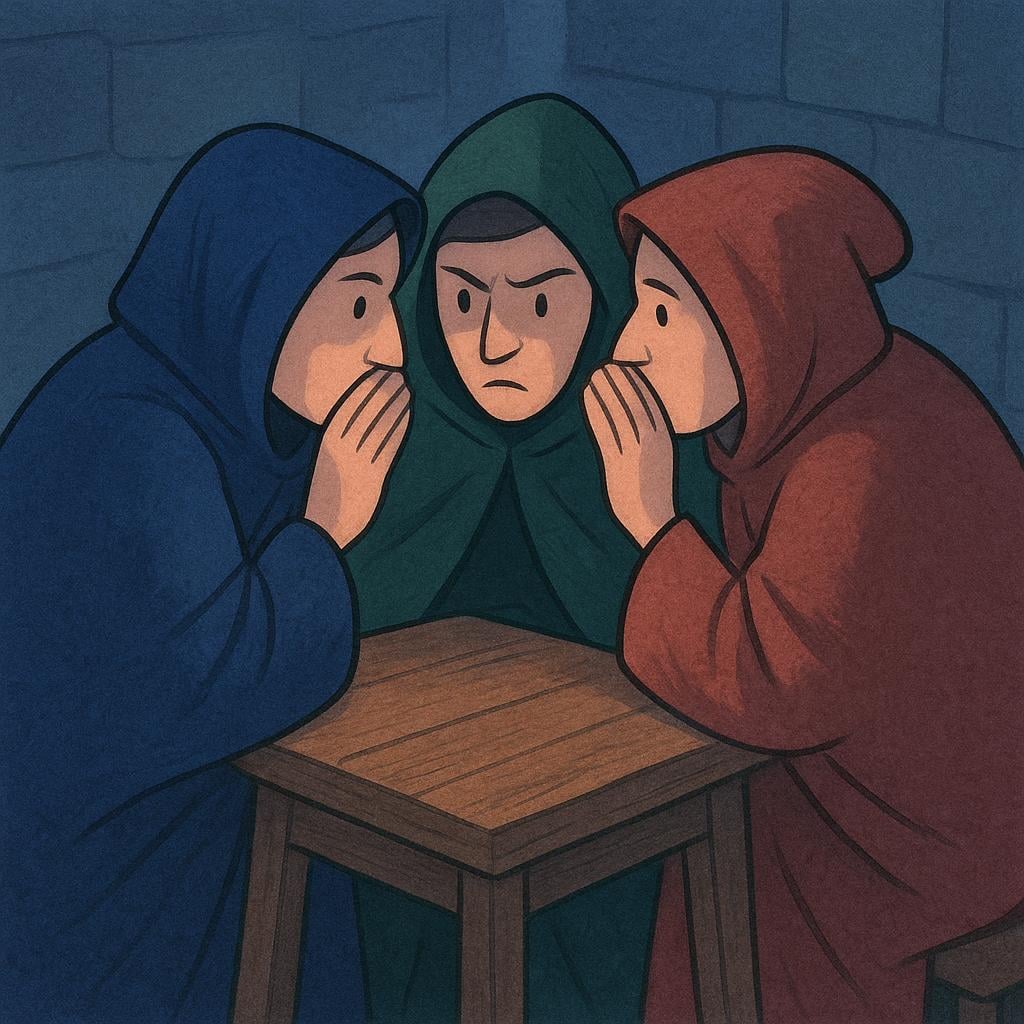
📝 In Action
La policía descubrió la conspiración para robar el banco central.
B2The police uncovered the conspiracy to rob the central bank.
Mucha gente cree en teorías de la conspiración sobre el aterrizaje en la luna.
B2Many people believe in conspiracy theories about the moon landing.
El senador fue acusado de participar en una conspiración política.
C1The senator was accused of participating in a political conspiracy.
✏️ Quick Practice
Quick Quiz: conspiración
Question 1 of 1
Which phrase correctly uses 'conspiración' to describe a secret plot?
📚 More Resources
👥 Word Family▼
🎵 Rhymes▼
📚 Etymology▼
This word comes from the Latin word 'conspiratio,' which is based on the verb 'conspirare.' This verb literally meant 'to breathe together' or 'to harmonize,' suggesting people sharing the same secret air or plan. Over time, it specifically came to mean 'to plot in secret.'
First recorded: 15th century
Cognates (Related words)
💡 Master Spanish
Take your Spanish to the next level. Read 200+ illustrated and narrated Spanish stories tailored to your level with the Inklingo app!
Frequently Asked Questions
Is 'conspiración' the same as 'complot'?
They are very similar synonyms, both meaning 'plot' or 'scheme.' 'Conspiración' is slightly more formal and often implies a larger, more serious political or criminal undertaking. 'Complot' can be used for smaller, personal schemes as well.
How do I use the term 'conspiracy theory'?
The standard Spanish phrase is 'teoría de la conspiración.' Remember that 'teoría' is also feminine, so you would say 'una teoría de la conspiración.'