criada
“criada” means “maid” in Spanish. It has 2 different meanings depending on context:
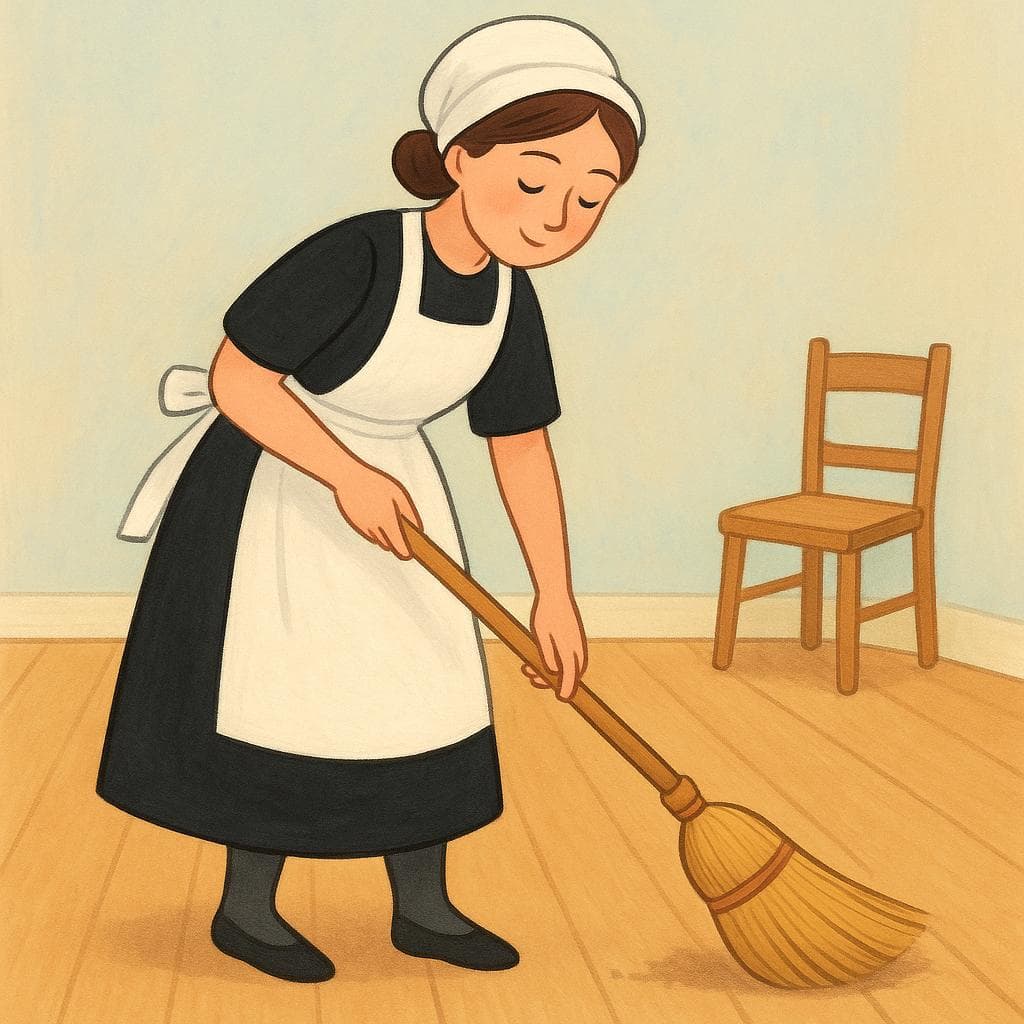

maid, servantAlso: housekeeper

📝 In Action
La criada preparó el desayuno antes de que saliera el sol.
B1The maid prepared breakfast before the sun came out.
En la película, la criada era la única que sabía el secreto.
B2In the movie, the servant was the only one who knew the secret.
Word Connections
raised, bredAlso: nurtured

📝 In Action
Ella fue criada por su tía en un pueblo pequeño.
A2She was raised by her aunt in a small town.
La ternera es criada para la producción de carne.
B1The calf is bred for meat production.
Word Connections
Translate to Spanish
Words that translate to "criada" in Spanish:
✏️ Quick Practice
Quick Quiz: criada
Question 1 of 2
Which sentence uses 'criada' in its meaning as a description (adjective)?
📚 More Resources
👥 Word Family
📚 Etymology
The word comes from the Latin verb *creare*, which means 'to create' or 'to produce.' In Spanish, *criar* took on the meaning of 'to raise' or 'to bring up.' Therefore, *criada* literally means 'one who has been raised.' Historically, this led to the meaning of a domestic servant who was often raised or kept within the household.
First recorded: 13th century
Cognates (Related words)
💡 Master Spanish
Take your Spanish to the next level. Read 200+ illustrated and narrated Spanish stories tailored to your level with the Inklingo app!
Frequently Asked Questions
Is 'criada' an offensive word?
While not always offensive, the noun *criada* (maid/servant) is considered old-fashioned and carries historical baggage related to class structures. It is much safer and more respectful to use *empleada doméstica* (domestic worker) instead.
How do I know if 'criada' means 'maid' or 'raised'?
Look at the context. If it's used as a standalone subject (like 'La criada llegó'), it's the noun 'maid.' If it follows a form of the verb *ser* or *estar* and describes a person's upbringing (like 'Ella es criada en la ciudad'), it means 'raised' or 'brought up.'