crucero
“crucero” means “cruise” in Spanish. It has 3 different meanings depending on context:
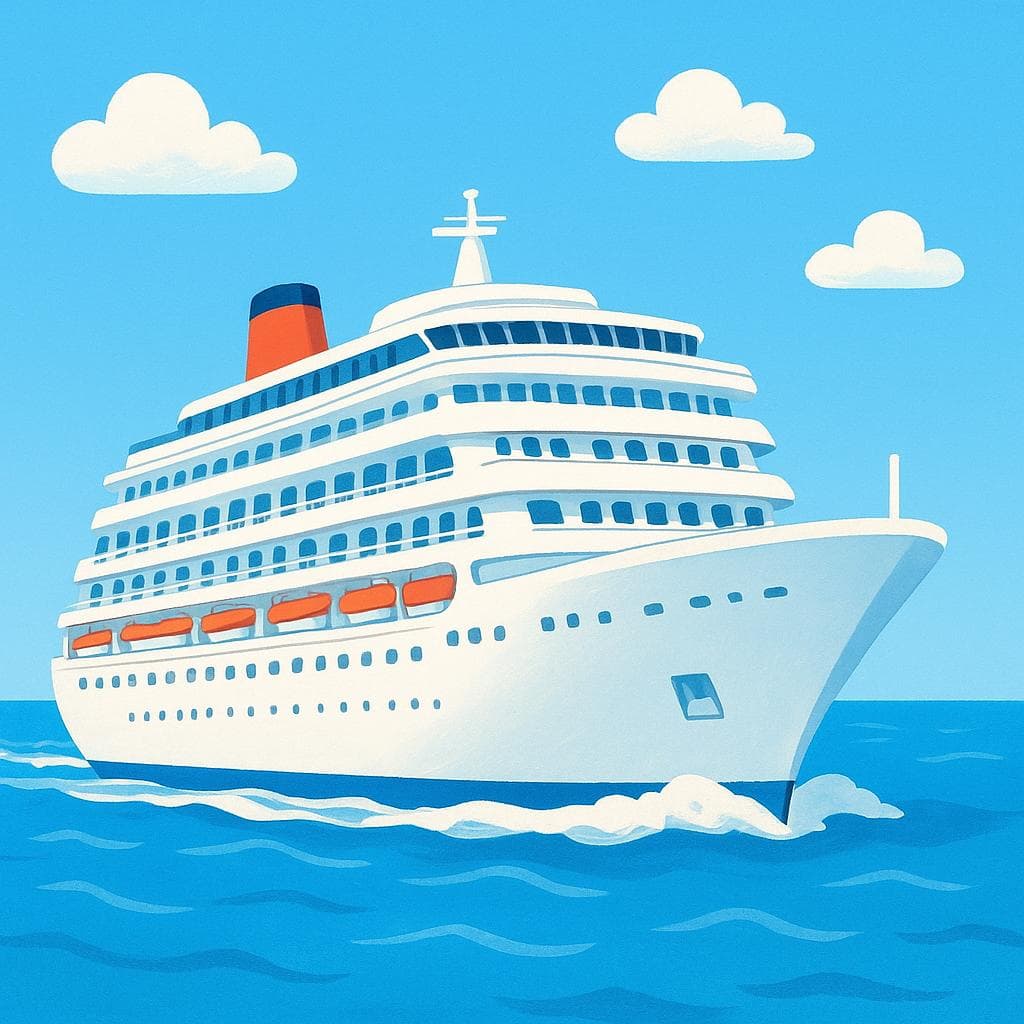

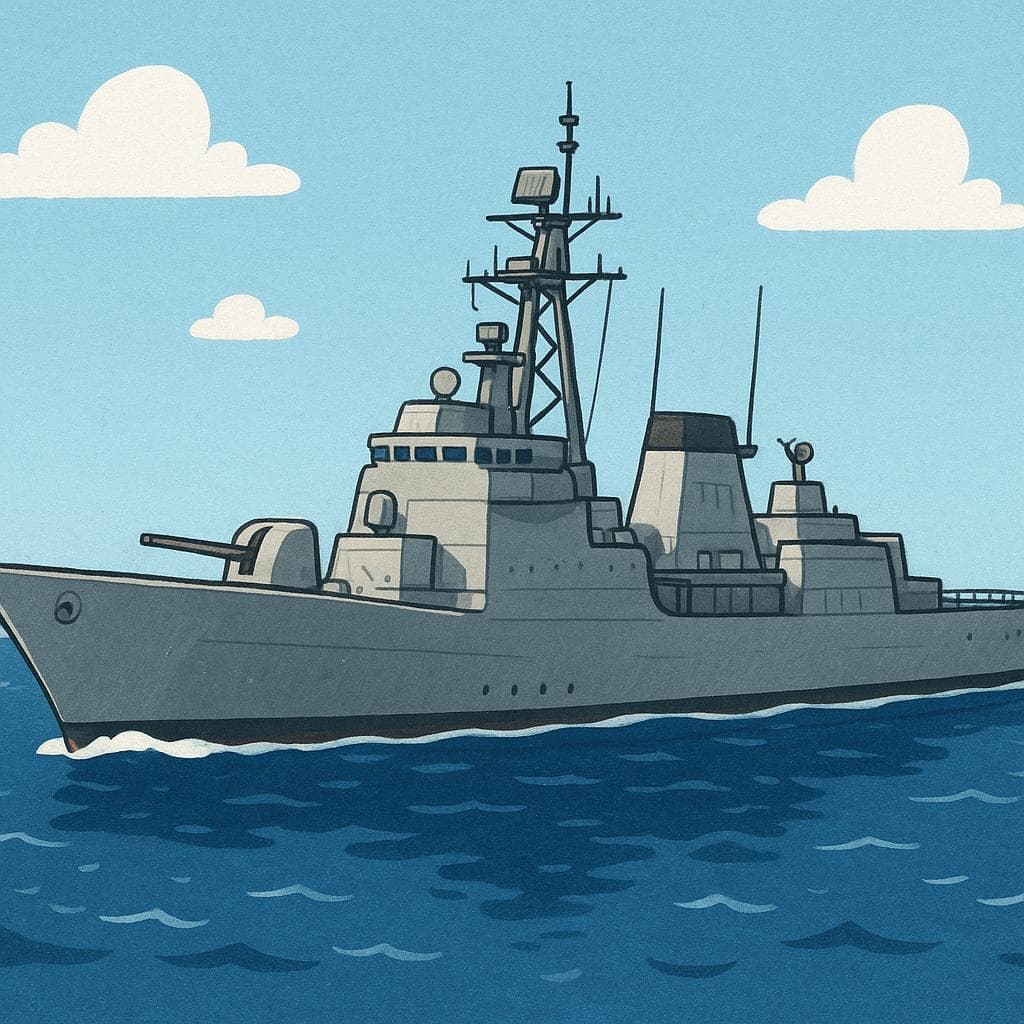
cruise, cruise ship

📝 In Action
Reservamos un crucero por el Caribe para el invierno.
B1We booked a cruise through the Caribbean for the winter.
El crucero era tan grande que parecía una ciudad flotante.
B2The cruise ship was so big that it looked like a floating city.
Word Connections
intersection, crossingAlso: crossroads

📝 In Action
Tuvimos que esperar mucho en el crucero principal de la ciudad.
A2We had to wait a long time at the main intersection of the city.
Hay un semáforo nuevo en ese crucero peligroso.
B1There is a new traffic light at that dangerous crossing.
Word Connections
cruiserAlso: crossing

📝 In Action
El crucero de batalla fue hundido durante la Segunda Guerra Mundial.
C1The battle cruiser was sunk during the Second World War.
El altar mayor se encuentra justo bajo el crucero de la catedral.
C2The main altar is located right under the crossing (of the nave and transept) of the cathedral.
Word Connections
Translate to Spanish
Words that translate to "crucero" in Spanish:
✏️ Quick Practice
Quick Quiz: crucero
Question 1 of 1
Which sentence uses 'crucero' to refer to a location on land?
📚 More Resources
📚 Etymology
Comes from the verb 'cruzar' (to cross), which itself traces back to the Latin word 'crux,' meaning 'cross.' The suffix '-ero' implies a place or a thing related to the action of crossing.
First recorded: 13th century (in related forms)
Cognates (Related words)
💡 Master Spanish
Take your Spanish to the next level. Read 200+ illustrated and narrated Spanish stories tailored to your level with the Inklingo app!
Frequently Asked Questions
What is the difference between 'crucero' and 'cruce'?
'Cruce' usually refers to a simple crossing or junction (like a pedestrian crossing or a minor road meeting another). 'Crucero' is often used for a major, complex intersection of roads, or, most commonly, for a large cruise ship or the trip itself.
Is 'crucero' always masculine?
Yes, 'crucero' is always masculine ('el crucero'), regardless of whether you are talking about the ship, the trip, or the road intersection.