Inklingo

despertar

/des-per-TAR/

to wake (someone) up

A smiling adult gently taps a sleeping child's shoulder in a sunny bedroom to wake them up.

When you wake someone else up, you use despertar (to wake someone up).

despertar(Verb)

A1irregular (e→ie stem change) ar

to wake (someone) up

?

causing someone else to awaken

Also:

to rouse

?

formal or literary

📝 In Action

Mi alarma me despierta a las seis de la mañana.

A1

My alarm wakes me up at six in the morning.

El ruido despertó a todos los vecinos.

A2

The noise woke up all the neighbors.

💡 Grammar Points

Stem-Changing Verb (e → ie)

In the present tense, the 'e' in the middle of the verb changes to 'ie' for all forms except 'nosotros' (we) and 'vosotros' (you plural, informal).

❌ Common Pitfalls

Forgetting the Stem Change

Mistake: "Yo desperto, tú despertas."

Correction: Yo despierto, tú despiertas. Remember that 'e' becomes 'ie' when stressed.

⭐ Usage Tips

Using the Personal 'A'

When you wake up a specific person, you must use the preposition 'a' before their name or title: 'Despierto a Juan.'

A young person stretching their arms above their head while sitting up in bed, eyes newly opened, symbolizing waking up oneself.

The reflexive form of despertar means to wake up (oneself).

despertar(Verb)

A1irregular (e→ie stem change), used reflexively ar

to wake up

?

to awaken (oneself)

Also:

to get up

?

often used interchangeably with 'levantarse'

📝 In Action

Me despierto a las siete sin alarma.

A1

I wake up at seven without an alarm.

¿A qué hora se despertaron ustedes hoy?

A2

What time did you all wake up today?

💡 Grammar Points

Reflexive vs. Non-Reflexive

Use 'despertar' (without 'se') when you wake someone else up. Use 'despertarse' (with 'me, te, se,' etc.) when you wake yourself up.

❌ Common Pitfalls

Missing the Reflexive Pronoun

Mistake: "Yo despierto tarde. (This means 'I wake [someone] up late.')"

Correction: Yo *me* despierto tarde. (This correctly means 'I wake up late.')

⭐ Usage Tips

Pronoun Placement in Commands

When giving a positive command (imperative), the reflexive pronoun attaches to the end of the verb, like in '¡Despiértate!' (Wake up!).

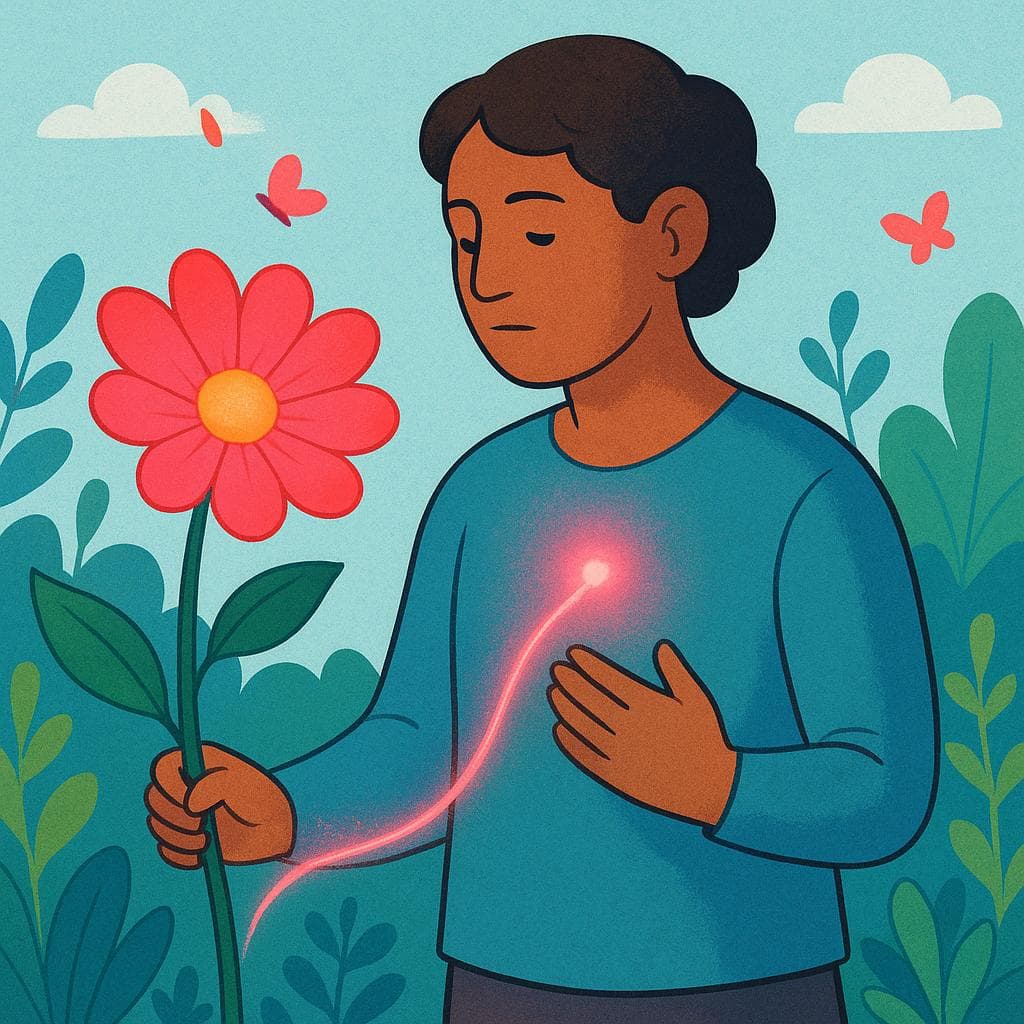
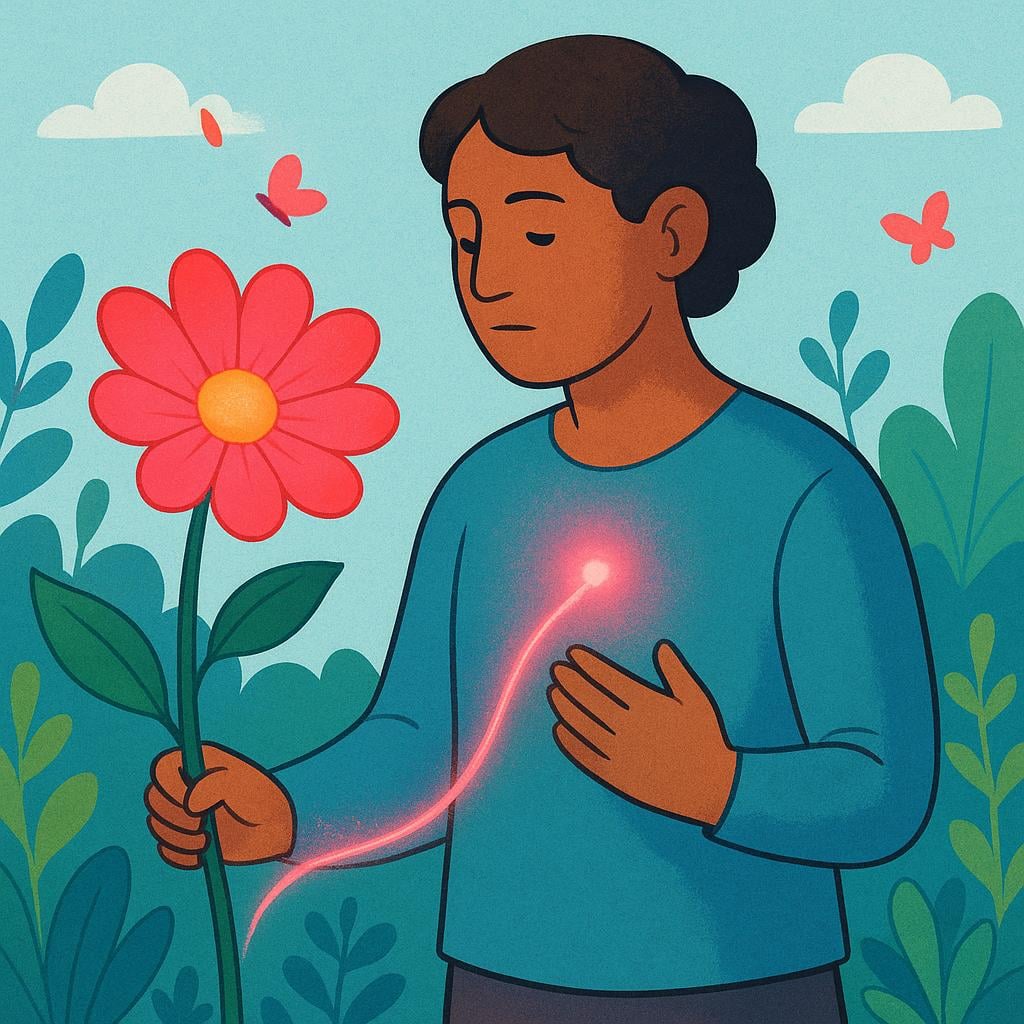
A person gazing intently at a large, vibrant, blooming flower. A small, stylized glowing light travels from the flower toward the person's heart area, symbolizing the arousal of a feeling.

Despertar can also mean to arouse or awaken feelings or passions.

despertar(Verb)

B1irregular (e→ie stem change) ar

to arouse

?

feelings, passions

,

to spark

?

interest, curiosity

Also:

to trigger

?

memories or thoughts

📝 In Action

La música despertó una vieja nostalgia en ella.

B1

The music awoke an old nostalgia in her.

Su discurso despertó gran controversia en la prensa.

B2

His speech sparked great controversy in the press.

Word Connections

Synonyms

  • suscitar (to provoke)
  • provocar (to cause)

Common Collocations

  • despertar la curiosidadto spark curiosity
  • despertar sospechasto raise suspicions

🔄 Conjugations

indicative

present

él/ella/usteddespierta
yodespierto
despiertas
ellos/ellas/ustedesdespiertan
nosotrosdespertamos
vosotrosdespertáis

imperfect

él/ella/usteddespertaba
yodespertaba
despertabas
ellos/ellas/ustedesdespertaban
nosotrosdespertábamos
vosotrosdespertabais

preterite

él/ella/usteddespertó
yodesperté
despertaste
ellos/ellas/ustedesdespertaron
nosotrosdespertamos
vosotrosdespertasteis

subjunctive

present

él/ella/usteddespierte
yodespierte
despiertes
ellos/ellas/ustedesdespierten
nosotrosdespertemos
vosotrosdespertéis

imperfect

él/ella/usteddespertara
yodespertara
despertaras
ellos/ellas/ustedesdespertaran
nosotrosdespertáramos
vosotrosdespertarais

✏️ Quick Practice

💡 Quick Quiz: despertar

Question 1 of 2

Which sentence correctly uses 'despertar' to mean 'I wake up' (referring to myself)?

📚 More Resources

Word Family

despierto(awake (adjective)) - adjective

Frequently Asked Questions

What is the difference between 'despertar' and 'levantarse'?

'Despertar' (or 'despertarse') means to transition from being asleep to being awake. 'Levantarse' means to transition from lying down (in bed) to standing up. You can wake up (despertarse) and stay in bed for an hour before getting up (levantarse).

Is 'despertar' a difficult verb to conjugate?

It's considered slightly irregular because the vowel 'e' changes to 'ie' in many forms (like 'despierto'), but it's very predictable once you learn the pattern. The change only happens when that syllable is stressed.