destruido
“destruido” means “destroyed” in Spanish. It has 2 different meanings depending on context:
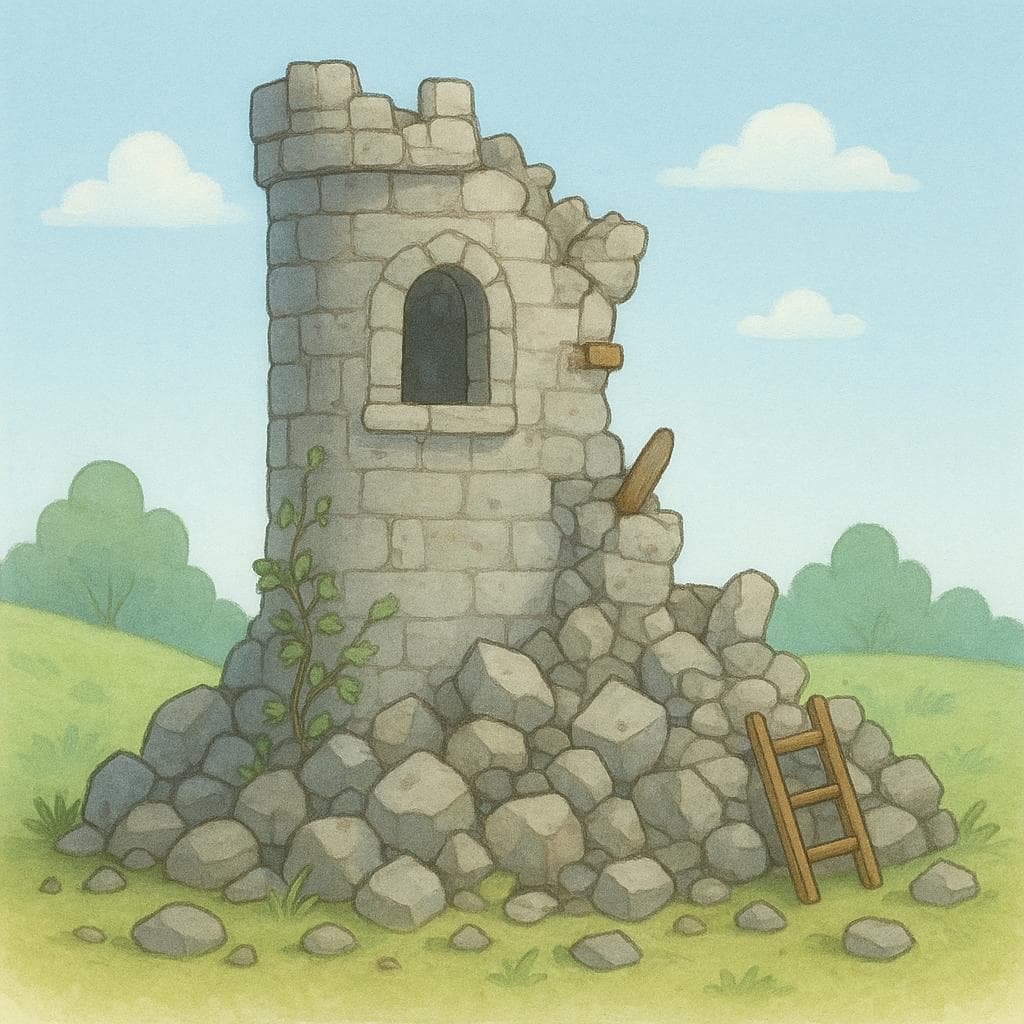

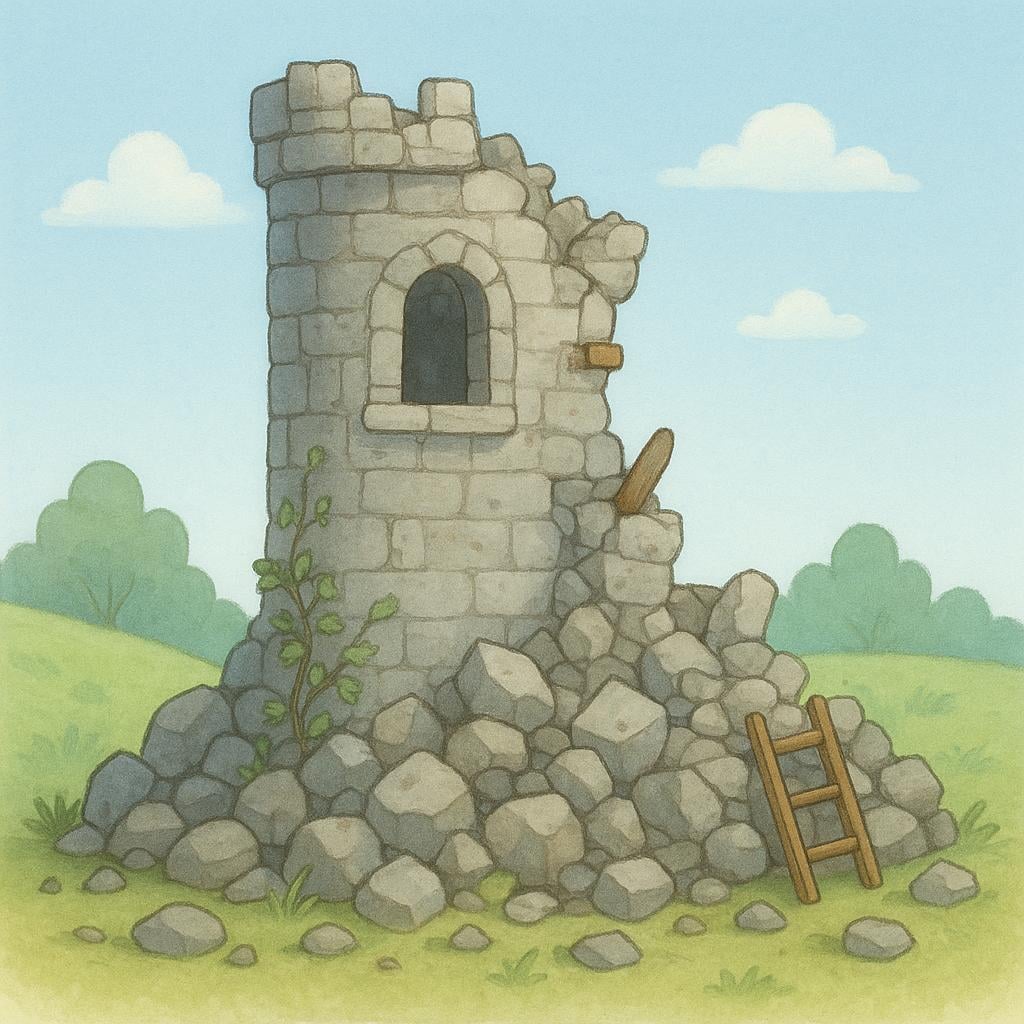
destroyedAlso: ruined, demolished
📝 In Action
El castillo medieval quedó completamente destruido por el incendio.
B1The medieval castle was left completely destroyed by the fire.
Después de la derrota, el equipo se sintió moralmente destruido.
B2After the defeat, the team felt morally ruined (destroyed).
Word Connections
destroyedAlso: ruined

📝 In Action
Hemos destruido todos los documentos antiguos.
A2We have destroyed all the old documents.
¿Quién ha destruido mi pastel de cumpleaños?
A2Who has destroyed my birthday cake?
Translate to Spanish
Words that translate to "destruido" in Spanish:
✏️ Quick Practice
Quick Quiz: destruido
Question 1 of 2
Which sentence correctly uses 'destruido' as a fixed past participle?
📚 More Resources
👥 Word Family
🎵 Rhymes
📚 Etymology
Comes from the Latin verb *destruere*, meaning 'to pull down,' 'to demolish,' or 'to tear apart.' The Spanish word kept this core idea of undoing or ruining something completely.
First recorded: Mid-13th century (in its infinitive form)
Cognates (Related words)
💡 Master Spanish
Take your Spanish to the next level. Read 200+ illustrated and narrated Spanish stories tailored to your level with the Inklingo app!
Frequently Asked Questions
Does 'destruido' ever change its ending?
Yes, but only when it acts as an adjective (meaning 'ruined' or 'demolished') or when it is part of the passive voice (used with 'ser' or 'estar'). If it is part of a perfect tense (used with 'haber'), it always stays 'destruido'.
Is 'destruido' related to 'construido'?
Yes! They are direct opposites. 'Destruido' means torn down, and 'construido' means built up. They both come from Latin verbs related to building and un-building.