dinamita
“dinamita” means “dynamite” in Spanish. It has 2 different meanings depending on context:
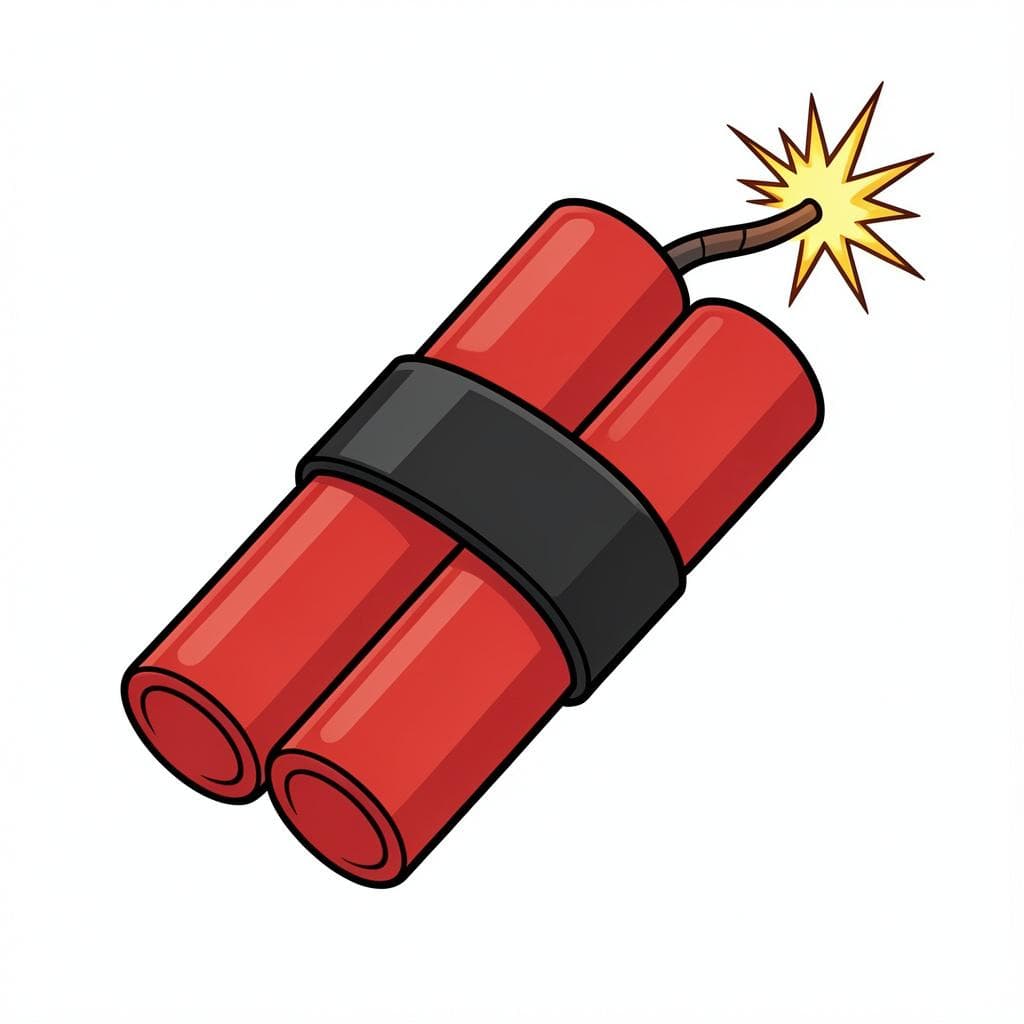

dynamite
Also: explosive
📝 In Action
Los obreros usaron dinamita para abrir el túnel en la montaña.
B1The workers used dynamite to open the tunnel in the mountain.
Alfred Nobel fue el inventor de la dinamita.
A2Alfred Nobel was the inventor of dynamite.
dynamite
Also: a powerhouse, a bombshell
📝 In Action
Esa nueva delantera es dinamita pura en el campo de fútbol.
B2That new striker is pure dynamite on the football pitch.
La noticia de su renuncia fue dinamita para la empresa.
C1The news of his resignation was a bombshell for the company.
Translate to Spanish
✏️ Quick Practice
Quick Quiz: dinamita
Question 1 of 2
Which of these is the correct way to say 'The dynamite'?
📚 More Resources
👥 Word Family▼
📚 Etymology▼
Coined by Alfred Nobel in 1867. It comes from the Greek word 'dynamis', which means 'power' or 'force'.
First recorded: 19th century
Cognates (Related words)
💡 Master Spanish
Take your Spanish to the next level. Read 200+ illustrated and narrated Spanish stories tailored to your level with the Inklingo app!
Frequently Asked Questions
Is 'dinamita' used as a verb in Spanish?
No, 'dinamita' is only a noun. To express the action of blowing something up with dynamite, you must use the verb 'dinamitar'.
Does it have a plural form?
Yes, the plural is 'dinamitas', but it is most commonly used in the singular to refer to the substance in general.