Inklingo

disculparme

/dees-kool-PAR-meh/

to apologize

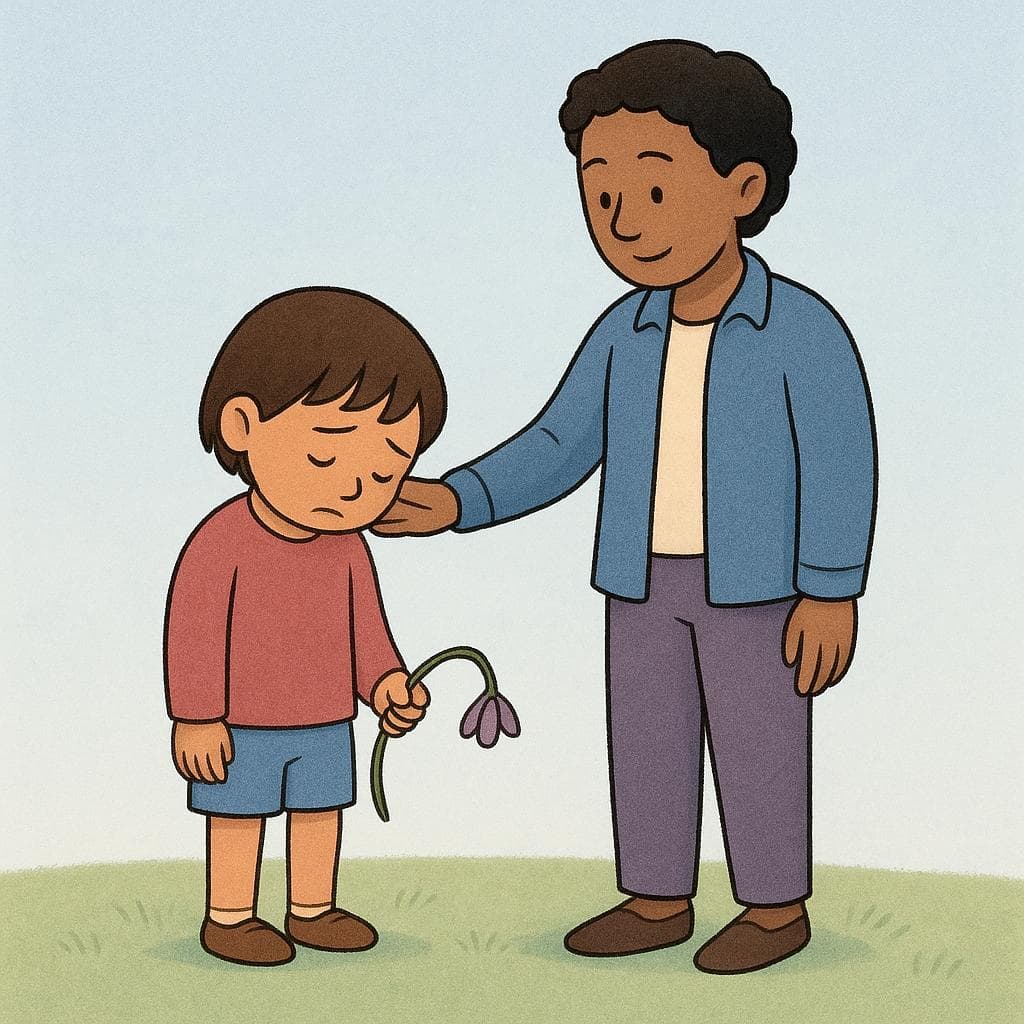
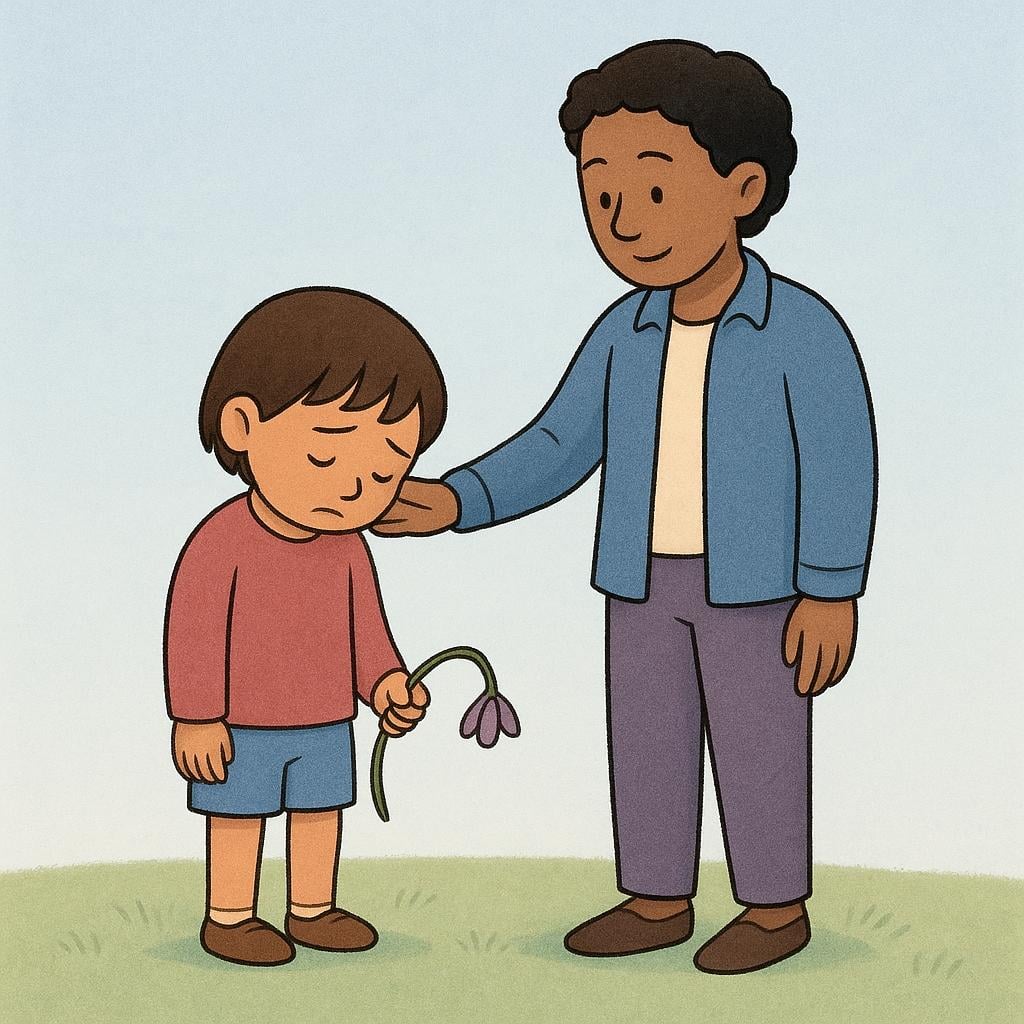
A small child standing next to an adult, holding a wilted flower and looking down remorsefully, symbolizing an apology.

When you need to apologize for a mistake, you use disculparme.

disculparme(Verb)

A2regular ar

to apologize

?

for a mistake or error

,

to say sorry

?

informal use

Also:

to beg forgiveness

?

more formal or serious

📝 In Action

Quiero disculparme por el ruido que hice anoche.

A2

I want to apologize for the noise I made last night.

Ella se disculpó con su hermana después de la pelea.

B1

She apologized to her sister after the fight.

Si no me disculpo, se va a enojar mucho.

B2

If I don't apologize, he is going to get very angry.

Word Connections

Synonyms

  • pedir perdón (to ask for forgiveness)

Antonyms

Common Collocations

  • disculparse con alguiento apologize to someone
  • disculparse por algoto apologize for something

💡 Grammar Points

The Attached 'Me'

The 'me' means the action reflects back to the speaker. When using the infinitive form like 'disculparme,' the pronoun is always attached to the end.

Placement Rule

When the verb is conjugated (e.g., 'I apologize'), the 'me' moves to the front: 'Me disculpo.' When it follows another verb (e.g., 'I must apologize'), you have a choice: 'Debo disculparme' OR 'Me debo disculpar.'

❌ Common Pitfalls

Confusing 'Disculpar' and 'Disculparme'

Mistake: "Using 'Disculparme a mí' (literally 'to excuse me to myself')."

Correction: The 'me' already includes 'myself,' so simply say 'Disculparme' or 'Me disculpo.' Adding 'a mí' is redundant and unnecessary.

⭐ Usage Tips

Using 'Lo siento'

While 'Me disculpo' is the verb form, the phrase 'Lo siento' (I feel it/I'm sorry) is often a quicker, more common way to express immediate regret.

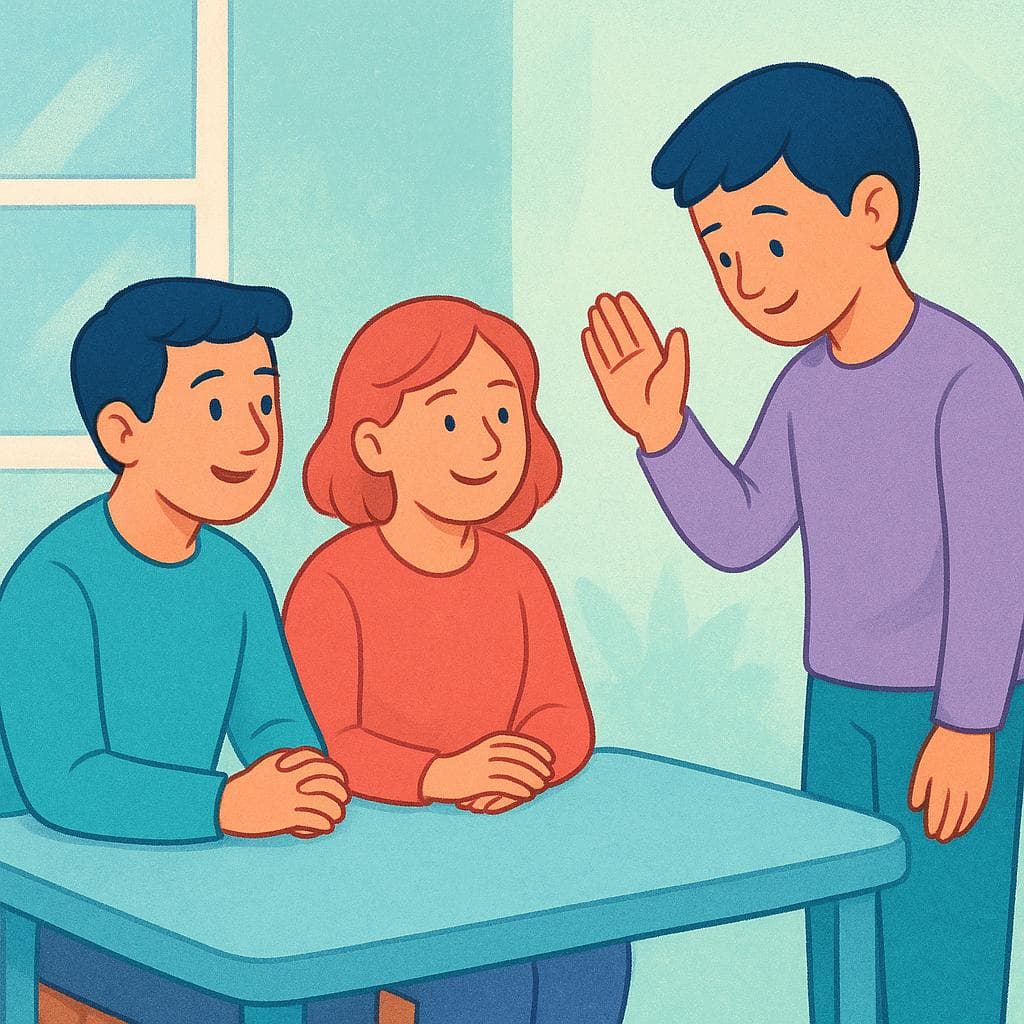
A person politely raising one hand and slightly bowing their head near a table where two other people are seated and talking, signaling they need to excuse themselves.

Asking to excuse oneself from a gathering is another meaning of disculparme.

disculparme(Verb)

B1regular ar

to excuse oneself

?

asking permission to leave or interrupt

Also:

to step away

?

temporarily leaving a group

📝 In Action

Voy a disculparme un momento, tengo que tomar una llamada urgente.

B1

I am going to excuse myself for a moment; I have to take an urgent call.

Disculparme, ¿puedo pasar?

A2

Excuse me (I need to excuse myself), may I pass?

Word Connections

Synonyms

  • retirarme (to withdraw/retire)
  • pedir permiso (to ask permission)

💡 Grammar Points

Using the Infinitive

When you use the infinitive 'disculparme' alone, it often functions as a polite request, similar to 'Excuse me' in English, but it carries a slightly more formal tone.

⭐ Usage Tips

Polite Interruptions

To politely get someone’s attention, you can use the conjugated form: 'Disculpe' (if speaking to 'usted') or 'Disculpa' (if speaking to 'tú'). These are shorter ways to say 'Excuse me.'

🔄 Conjugations

indicative

present

él/ella/ustedse disculpa
yome disculpo
te disculpas
ellos/ellas/ustedesse disculpan
nosotrosnos disculpamos
vosotrosos disculpáis

imperfect

él/ella/ustedse disculpaba
yome disculpaba
te disculpabas
ellos/ellas/ustedesse disculpaban
nosotrosnos disculpábamos
vosotrosos disculpabais

preterite

él/ella/ustedse disculpó
yome disculpé
te disculpaste
ellos/ellas/ustedesse disculparon
nosotrosnos disculpamos
vosotrosos disculpasteis

subjunctive

present

él/ella/ustedse disculpe
yome disculpe
te disculpes
ellos/ellas/ustedesse disculpen
nosotrosnos disculpemos
vosotrosos disculpéis

imperfect

él/ella/ustedse disculpara
yome disculpara
te disculparas
ellos/ellas/ustedesse disculparan
nosotrosnos disculpáramos
vosotrosos disculparais

✏️ Quick Practice

💡 Quick Quiz: disculparme

Question 1 of 2

Which sentence correctly uses 'disculparme' to mean 'I need to leave'?

📚 More Resources

Word Family

disculpa(apology / excuse (noun)) - noun

Frequently Asked Questions

What is the difference between 'disculpar' and 'disculparme'?

'Disculpar' is the base verb meaning 'to excuse' or 'to pardon' someone else (e.g., 'Disculpa mi error' - Excuse my error). 'Disculparme' is the reflexive form, meaning the action reflects back to you—you are excusing yourself or apologizing.

Is it rude to use 'Disculpa' instead of 'Disculpe'?

Not rude, but different levels of formality. 'Disculpa' uses the 'tú' form and is used with friends or family. 'Disculpe' uses the formal 'usted' form and is best used with strangers, elders, or professionals.