dudas
“dudas” means “doubts” in Spanish. It has 2 different meanings depending on context:
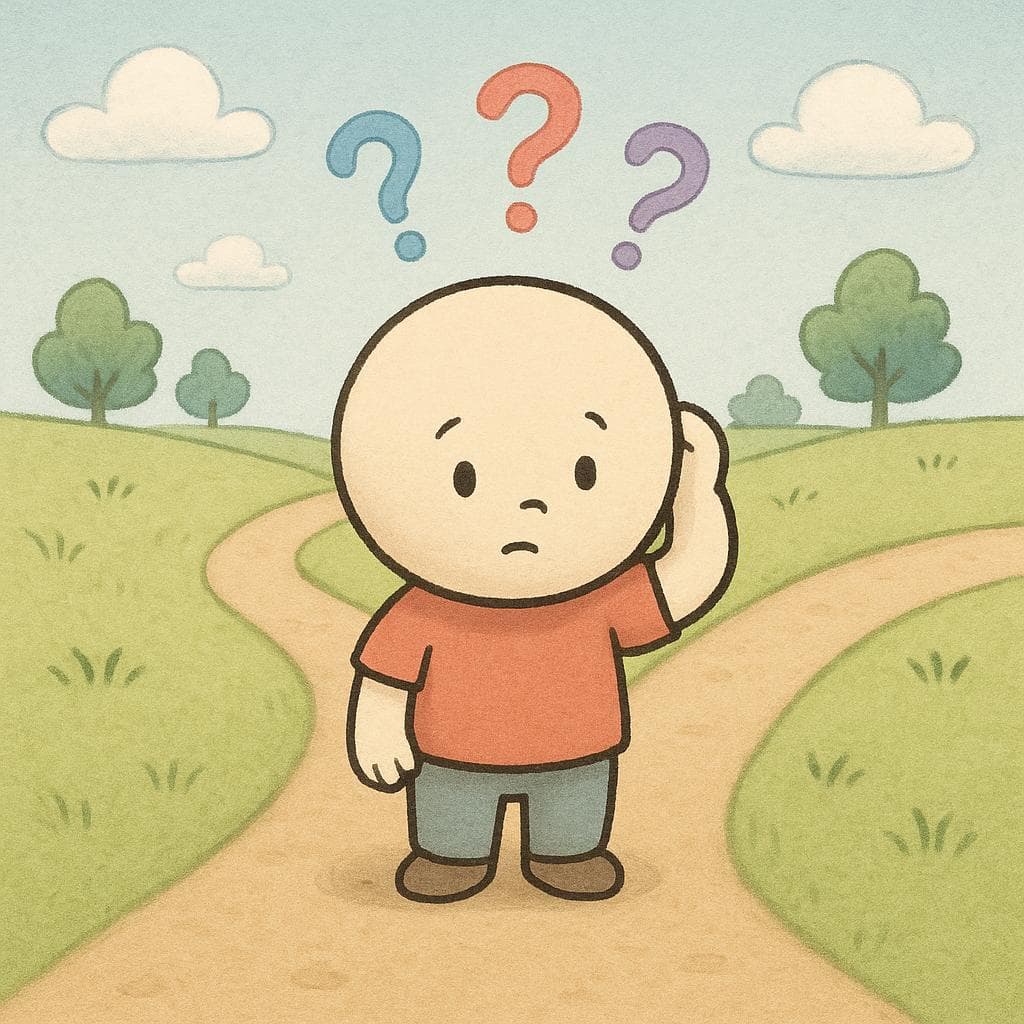

doubts, questionsAlso: concerns
📝 In Action
Si tienes dudas, puedes preguntar a la profesora.
A2If you have questions, you can ask the teacher.
Ella tenía serias dudas sobre la honestidad del vendedor.
B1She had serious doubts about the honesty of the seller.
Word Connections
you doubt, you are doubtingAlso: don't doubt

📝 In Action
Si dudas de mi compromiso, solo tienes que decírmelo.
A2If you doubt my commitment, you just have to tell me.
Veo que dudas sobre qué camino tomar.
B1I see that you are hesitating about which road to take.
Word Connections
Indicative
Present
Imperfect
Preterite
Subjunctive
Present Subjunctive
Imperfect Subjunctive
Translate to Spanish
Words that translate to "dudas" in Spanish:
✏️ Quick Practice
Quick Quiz: dudas
Question 1 of 2
Which sentence uses 'dudas' as the plural noun, meaning 'questions'?
📚 More Resources
📚 Etymology
Comes from the Latin verb *dubitare*, which meant 'to waver' or 'to be uncertain between two things.' This origin emphasizes the feeling of being pulled in two directions.
First recorded: 13th century
Cognates (Related words)
💡 Master Spanish
Take your Spanish to the next level. Read 200+ illustrated and narrated Spanish stories tailored to your level with the Inklingo app!
Frequently Asked Questions
How do I know if 'dudas' means the noun or the verb?
Look at the surrounding words! If it follows a verb like *tener* (to have), it's the noun ('Tengo muchas dudas'). If it is acting as the main action, it's the verb ('Tú dudas de la solución').
Is 'dudas' always plural?
Yes, when it is the noun, it is the plural of *duda* (doubt). When it is the verb, it is a single conjugation, but it's not considered plural in the same way; it’s the singular 'tú' form.