enfrentar
“enfrentar” means “to face” in Spanish. It has 2 different meanings depending on context:


to face, to confront
Also: to tackle
📝 In Action
Tenemos que enfrentar la realidad, no podemos ignorarla.
A2We have to face reality; we can't ignore it.
El presidente enfrentó muchas críticas por su nueva ley.
B1The president confronted a lot of criticism for his new law.
Ella enfrenta sus miedos con valentía.
A2She faces her fears with courage.
to face off, to clash
Also: to confront each other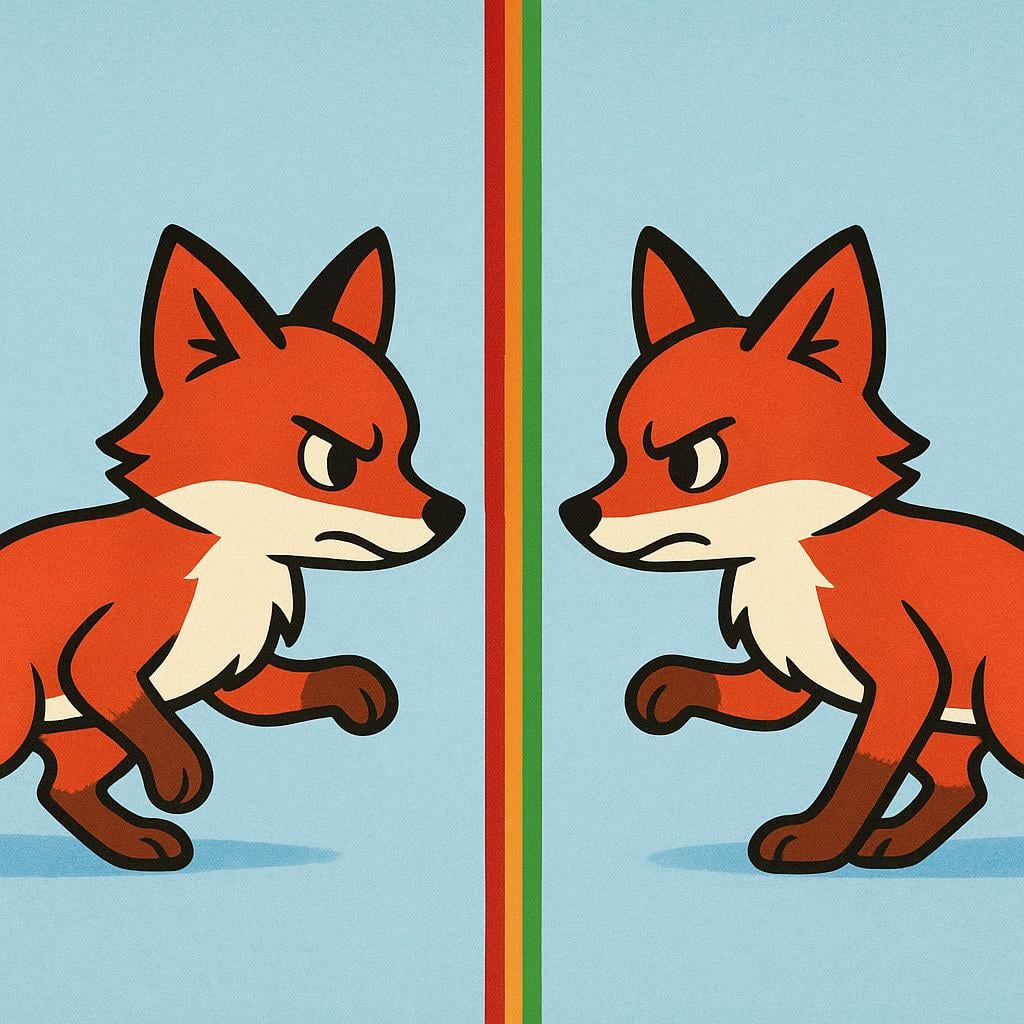
📝 In Action
Los dos equipos se enfrentarán en la final mañana.
B1The two teams will face off in the final tomorrow.
Ellos se enfrentaron por el control de la empresa.
B2They clashed over the control of the company.
Marta se enfrentó a su jefe sobre el horario.
B1Marta confronted her boss about the schedule.
Indicative
Present
Imperfect
Preterite
Subjunctive
Present Subjunctive
Imperfect Subjunctive
Translate to Spanish
✏️ Quick Practice
Quick Quiz: enfrentar
Question 1 of 2
Which sentence uses the transitive form of 'enfrentar' (Definition 1)?
📚 More Resources
👥 Word Family▼
📚 Etymology▼
Comes from the prefix 'en-' (meaning 'in' or 'into') combined with 'frente' (meaning 'front' or 'forehead'). It literally means 'to put face to face' or 'to put in front of.'
First recorded: Medieval Spanish
Cognates (Related words)
💡 Master Spanish
Take your Spanish to the next level. Read 200+ illustrated and narrated Spanish stories tailored to your level with the Inklingo app!
Frequently Asked Questions
What is the difference between 'enfrentar' and 'enfrentarse'?
'Enfrentar' (without the 'se') means *you* face a problem or situation. 'Enfrentarse' (with 'se') means two things are facing *each other* (like teams in a game), or that you are initiating a confrontation *with* someone (often followed by 'a' or 'con').
Is 'enfrentar' a difficult verb to conjugate?
No, 'enfrentar' is a regular -ar verb, meaning its endings follow the standard, predictable pattern. If you know how to conjugate 'hablar,' you know how to conjugate 'enfrentar'!