escondite
“escondite” means “hide-and-seek” in Spanish. It has 2 different meanings depending on context:
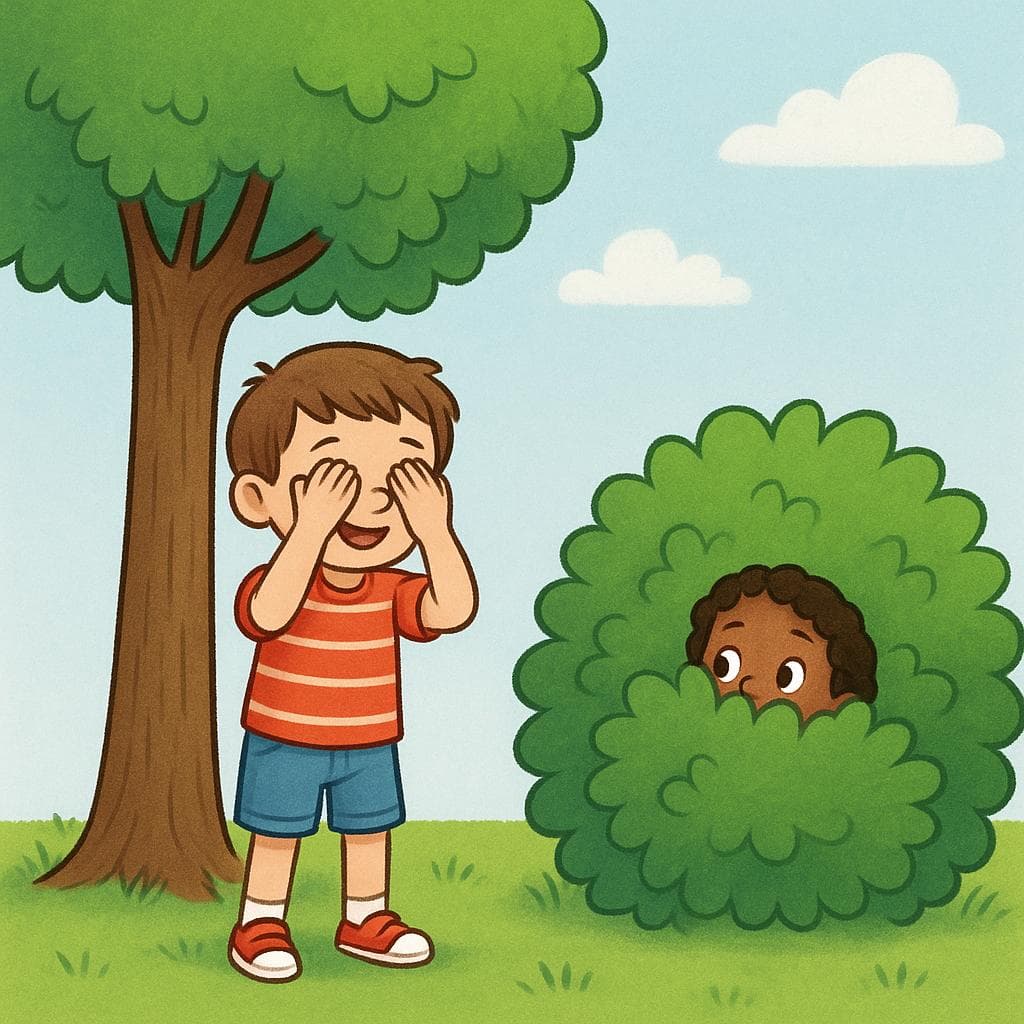

hide-and-seek

📝 In Action
Cuando éramos pequeños, siempre jugábamos al escondite en el parque.
A1When we were little, we always played hide-and-seek in the park.
¡Ya no quiero contar! ¿Quién va a empezar el escondite?
A2I don't want to count anymore! Who is going to start hide-and-seek?
Word Connections
hiding place, hideoutAlso: cache

📝 In Action
Necesitamos un buen escondite para guardar las llaves de repuesto.
B1We need a good hiding place to keep the spare keys.
La policía descubrió el escondite de los documentos robados.
B2The police discovered the hideout of the stolen documents.
Word Connections
Translate to Spanish
Words that translate to "escondite" in Spanish:
✏️ Quick Practice
Quick Quiz: escondite
Question 1 of 1
Which sentence uses 'escondite' to refer to a physical location, not the game?
📚 More Resources
🎵 Rhymes
📚 Etymology
'Escondite' comes directly from the Spanish verb 'esconder,' meaning 'to hide.' The suffix '-ite' is added to turn the action of hiding into the name of the place or the game.
First recorded: Medieval Spanish
Cognates (Related words)
💡 Master Spanish
Take your Spanish to the next level. Read 200+ illustrated and narrated Spanish stories tailored to your level with the Inklingo app!
Frequently Asked Questions
Is 'escondite' masculine or feminine?
'Escondite' is a masculine noun, so you must always use 'el' before it: 'el escondite' (the hiding place/the game).
How do you say 'It's time to hide' using the verb form?
You would use the verb 'esconderse' (to hide oneself): 'Es hora de esconderse.' 'Escondite' is only the noun (the place or the game).