escuches
“escuches” means “you listen” in Spanish (in a wish, doubt, or suggestion (subjunctive)).
you listen, don't listen
Also: you may listen, you should listen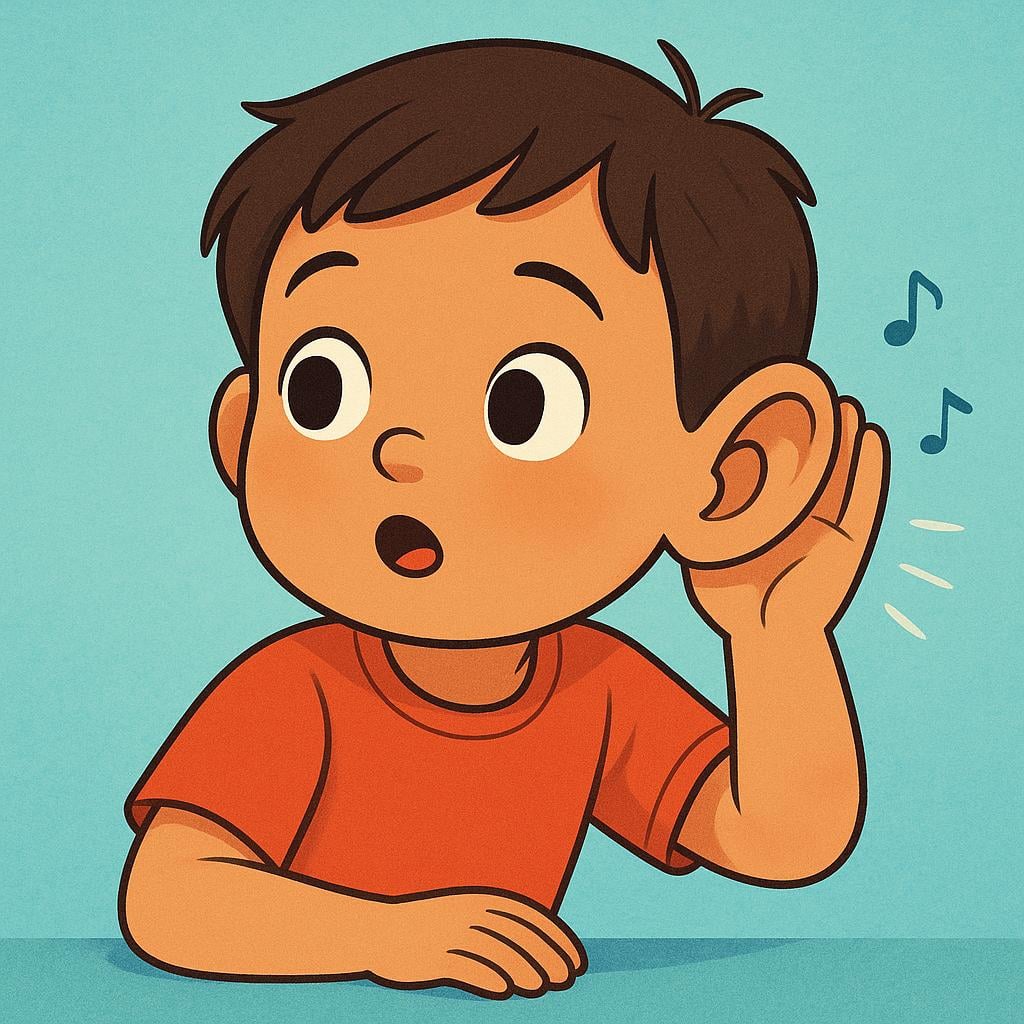
📝 In Action
Espero que escuches mis consejos.
A2I hope that you listen to my advice.
No quiero que escuches esa música tan alta.
B1I don't want you to listen to that music so loudly.
Si no escuches al profesor, no entenderás la lección.
A2If you don't listen to the teacher, you won't understand the lesson.
¡No escuches a ese hombre! Está mintiendo.
A2Don't listen to that man! He is lying.
Indicative
Present
Imperfect
Preterite
Subjunctive
Present Subjunctive
Imperfect Subjunctive
Translate to Spanish
Words that translate to "escuches" in Spanish:
don't listen→✏️ Quick Practice
Quick Quiz: escuches
Question 1 of 2
Which sentence correctly uses 'escuches' as a negative command?
📚 More Resources
👥 Word Family▼
🎵 Rhymes▼
📚 Etymology▼
Comes from the Latin verb *auscultare*, which meant 'to listen attentively' or 'to pay attention.' This root word also gave us the English word 'auscultate' (to listen to sounds within the body).
First recorded: Appeared in Spanish as *escuchar* during the Middle Ages.
Cognates (Related words)
💡 Master Spanish
Take your Spanish to the next level. Read 200+ illustrated and narrated Spanish stories tailored to your level with the Inklingo app!
Frequently Asked Questions
What is the difference between 'escuches' and 'escuchas'?
'Escuchas' is the normal present tense ('You listen/are listening'). 'Escuches' is the special form (subjunctive) used after words that express emotion, desire, or doubt, or when giving a negative command ('Don't listen').
Is 'escuches' formal or informal?
'Escuches' is informal because it is the 'tú' form. If you needed to speak formally to someone (using 'usted'), you would use 'escuche'.