frontera
“frontera” means “border” in Spanish. It has 2 different meanings depending on context:
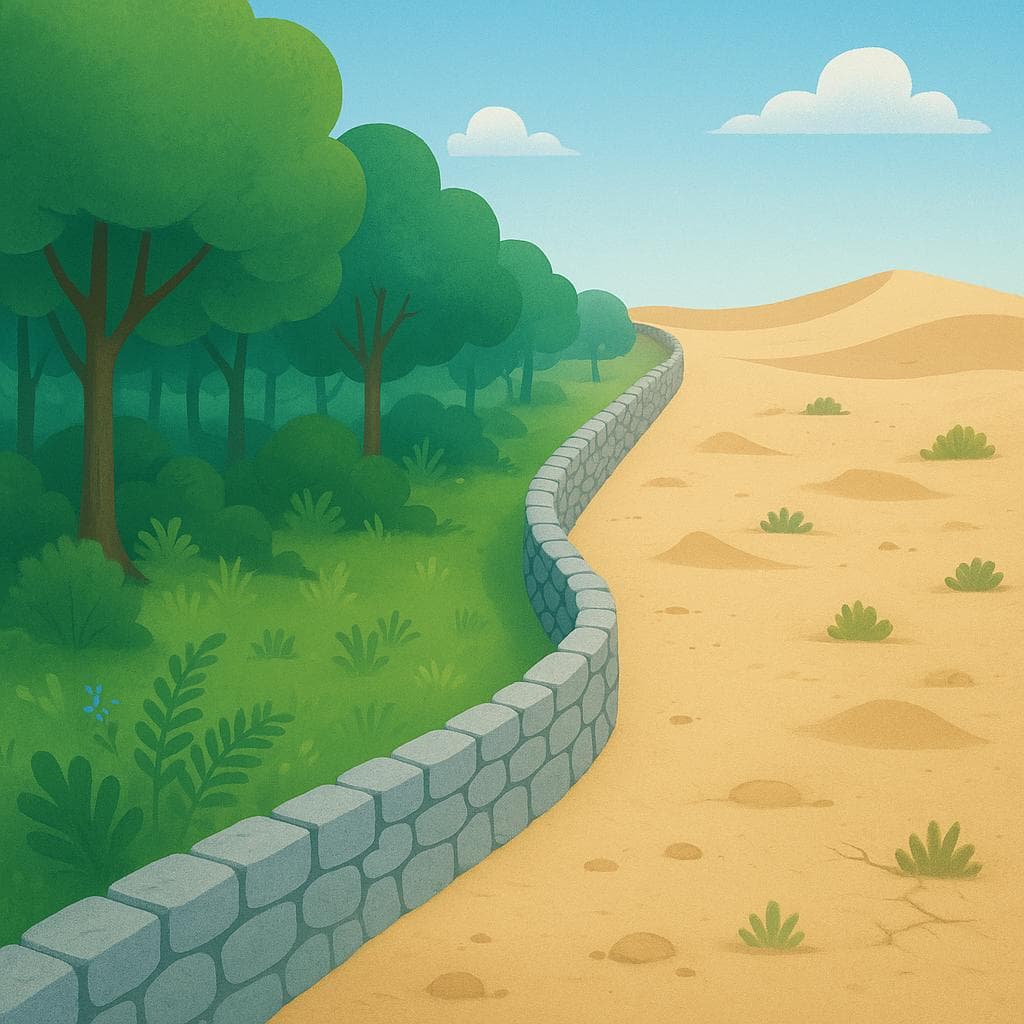

border, frontier
Also: boundary line
📝 In Action
Tuvimos que mostrar nuestros pasaportes al cruzar la frontera.
A2We had to show our passports when crossing the border.
La frontera entre Estados Unidos y Canadá es la más larga del mundo.
B1The border between the United States and Canada is the longest in the world.
La pequeña ciudad fronteriza dependía del comercio internacional.
B2The small border town depended on international trade.
limit, cutting edge
Also: threshold
📝 In Action
Los científicos están empujando las fronteras del conocimiento humano.
C1The scientists are pushing the limits of human knowledge.
Su arte se encuentra en la frontera entre la pintura y la escultura.
C2His art is found on the boundary between painting and sculpture.
Vocabulary Collections
Translate to Spanish
Words that translate to "frontera" in Spanish:
border→boundary line→cutting edge→frontier→limit→threshold→✏️ Quick Practice
Quick Quiz: frontera
Question 1 of 1
Which sentence uses 'frontera' in its figurative (conceptual) sense?
📚 More Resources
📚 Etymology▼
Comes from the Late Latin word *frontaria*, which originally meant 'forehead' or 'front line.' This idea of being at the very front or edge evolved into the modern meaning of a boundary line.
First recorded: 13th century
Cognates (Related words)
💡 Master Spanish
Take your Spanish to the next level. Read 200+ illustrated and narrated Spanish stories tailored to your level with the Inklingo app!
Frequently Asked Questions
Is 'frontera' masculine or feminine?
'Frontera' is always feminine. You must use the feminine article 'la' or 'una' with it (e.g., 'la frontera').
Is there a difference between 'límite' and 'frontera'?
Yes, but they are related. 'Frontera' almost always refers to the boundary between countries or large territories. 'Límite' is a more general word that can refer to any kind of boundary, restriction, or maximum point (e.g., 'el límite de velocidad'—the speed limit).