gallina
“gallina” means “hen” in Spanish. It has 2 different meanings depending on context:
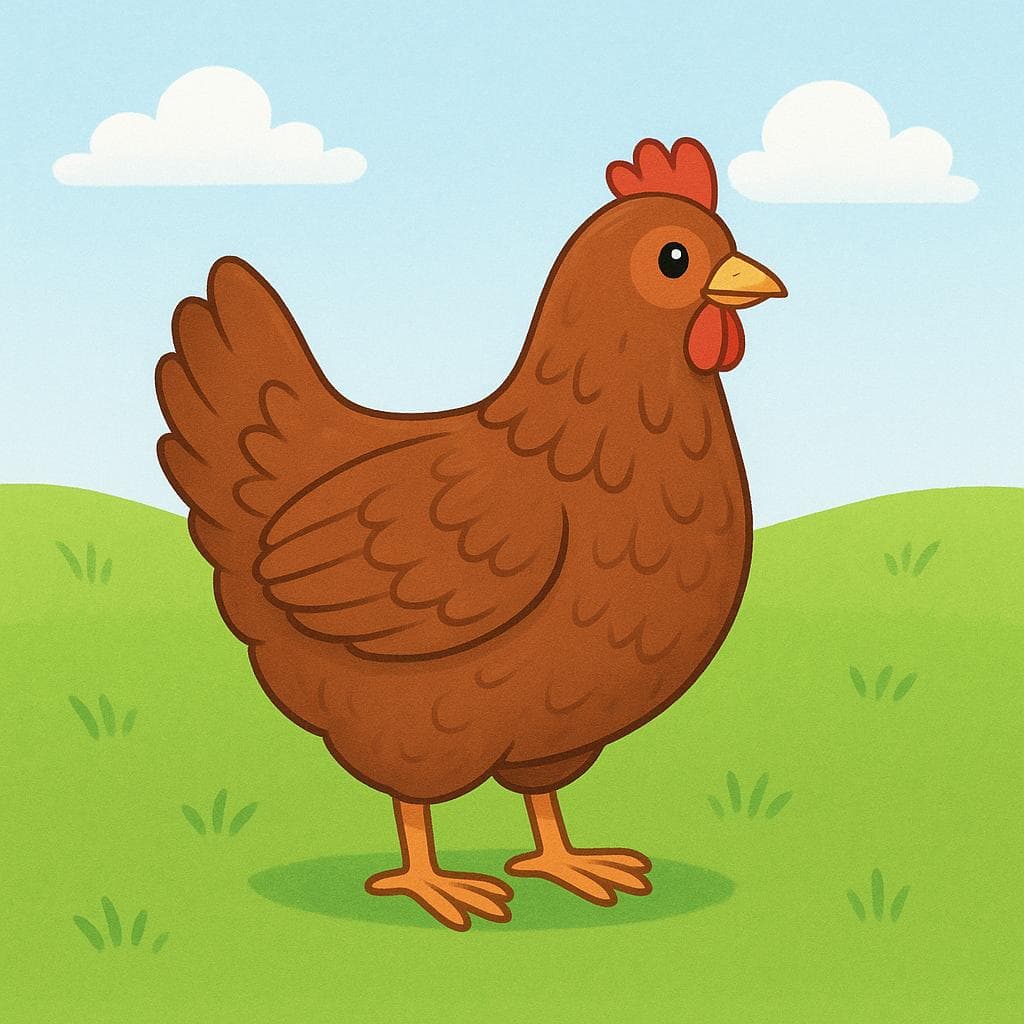

hen
Also: chicken
📝 In Action
La gallina puso tres huevos esta mañana.
A1The hen laid three eggs this morning.
El granjero tiene más de cien gallinas en su corral.
A2The farmer has more than a hundred chickens in his coop.
coward
Also: chicken, scaredy-cat
📝 In Action
¡No seas gallina! Tienes que decirle la verdad.
B1Don't be a coward! You have to tell her the truth.
Él es una gallina; nunca se atreve a probar nada nuevo.
B2He is a chicken; he never dares to try anything new.
Vocabulary Collections
Translate to Spanish
✏️ Quick Practice
Quick Quiz: gallina
Question 1 of 2
Which sentence uses 'gallina' in its figurative (insulting) sense?
📚 More Resources
👥 Word Family▼
🎵 Rhymes▼
📚 Etymology▼
Comes directly from the Latin word *gallīna*, which meant 'hen' or 'female chicken'. This word has been used in Spanish since its earliest days.
First recorded: 10th century
Cognates (Related words)
💡 Master Spanish
Take your Spanish to the next level. Read 200+ illustrated and narrated Spanish stories tailored to your level with the Inklingo app!
Frequently Asked Questions
Why is 'gallina' always feminine, even when I call a man a coward?
This is common in Spanish! When 'gallina' is used to mean 'coward,' it is acting like a fixed feminine noun, similar to how 'persona' (person) is always feminine, regardless of the gender of the person you are talking about. You use 'una gallina' for both men and women.
What is the difference between 'gallo' and 'gallina'?
'Gallo' is the male chicken (rooster), and 'gallina' is the female chicken (hen). They are a pair, like husband and wife in the chicken world!