garaje
“garaje” means “garage” in Spanish (a place to store vehicles).
garage
Also: car park, workshop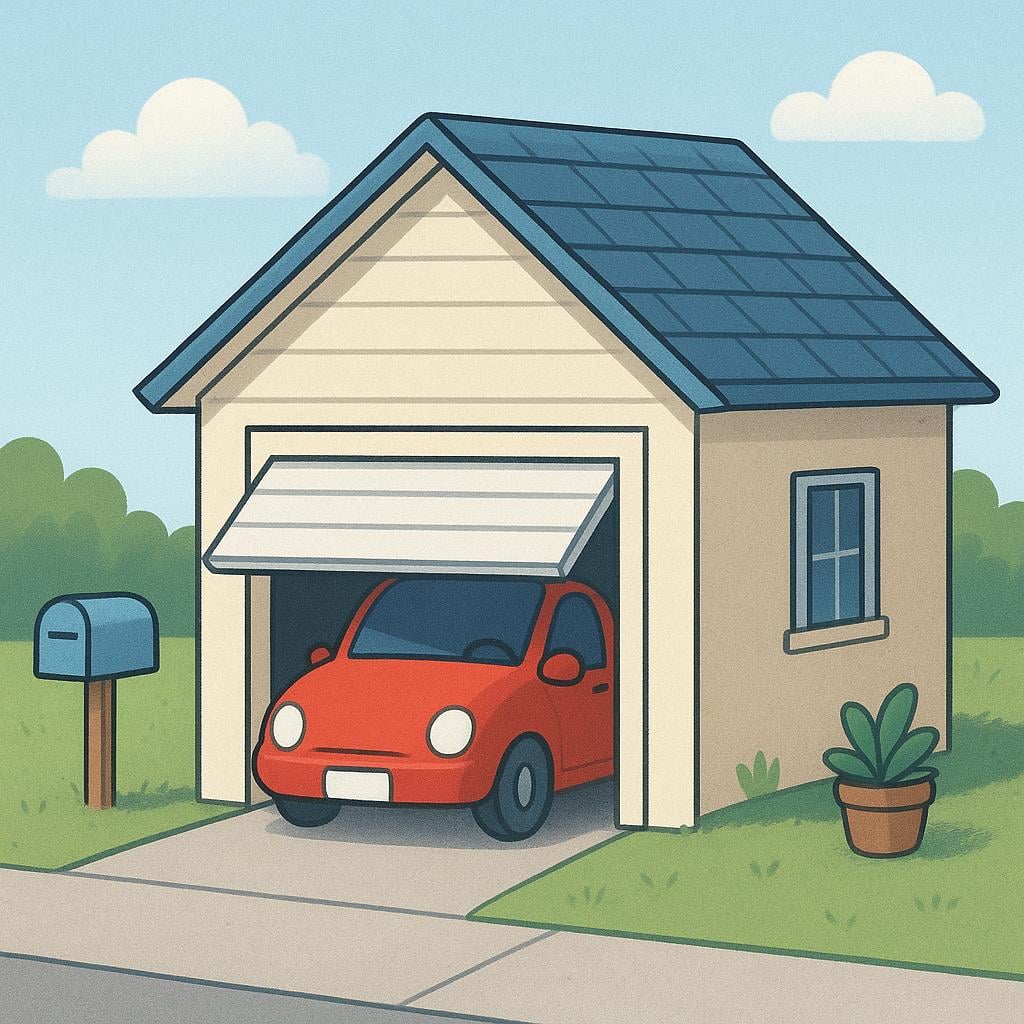
📝 In Action
Mi coche está aparcado en el garaje.
A1My car is parked in the garage.
La puerta del garaje no cierra bien.
A2The garage door doesn't close properly.
Necesitamos alquilar una plaza de garaje en el centro.
B1We need to rent a parking space in the center.
✏️ Quick Practice
Quick Quiz: garaje
Question 1 of 1
Which sentence correctly uses the Spanish word for 'garage'?
📚 More Resources
👥 Word Family▼
📚 Etymology▼
'Garaje' comes directly from the French word 'garage,' which itself is related to the verb 'garrer,' meaning 'to shelter' or 'to dock.' Spanish adopted the word in the 20th century as motor vehicles became common.
First recorded: Early 20th century
Cognates (Related words)
💡 Master Spanish
Take your Spanish to the next level. Read 200+ illustrated and narrated Spanish stories tailored to your level with the Inklingo app!
Frequently Asked Questions
Is 'garaje' the same as 'aparcamiento'?
Not exactly. 'Garaje' usually refers to a specific, enclosed building or room, often attached to a house, used for storing or repairing vehicles. 'Aparcamiento' is the general term for a parking area or parking lot, which may or may not be indoors.
If I am in Latin America, should I say 'garaje' or 'cochera'?
Both are understood! 'Garaje' is universal. However, 'cochera' is very common and often preferred for a private garage attached to a home. Using either one will be fine.