Inklingo

gritos

/GREE-tohs/

shouts

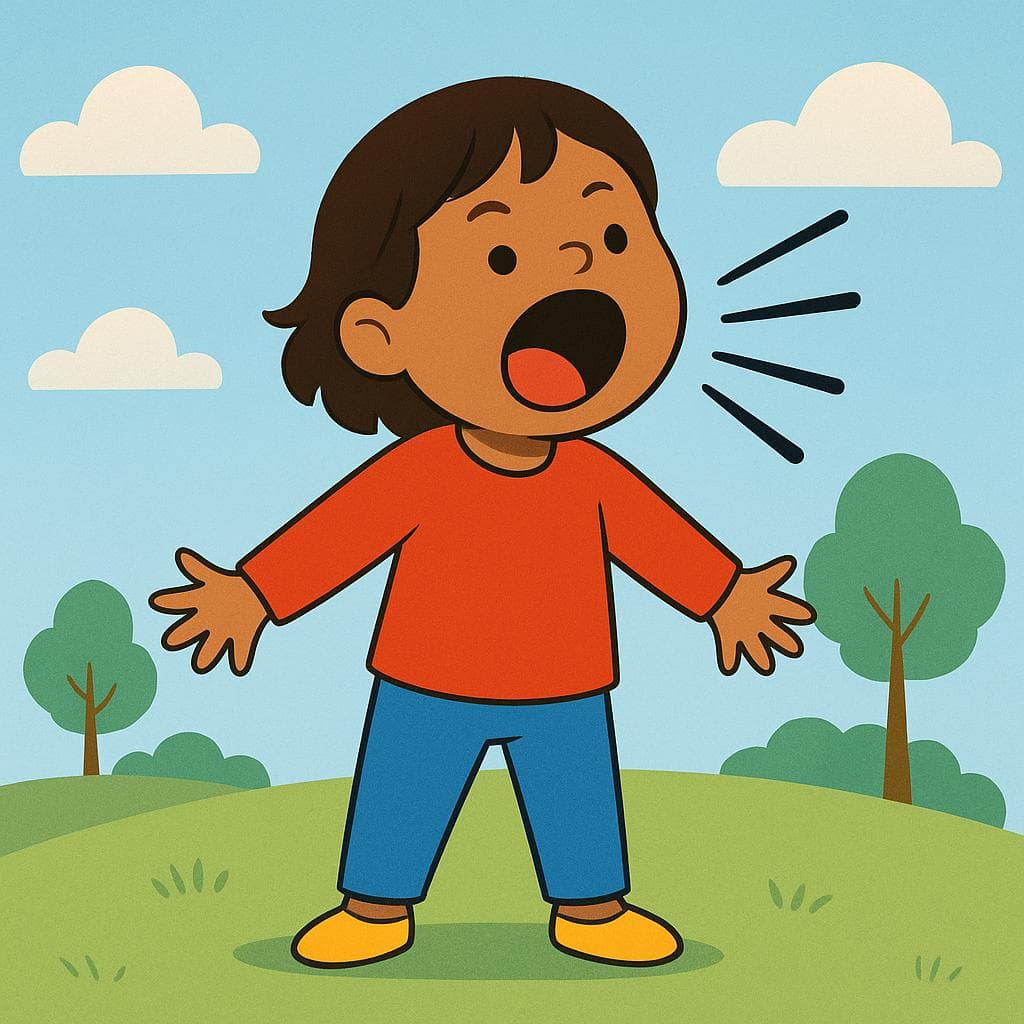
A high quality simple colorful storybook illustration of a small person standing in a bright green field, mouth wide open, emitting exaggerated, stylized sound lines to represent a loud shout.

The noun 'gritos' translates to 'shouts,' representing loud, vocal expressions.

gritos(noun)

mA1

shouts

?

loud, vocal expressions

,

screams

?

piercing, high-pitched cries

Also:

yells

?

informal

,

cries

?

used for expressions of pain or joy

📝 In Action

Los gritos de los niños se oían desde la calle.

A1

The shouts of the children could be heard from the street.

Hubo gritos de alegría cuando el equipo ganó el campeonato.

A2

There were screams of joy when the team won the championship.

Sus gritos de auxilio alertaron a los vecinos.

B1

Her cries for help alerted the neighbors.

Word Connections

Synonyms

  • alaridos (screams, loud cries)
  • chillidos (squeals, shrieks)

Antonyms

  • susurros (whispers)

Common Collocations

  • soltar gritosto let out shouts
  • escuchar gritosto hear shouts

💡 Grammar Points

Always Plural

Since 'gritos' is the plural of 'grito', you always use plural forms with it (e.g., 'los gritos', 'muchos gritos').

❌ Common Pitfalls

Using the wrong article

Mistake: "La gritos son fuertes."

Correction: Los gritos son fuertes. (Remember, 'gritos' is a masculine noun.)

⭐ Usage Tips

Emotional Intensity

Use 'gritos' to describe sounds related to strong emotions, whether positive (joy, excitement) or negative (fear, anger, pain).

A friendly cartoon bear is shown speaking very forcefully and loudly into a large, simple microphone, emphasizing the action being performed loudly.

When used adverbially, 'gritos' can mean 'loudly,' describing the manner in which someone is speaking or acting.

gritos(adverb)

B1

loudly

?

speaking or acting with a loud voice

,

yelling

?

manner of communication

Also:

shouting

?

describing the volume of voice

📝 In Action

No podemos hablar a gritos en la biblioteca.

B1

We can't talk loudly/yelling in the library.

Me dijo a gritos que me fuera.

B1

He told me, yelling, to leave.

Parece que la casa está pintada a gritos.

C1

It seems like the house is painted terribly/loudly. (Figurative: glaringly, poorly done)

Word Connections

Synonyms

  • en voz alta (out loud)
  • fuertemente (strongly, loudly)

Antonyms

  • en voz baja (softly, whispering)

Common Collocations

  • hablar a gritosto speak loudly/yelling
  • decir algo a gritosto shout something out

Idioms & Expressions

  • estar a gritosTo be obvious or glaringly noticeable (usually about colors or poor taste)

💡 Grammar Points

The 'A' Connection

When 'gritos' is used to mean 'loudly,' it almost always follows the preposition 'a' (a gritos). This structure turns the noun into a way of describing an action.

❌ Common Pitfalls

Omitting the preposition

Mistake: "Me habló gritos."

Correction: Me habló a gritos. (The 'a' is essential to form the adverbial phrase.)

⭐ Usage Tips

Implied Anger or Urgency

Using 'a gritos' usually implies that the speaker is angry, frustrated, or speaking in a very urgent, uncontrolled manner, unlike the more neutral 'en voz alta' (out loud).

✏️ Quick Practice

💡 Quick Quiz: gritos

Question 1 of 2

Which sentence uses 'gritos' to describe the *manner* of speaking?

📚 More Resources

Word Family

Frequently Asked Questions

What is the difference between 'gritos' and 'grito'?

'Gritos' is the plural form, meaning 'shouts' or 'screams' (more than one). 'Grito' is the singular form, meaning 'a shout' or 'a scream' (just one).

Can 'gritos' be used figuratively?

Yes! The phrase 'estar a gritos' or 'pintado a gritos' is a common idiom meaning something is glaringly obvious or done in terrible, loud taste (like wearing clashing colors). For example, 'Esa corbata está a gritos' (That tie is hideous/glaring).